
17 Smart Ideas for What to Do With an Empty Corner in Your Living Room
An empty corner can make a living room feel unfinished, especially when the rest of the space has been carefully decorated. At the same time, awkward corners can be some of the most useful areas in a room. With the right piece of furniture, a little greenery, or even a simple change in lighting, that unused space can become one of the most interesting parts of your living room.
The best choice depends on the size of the corner, the amount of natural light it receives, and how you already use the room. A small corner might be perfect for a narrow cabinet or reading chair, while a larger area could accommodate a full seating arrangement or a statement plant.
Here are 17 ideas worth considering if you have an empty corner in your living room.
1. Create a Cozy Reading Corner
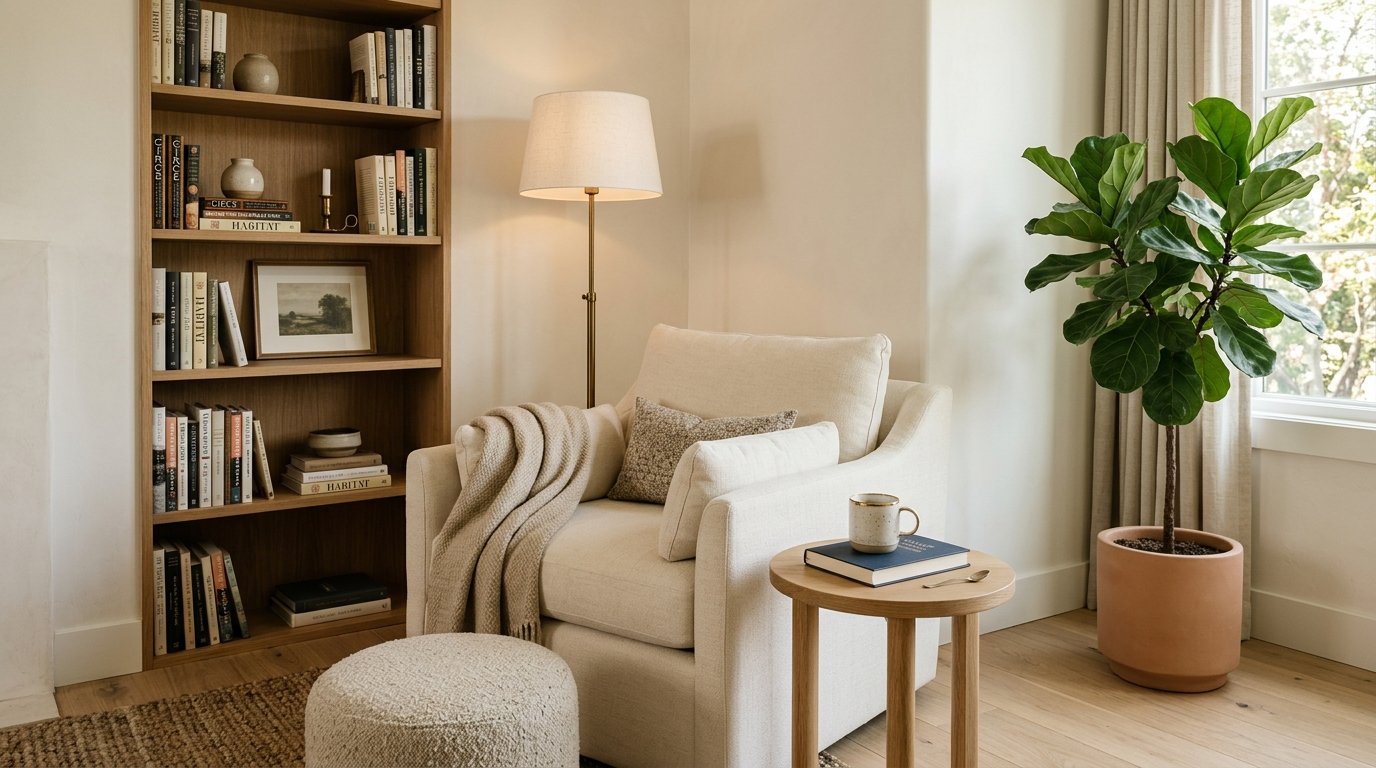
A comfortable reading chair can turn an unused corner into a quiet place to relax. Look for a chair that fits comfortably without blocking walkways through the room. A soft armchair with a small side table is often all you need.
Add a floor lamp beside the chair so the area can be used in the evening as well. A lamp with a warm bulb can make the corner feel especially inviting without adding harsh overhead lighting to the room.
A small ottoman can give you somewhere to rest your feet, while a folded throw blanket adds another layer of comfort. If there is enough room, a narrow bookcase beside the chair can complete the setup.
The key is to keep the arrangement simple. The corner should feel like a natural extension of the living room rather than a separate room squeezed into an unused space.
2. Add a Tall Indoor Plant
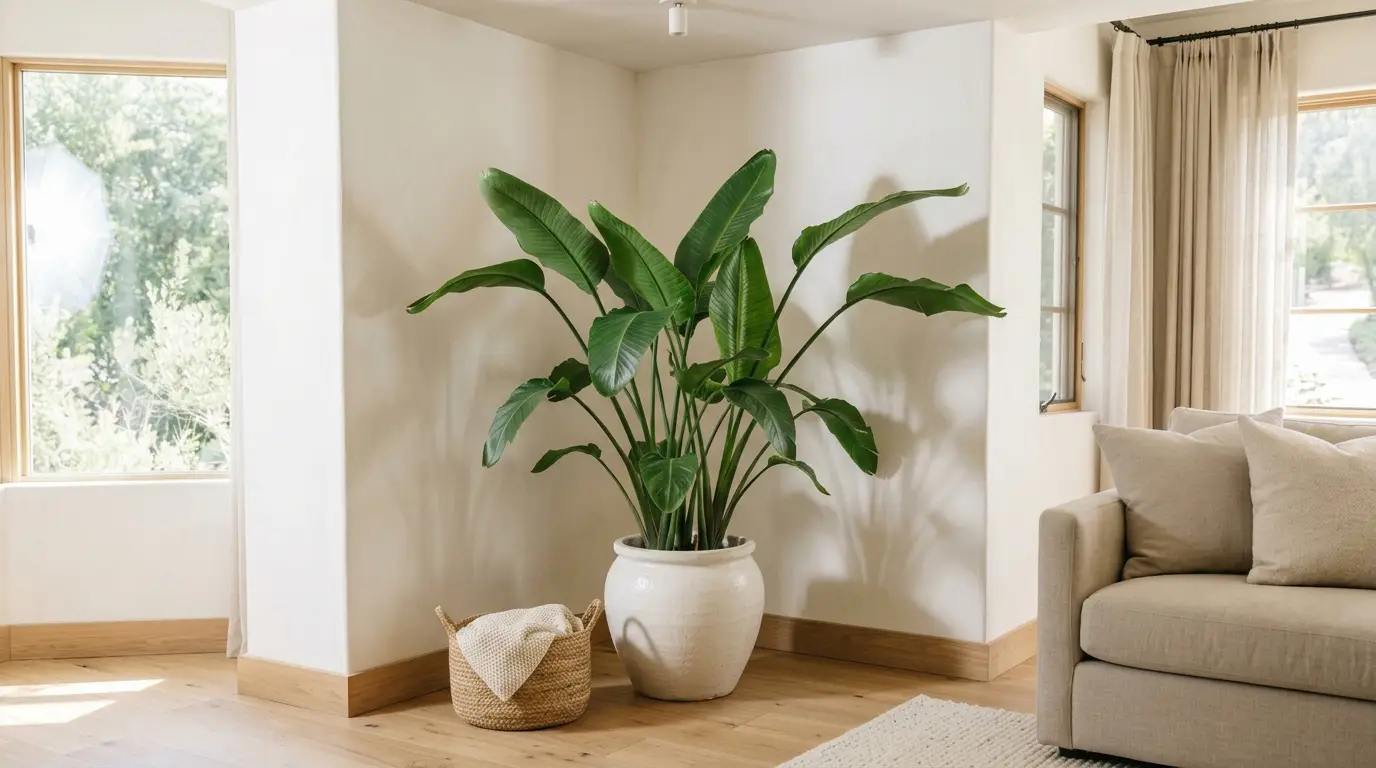
A tall indoor plant is one of the easiest ways to fill a difficult corner without making the room feel crowded. Plants such as fiddle leaf figs, rubber plants, birds of paradise, and tall palms can add height to a room while keeping the floor area relatively open.
Choose a planter that works with the colors already present in your living room. A simple ceramic planter can suit a modern space, while a woven basket planter can work beautifully with a relaxed or natural interior.
Pay attention to the light in the corner before choosing the plant. A bright corner near a window gives you many options, while a darker corner may be better suited to a plant that tolerates lower light.
If one large plant feels too sparse, place a smaller plant or decorative basket beside it. This creates a layered arrangement without requiring much furniture.
3. Set Up a Small Home Office
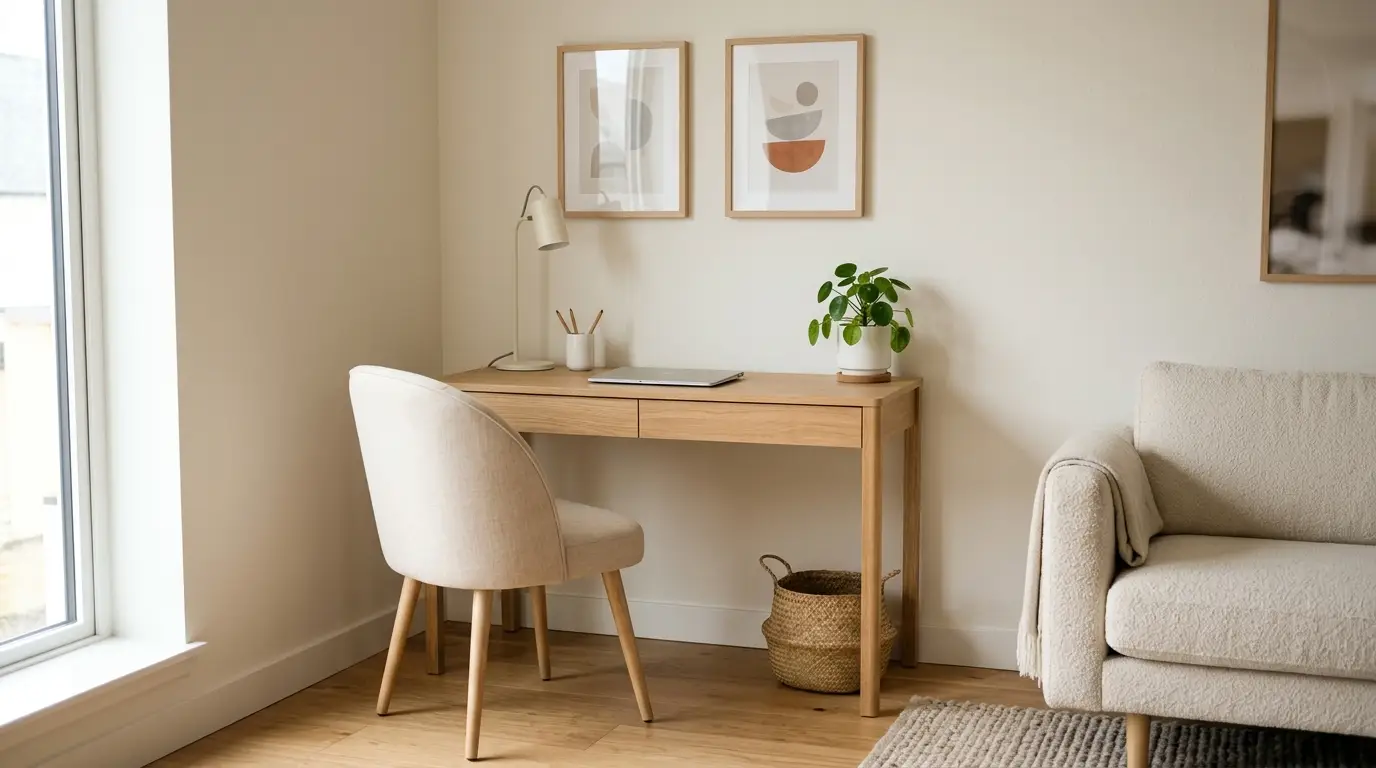
If you regularly work from home, an unused corner can become a compact workstation. A narrow desk can provide enough room for a laptop, notebook, lamp and a few essentials without taking over the living room.
Choose a desk with clean lines and modest dimensions. Wall mounted desks can be especially useful when floor space is limited because they keep the area underneath open.
A comfortable chair is important, but it does not need to look like traditional office furniture. A simple upholstered chair can blend much better with a living room.
Add a small lamp, a framed print or two, and perhaps a small plant to make the area feel intentional. When the workday is over, the desk can remain visually connected to the rest of the room.
4. Place a Decorative Floor Lamp There
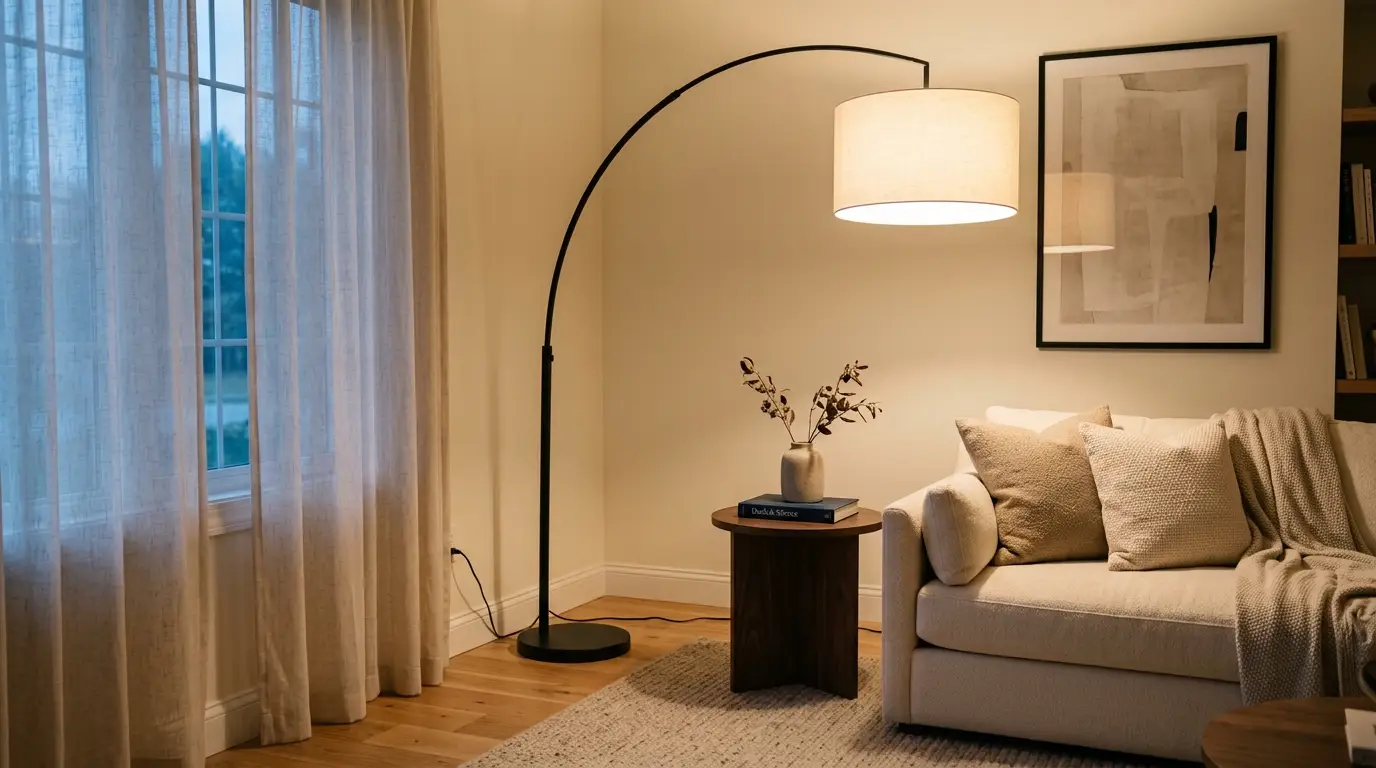
Some corners do not need furniture at all. A beautiful floor lamp can fill the vertical space while providing useful lighting for the entire room.
An oversized arc lamp can make a strong statement, especially when positioned beside a sofa. A tall tripod lamp tends to work well in rooms with a more relaxed or traditional feel.
Think about the color and finish of the lamp as well. Black metal can add contrast to a neutral room, while brass or brushed gold can bring warmth to a more elegant interior.
This approach works particularly well when the corner is close to existing seating. Instead of filling the area with furniture, you are adding something useful that also improves the atmosphere of the room.
5. Build a Small Gallery Wall
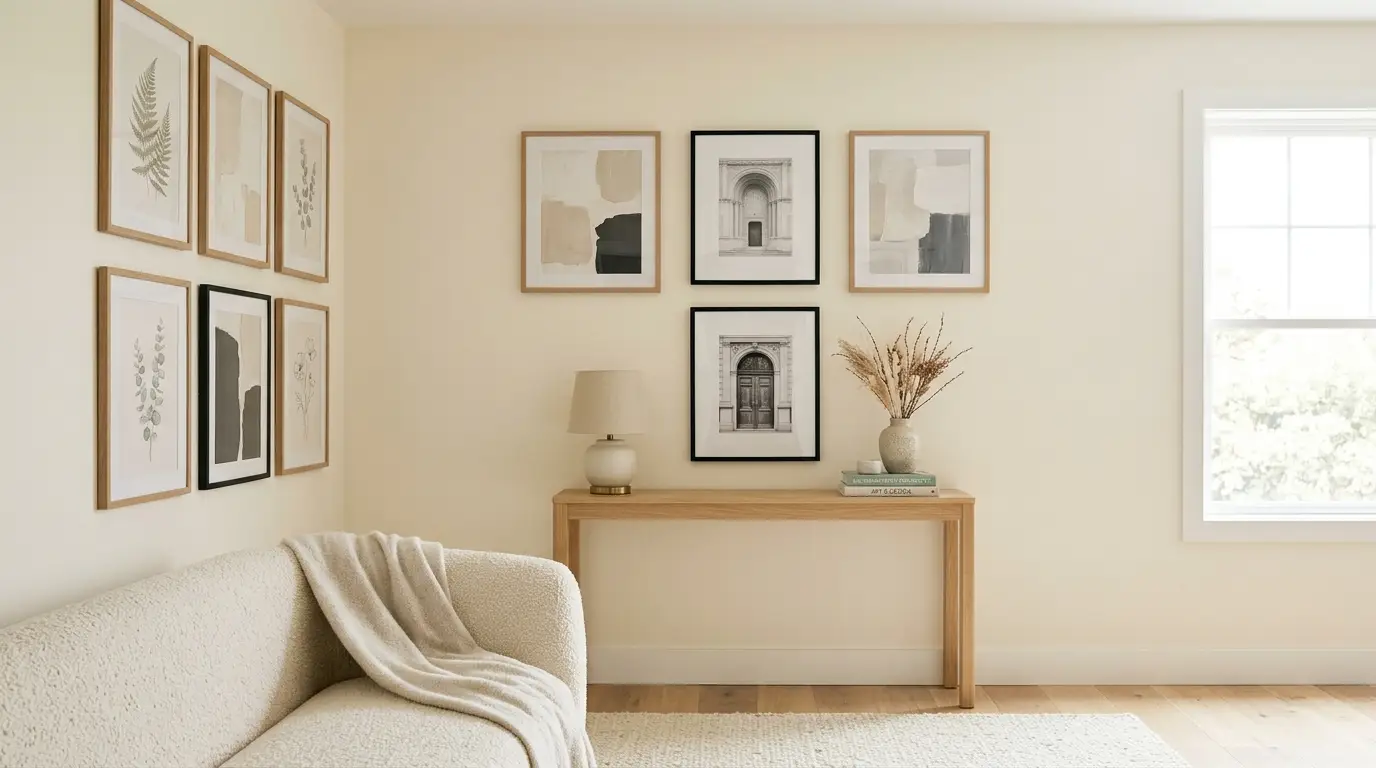
An empty corner can become a focal point with a carefully arranged collection of artwork. Instead of placing one large piece on each wall, use several smaller prints to visually connect the two surfaces.
You can use family photographs, botanical prints, abstract artwork or vintage inspired illustrations. Keeping a common color palette will help the collection look intentional even when the individual pieces are different.
Try laying the frames on the floor first to experiment with the arrangement. This makes it easier to find a balanced composition before putting anything on the wall.
A small console table beneath the gallery wall can make the arrangement feel more complete. Add one lamp, a vase or a small stack of books without filling every available surface.
6. Add a Narrow Console Table
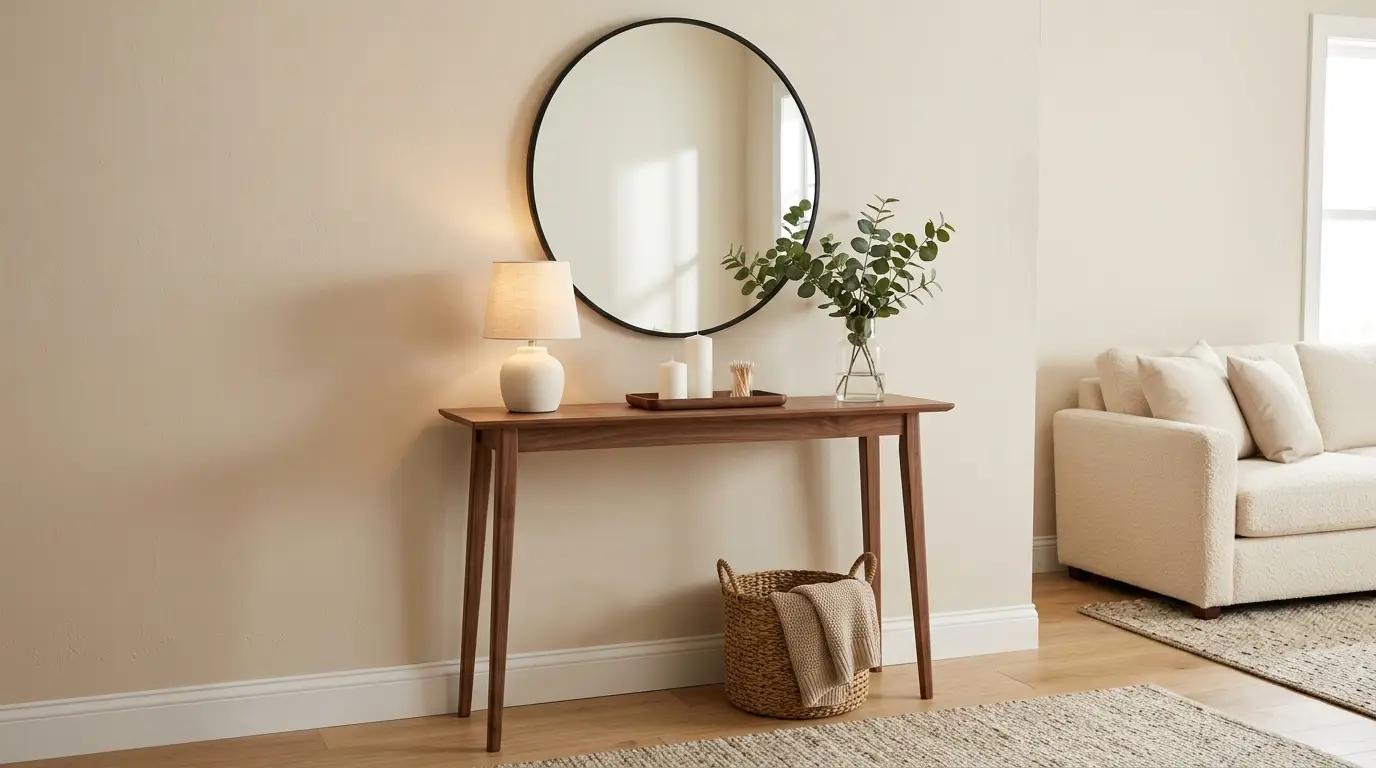
A narrow console table can give an otherwise empty corner a practical purpose. It provides a surface for lamps, artwork, books and small decorative objects without requiring the depth of a traditional cabinet.
Choose a table that leaves enough walking space around it. Slim designs are particularly useful in living rooms where the corner sits near a doorway or main walkway.
A mirror above the table can make the arrangement feel larger and brighter. Alternatively, a large piece of artwork can provide a stronger decorative statement.
Keep the surface relatively restrained. Two or three carefully chosen objects usually look better than covering the entire tabletop.
7. Create a Mini Bar Area
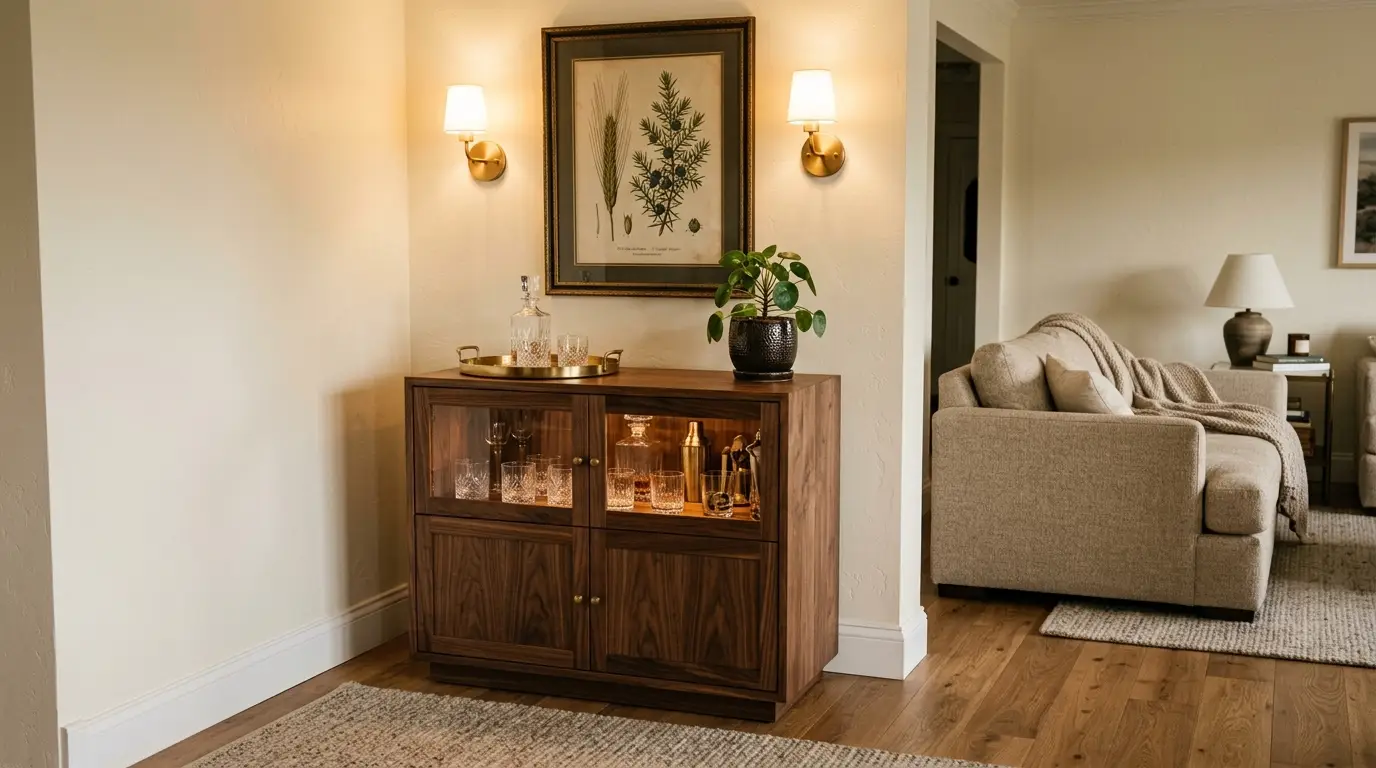
A larger corner can work surprisingly well as a small home bar. A compact bar cabinet or narrow drinks console can turn unused floor space into something useful for entertaining.
Choose furniture that matches the existing living room rather than making the bar look like a separate installation. Wood cabinets, glass doors and simple metal hardware can work with many decorating styles.
A small collection of attractive glasses, a tray and a few bottles can provide enough decoration without overcrowding the space. If you prefer not to display bottles, a closed bar cabinet keeps everything hidden.
A framed piece of artwork or a small wall light above the cabinet can give the corner a finished appearance.
8. Turn It Into a Plant Display
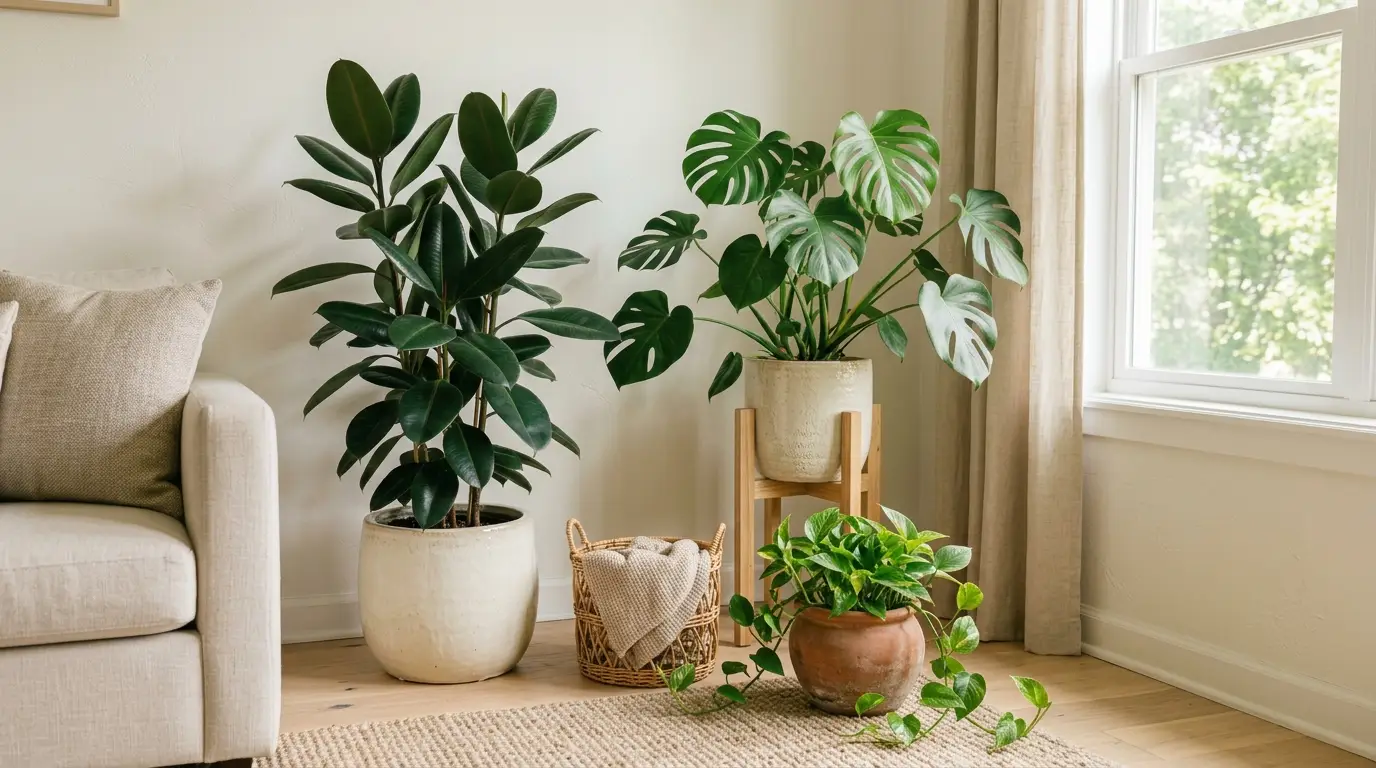
You do not have to limit yourself to one large plant. A collection of plants at different heights can turn a plain corner into a small indoor garden.
Use a combination of a tall plant, a medium plant on a stand and a smaller plant on the floor. This creates height variation and makes the arrangement more interesting.
Choose pots in complementary colors rather than using a completely different style for every plant. Terracotta, cream ceramic and natural woven planters work especially well together.
If the corner receives good sunlight, it can become one of the healthiest areas of the room for your plants. A small plant stand can also make use of vertical space without adding bulky furniture.
9. Add a Large Mirror
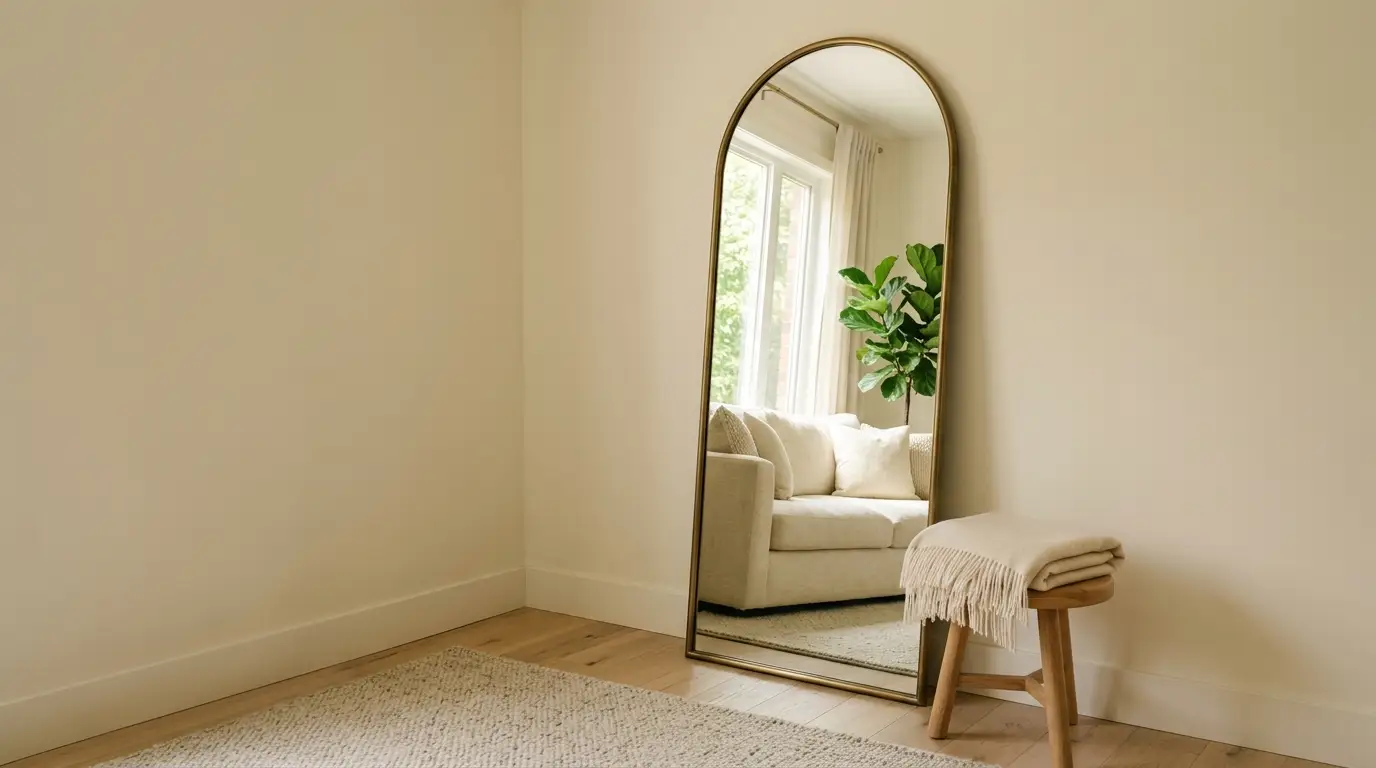
A large mirror can be particularly useful when the corner feels dark or visually heavy. It reflects light and gives the room another layer of depth.
A full height mirror leaning against the wall is an easy option if you do not want to drill into the wall. Choose a frame that complements the furniture already in the room.
Round mirrors work well above small tables, while tall rectangular mirrors can make a corner feel taller. An arched mirror can add a softer architectural shape to rooms with many straight lines.
Position the mirror where it reflects something attractive, such as a window, plant or piece of artwork. A mirror facing a blank wall will not have the same effect.
10. Make a Kids' Reading or Activity Corner
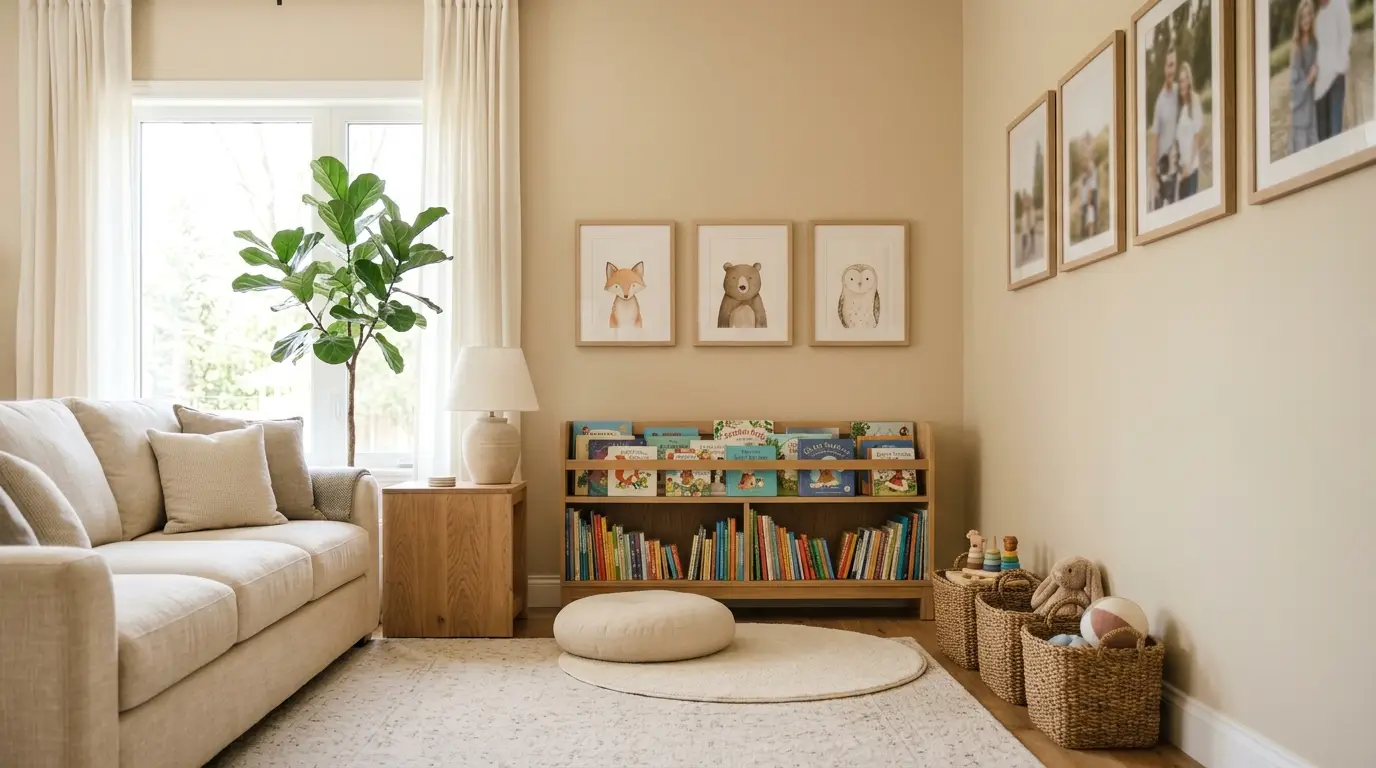
If you have children, an empty living room corner can become a small area where they can read, draw or play quietly.
A low bookshelf is useful because children can reach the books without assistance. Add a small floor cushion or child sized chair and a washable rug to make the area comfortable.
Use baskets for crayons, coloring books and toys so that everything has a place when playtime is over. Keeping the storage open also makes it easier for children to put things away.
Choose colors that work with the rest of your living room. Soft greens, warm beige, muted blue and natural wood can make a children’s corner feel playful without overwhelming the room.
11. Install Floating Shelves
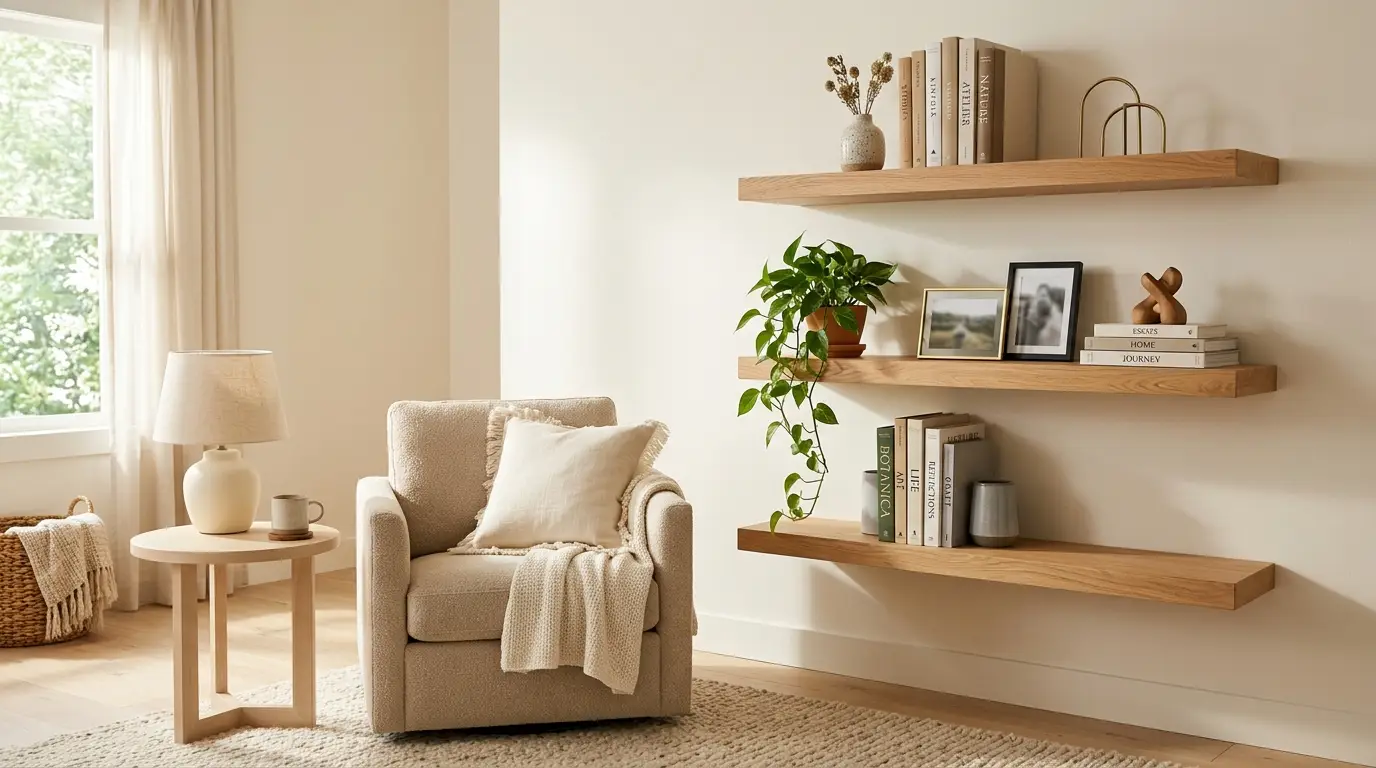
Floating shelves can give an empty corner a purpose without taking up much floor space. They are especially useful when the corner is too narrow for a cabinet or table.
Use two or three shelves arranged vertically. Place books, small plants, framed photographs and a few decorative objects on them.
Avoid filling every inch of the shelves. Leaving some open space makes the arrangement look cleaner and allows the individual pieces to stand out.
If you have a collection of pottery, travel souvenirs or books, this can also become a simple way to display things that otherwise have nowhere to go.
12. Create a Coffee Station
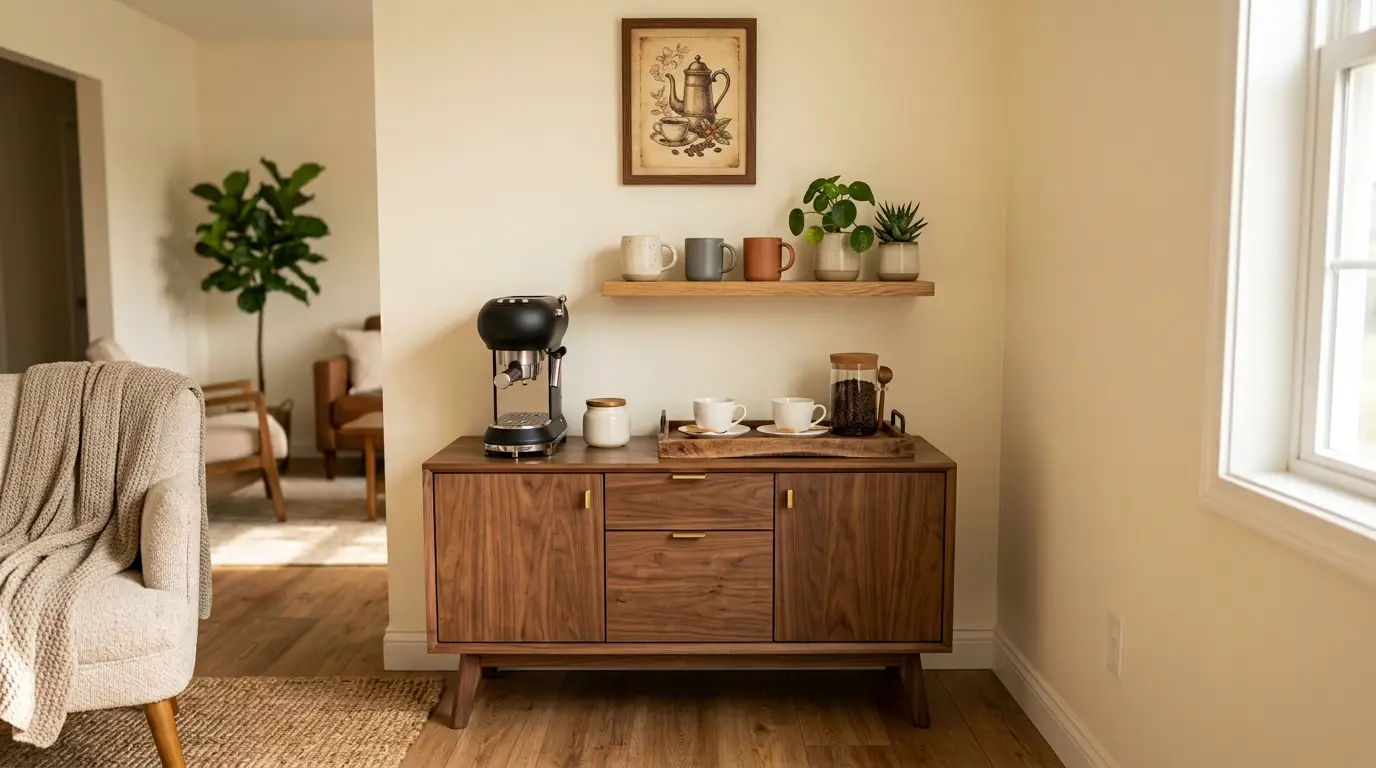
If your living room is close to the kitchen or dining area, a small coffee station can be a practical use for an otherwise forgotten corner.
A narrow cabinet or sideboard can hold a coffee machine, mugs, coffee containers and other supplies. Choose a piece with closed storage if you want the area to look tidy when it is not being used.
A small shelf above the cabinet can hold mugs or a few decorative pieces. A framed coffee print can add personality without requiring much wall space.
Keep the setup simple and make sure there is a convenient power outlet nearby. The goal is to create a useful station without making the living room feel like a second kitchen.
13. Use a Statement Chair
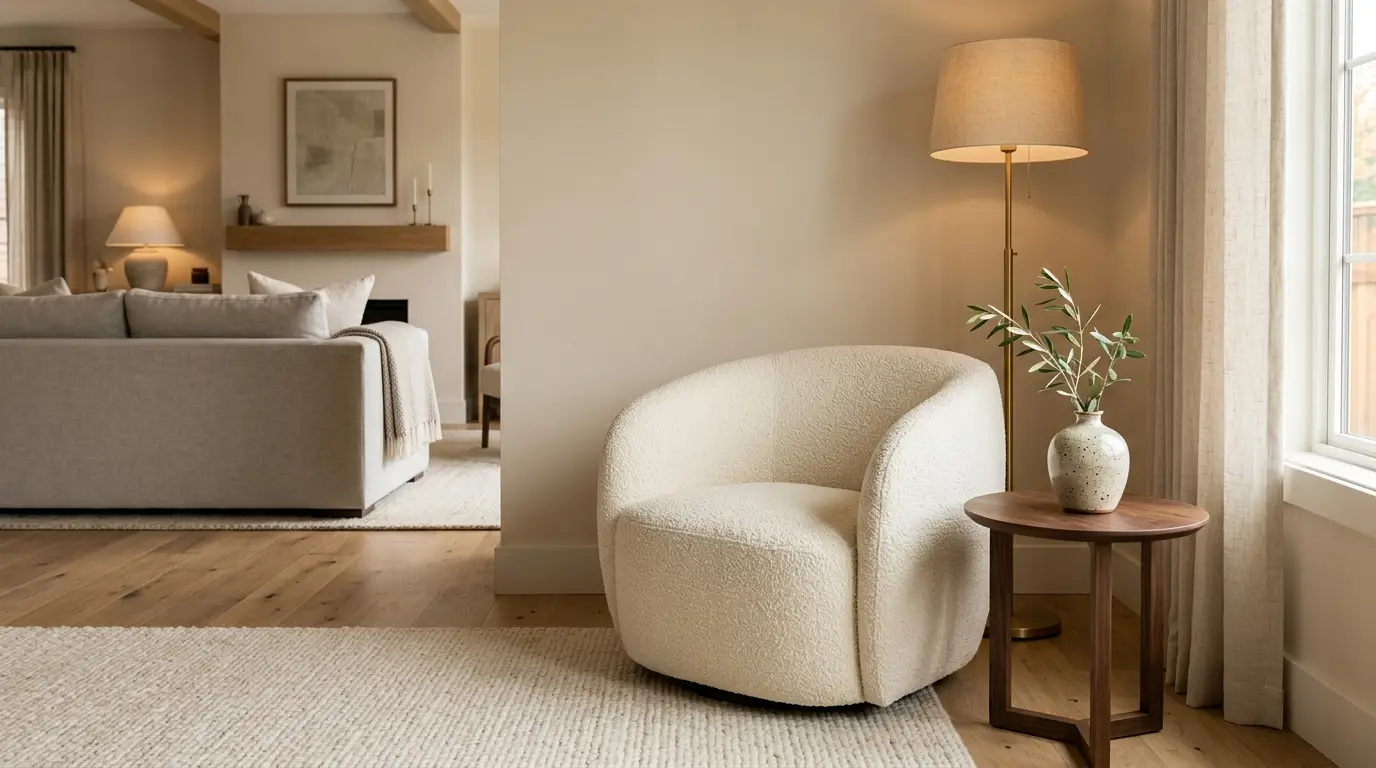
Sometimes the simplest way to fill an empty corner is to add one beautiful chair. Choose something with enough character to stand on its own.
A curved accent chair can soften a room dominated by straight lines. A patterned chair can introduce color, while a textured boucle chair can add warmth without needing a bold pattern.
Pair it with a small side table and a lamp if there is enough room. If the corner is tight, let the chair be the main feature and avoid adding unnecessary pieces.
This approach works especially well when you want the living room to feel finished without adding a large piece of furniture.
14. Create a Small Library Wall
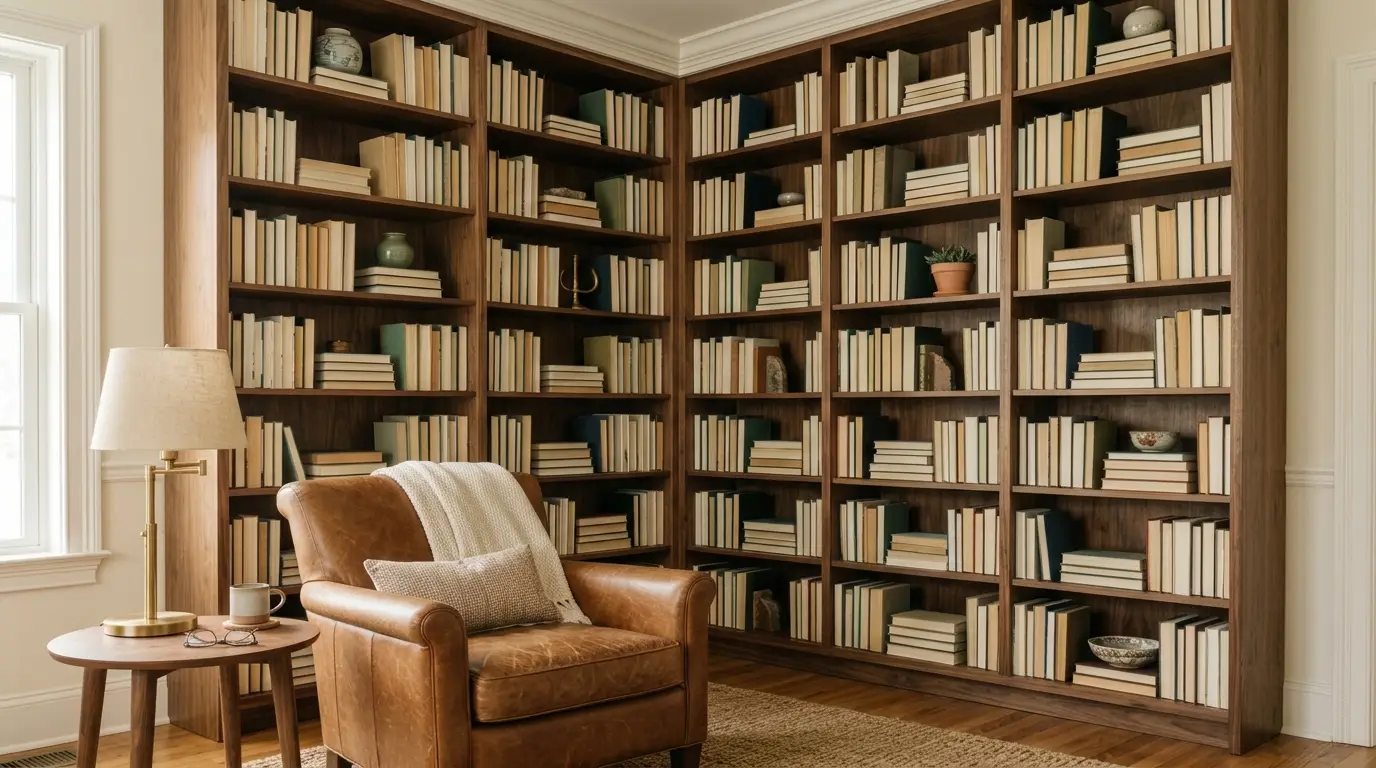
If you love books, an empty corner can become a compact home library. Tall narrow bookcases are particularly useful because they use vertical space rather than spreading across the room.
Arrange books by size or color depending on the look you prefer. A few horizontal stacks can break up rows of vertical books and create space for decorative objects.
You can add a comfortable chair nearby if the corner is large enough. Even without seating, a well arranged bookshelf can give the room warmth and personality.
Natural wood shelving works especially well if your living room already contains warm wood furniture. For a more dramatic look, consider darker shelving against a lighter wall.
15. Add a Decorative Cabinet
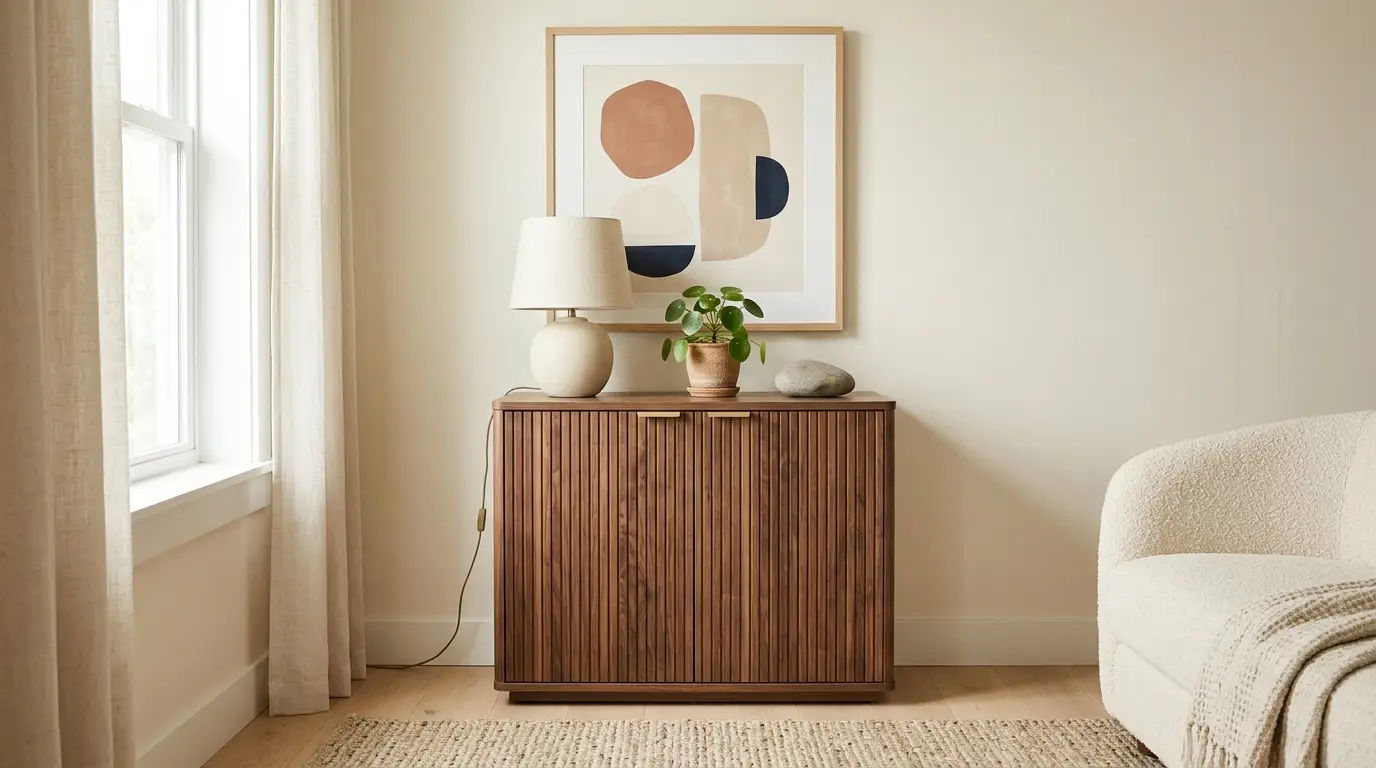
A small cabinet can solve two problems at once by filling the corner and giving you hidden storage. This is especially useful if your living room has items that you want nearby but do not want sitting out in the open.
Choose a cabinet with doors so the contents remain hidden. Use the top surface for a lamp, plant, vase or framed artwork.
A cane front, fluted wood design or painted finish can make the cabinet feel more like furniture than storage. The style should complement the rest of the room.
Before buying one, measure the corner carefully. Make sure the doors can open fully without hitting a sofa, coffee table or nearby wall.
16. Turn It Into a Seasonal Decor Spot
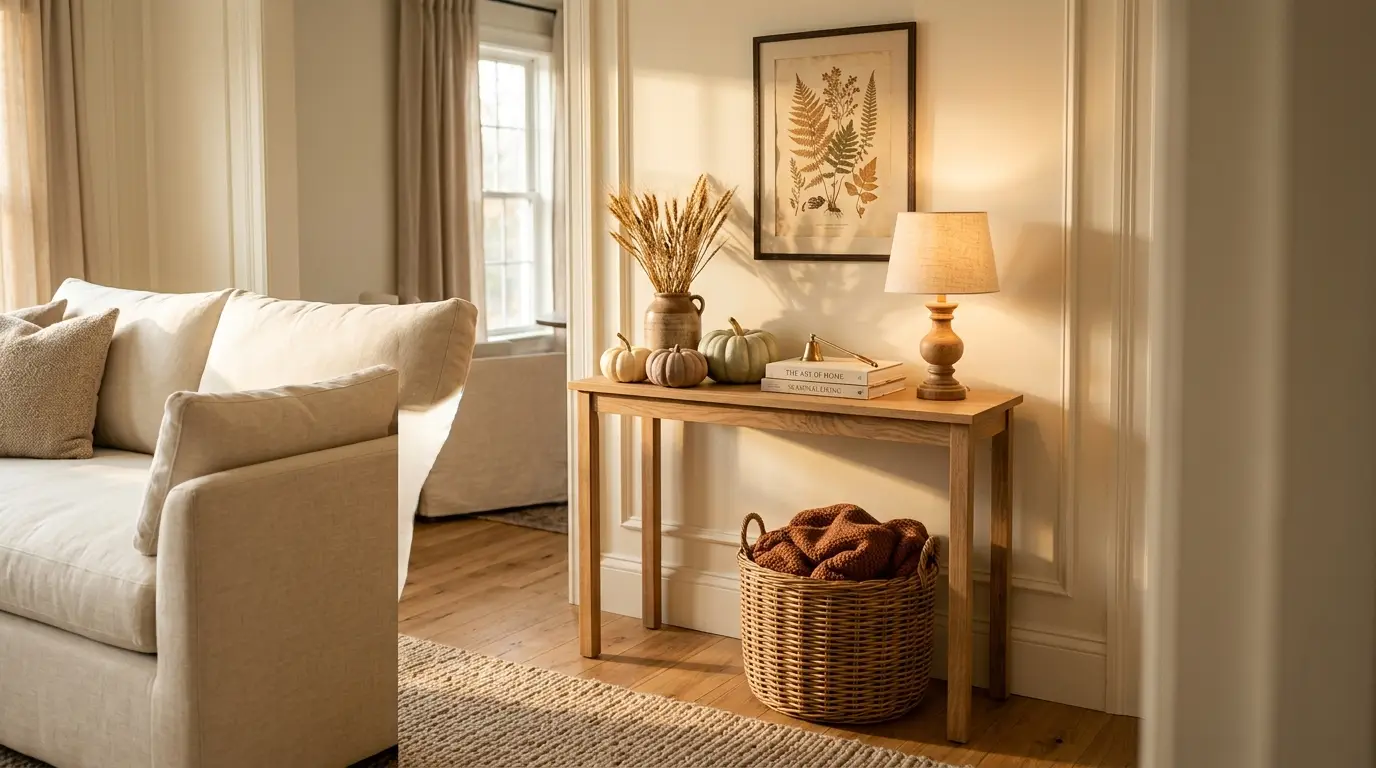
An empty corner gives you a place to change your decor throughout the year. A simple console, ladder shelf or small cabinet can act as the foundation while the decorations change with the season.
In fall, you could add pumpkins, dried leaves and warm colored textiles. During winter, the same corner could hold a small Christmas tree, wrapped gifts or evergreen branches.
Spring can bring flowers, pastel colors and lighter textures, while summer can be kept simple with greenery, woven baskets and bright accents.
Because the furniture stays the same, changing the decorations does not require a complete room makeover. It is an easy way to keep the living room feeling fresh throughout the year.
17. Create a Cozy Floor Seating Area
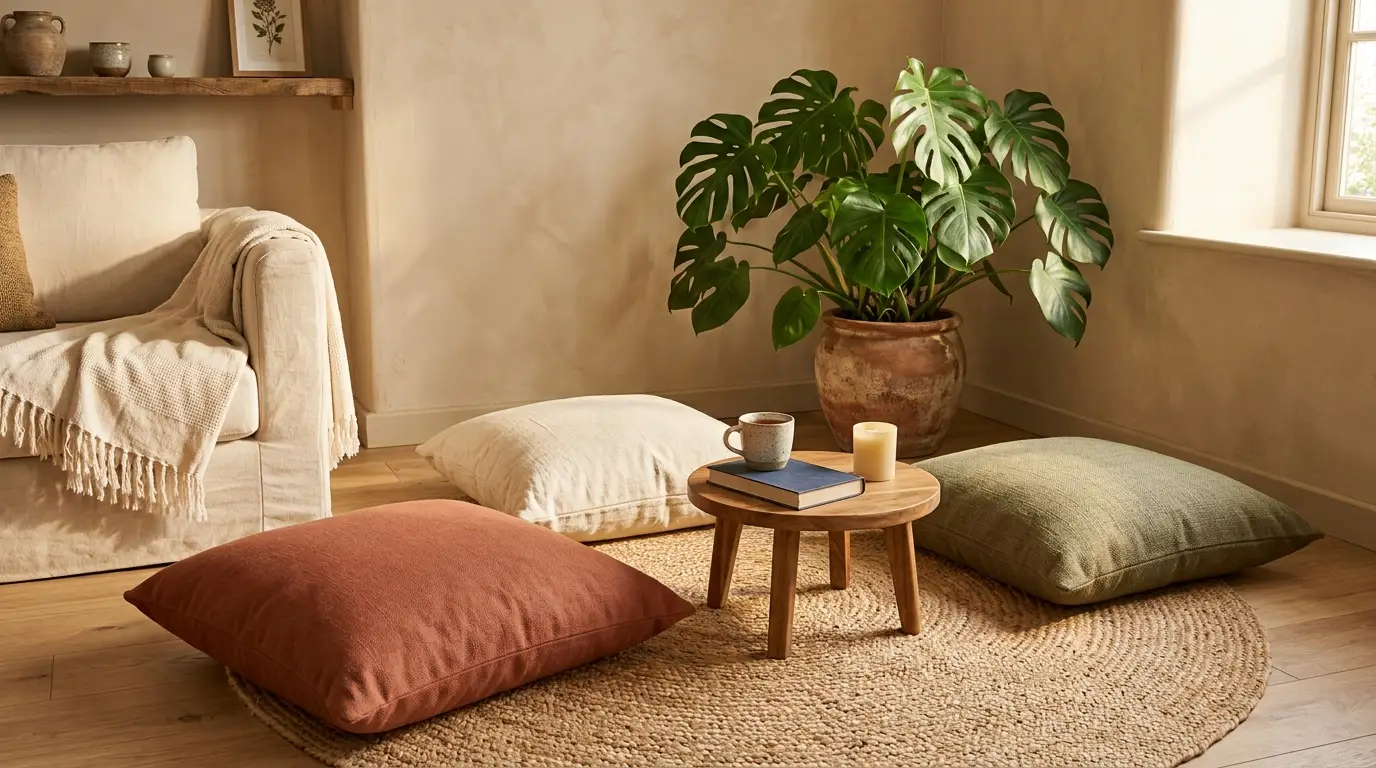
If your living room has a relaxed style, you do not necessarily need traditional furniture to make use of an empty corner. A low floor cushion arrangement can create an informal place to sit, read or have a cup of coffee.
Layer two or three oversized cushions in different textures. Add a small round floor table in the center for drinks, books or a candle.
A soft rug underneath the arrangement helps define the space and makes it feel comfortable. This can work particularly well in homes with bohemian, Mediterranean, earthy or casual interiors.
The best part is that the area can remain flexible. Cushions can be moved when you need extra floor space, so the corner does not become permanently occupied.
Final Thoughts
An empty corner does not necessarily need to be filled with another large piece of furniture. Sometimes the best solution is something as simple as a tall plant or floor lamp. In other rooms, the corner can become a reading area, workspace, storage zone or even a small home library.
Before buying anything, look at how the corner connects with the rest of the living room. Consider the walking paths, available natural light and the furniture you already own. A solution that looks good on its own can still feel awkward if it makes the rest of the room harder to use.
It also helps to think vertically. Shelves, tall plants, artwork and floor lamps can make use of wall height without taking up much floor space. This is especially valuable when the living room is small.
Most importantly, choose something that gives the corner a purpose. Once an unused area becomes useful, it stops looking like an awkward leftover space and starts feeling like an intentional part of your home.