
25 Backpack Drop Zone Ideas to Keep Your Entryway Organized
Backpacks have a way of making an entryway look messy within minutes. One gets dropped beside the door, another ends up on a chair, and before long, shoes, jackets, lunch bags and school supplies are scattered across the same small area.
A dedicated backpack drop zone gives everything a place to land when you walk through the door. It does not need to be complicated or expensive. A few hooks, a narrow bench, some baskets or a small piece of wall mounted storage can completely change how the entryway functions.
The best setup depends on how much space you have and how many people need to use it. A family with several children may need individual storage spaces, while a smaller household can get away with a simple row of hooks and one basket.
Here are 25 practical backpack drop zone ideas that can help keep your entryway looking tidy while making everyday routines easier.
1. Install a Simple Row of Hooks
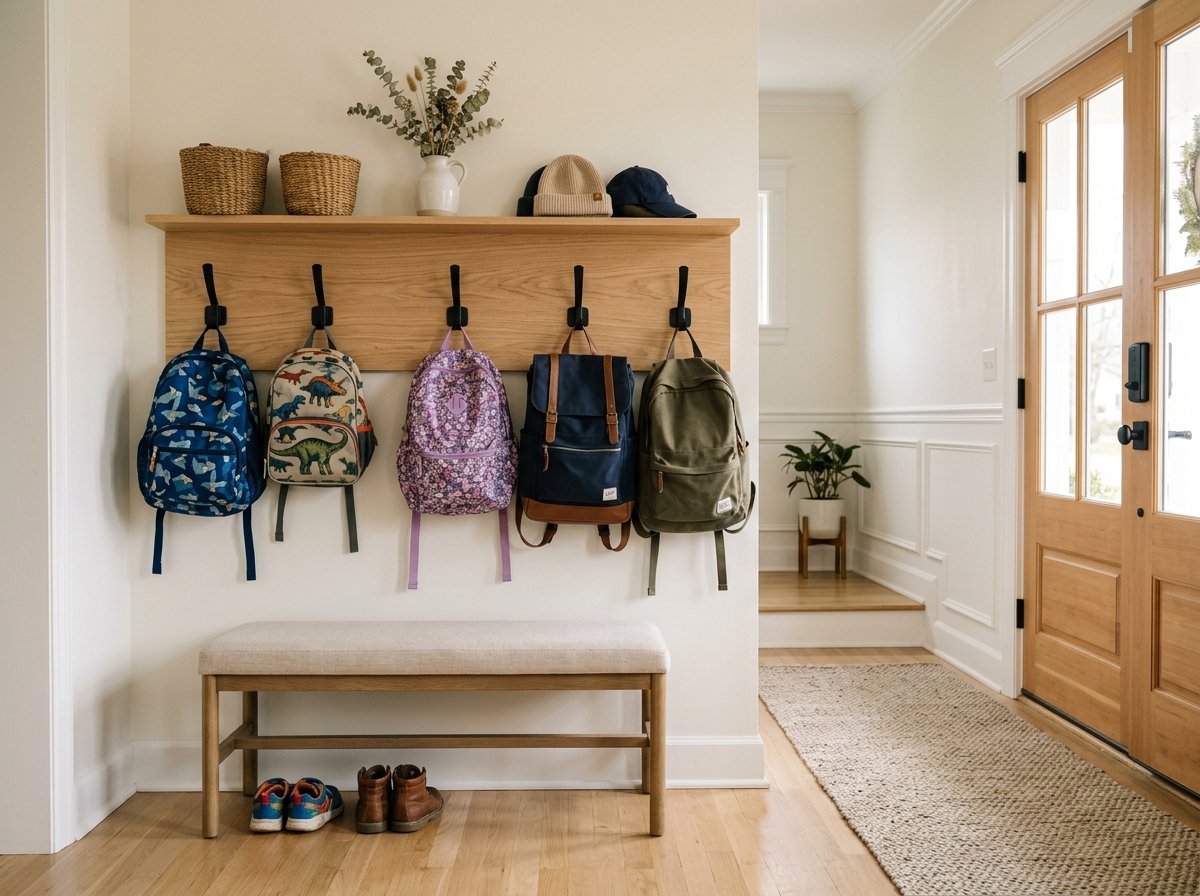
A row of sturdy wall hooks is one of the easiest ways to create a backpack drop zone. Mount several hooks at a comfortable height so everyone has a designated place to hang their bag.
Choose hooks that can support the weight of a fully packed backpack. Metal, wood and heavy duty decorative hooks can all work well depending on the style of your entryway.
If several people use the space, give each person their own hook. You can place names or small labels above them if you want the storage areas to be immediately recognizable.
Add a narrow shelf above the hooks for hats, small baskets or seasonal accessories. This gives you a little extra storage without taking up more floor space.
2. Create Individual Cubbies for Each Person
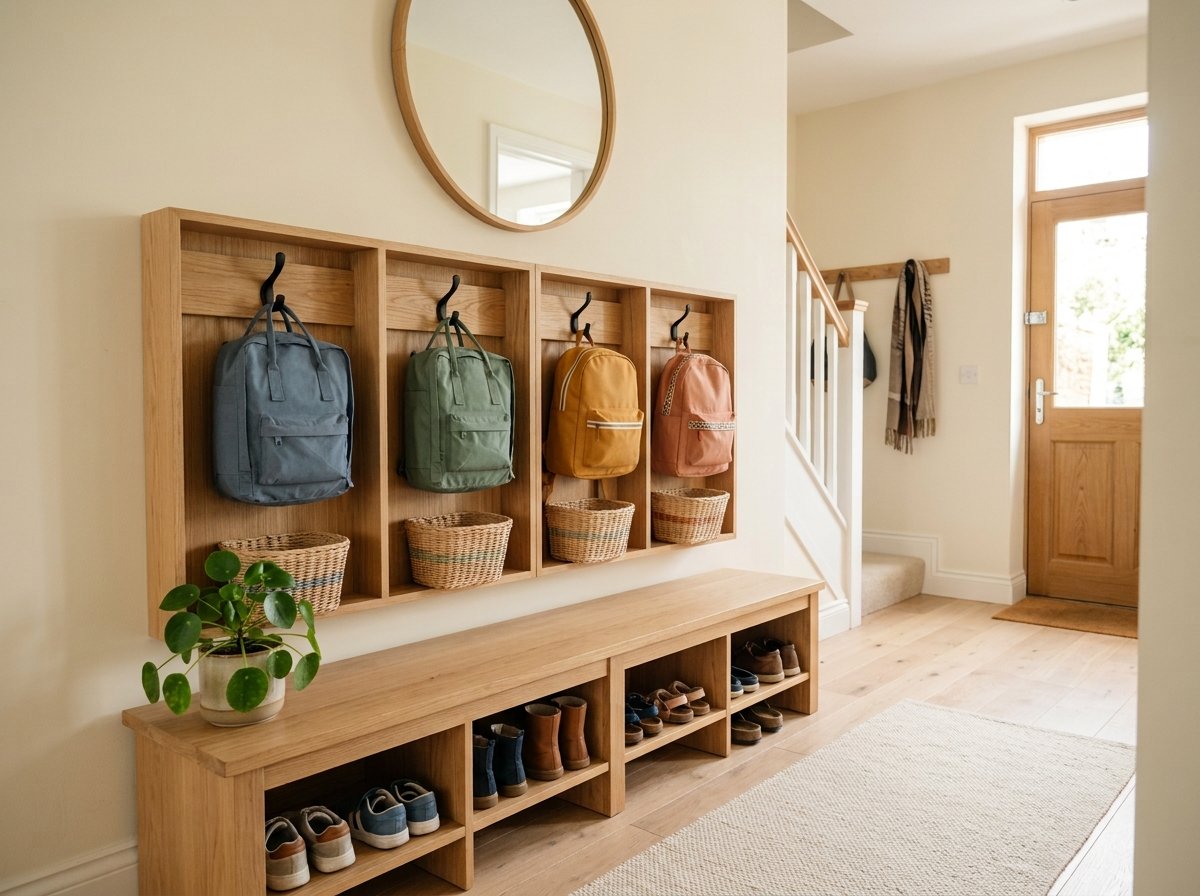
Cubbies work especially well for families because each person can have a clearly defined space. A cubby can hold a backpack, shoes, sports equipment and other everyday items.
Place hooks inside or directly above each cubby so bags can be hung instead of thrown onto the floor. The lower section can be reserved for shoes or baskets.
If you have several children, assign each one a cubby and keep the arrangement consistent. This makes it easier for everyone to know where their belongings belong.
Use matching baskets inside the cubbies for smaller items such as gloves, scarves and school supplies.
3. Add a Bench With Storage Underneath
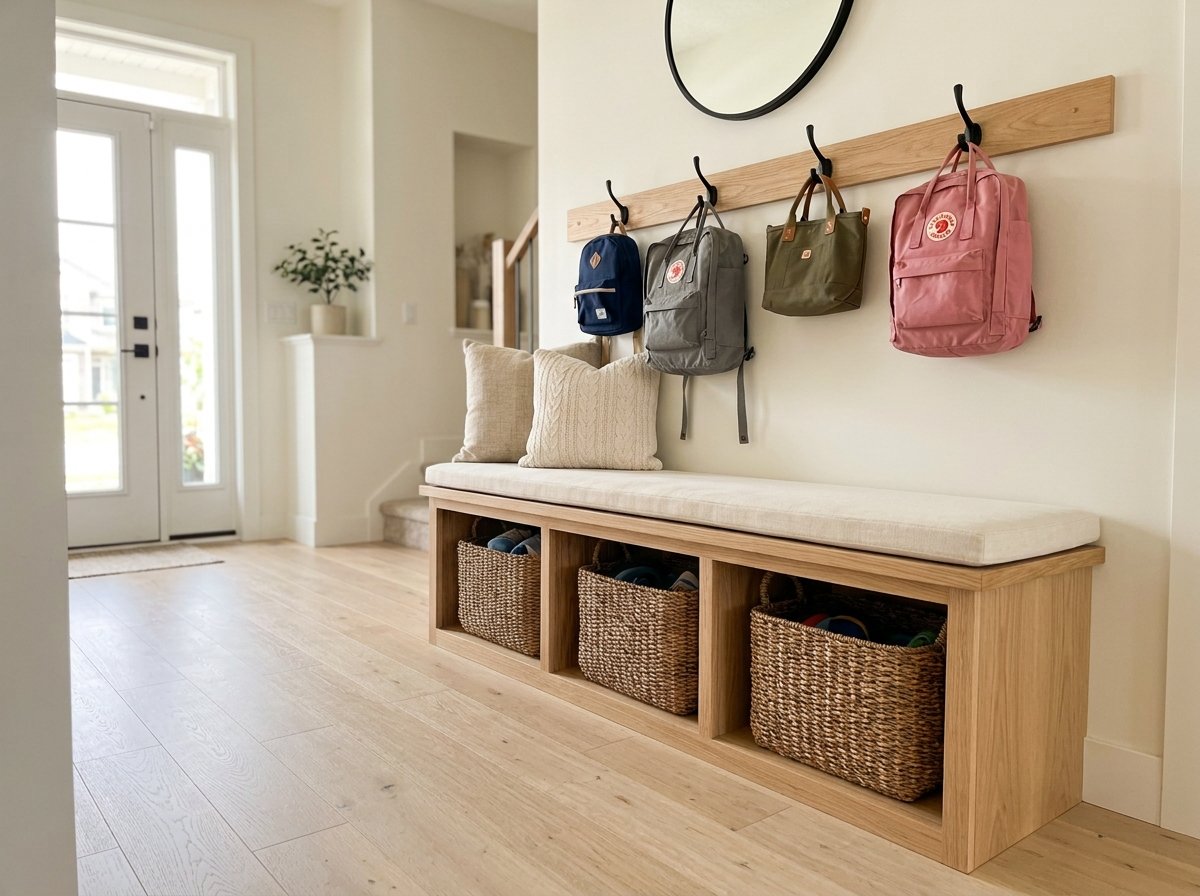
A storage bench can serve two purposes at once. It gives you a comfortable place to sit while putting on shoes and provides a convenient spot for backpacks and other belongings.
Choose a bench with open compartments underneath if you want quick access to bags. Closed drawers or cabinets work better if you prefer a cleaner appearance.
Place hooks or a wall mounted rack directly above the bench. This creates a complete drop zone without requiring much floor space.
Add a few labeled or matching baskets underneath for smaller items. The baskets can also hide clutter when you have guests.
4. Use a Pegboard Wall
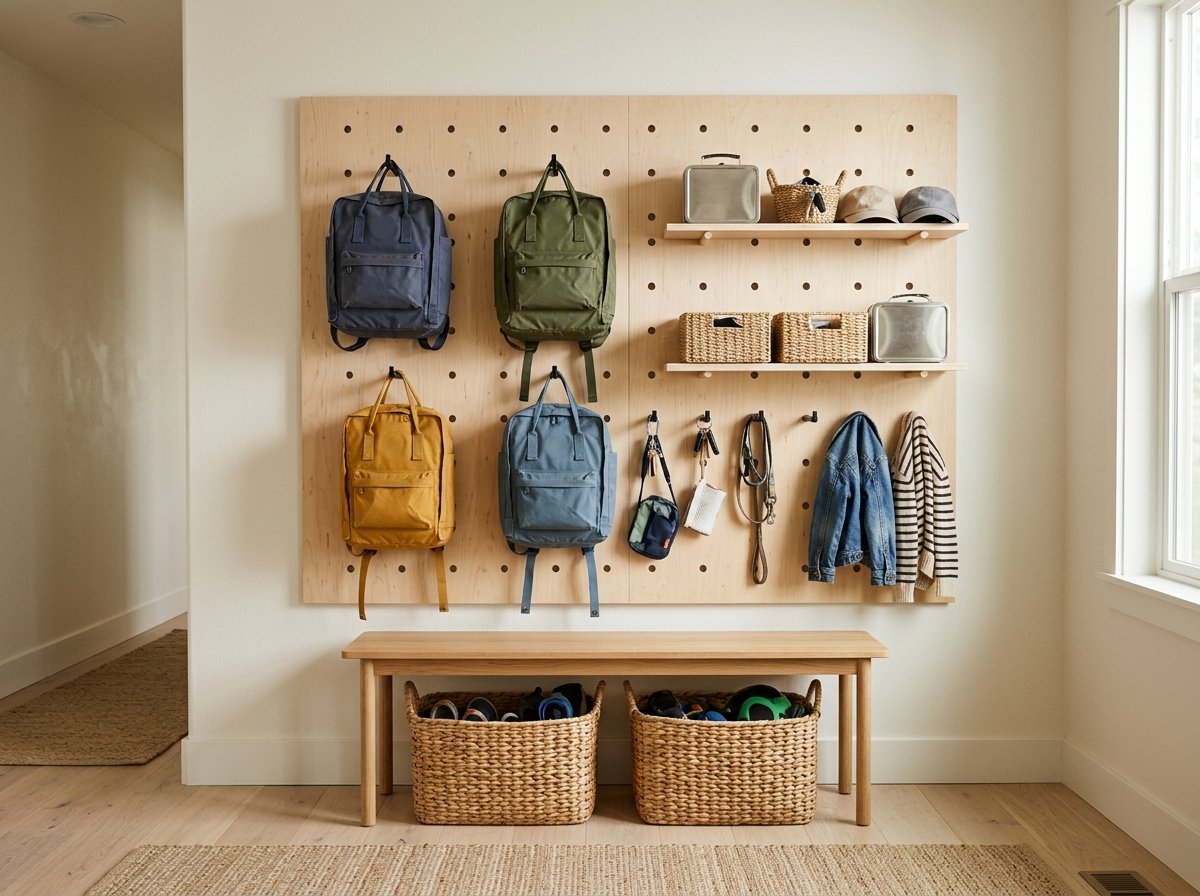
A large pegboard can turn an otherwise unused wall into a flexible storage system. Hooks and shelves can be moved around as your storage needs change.
Use larger hooks for backpacks and smaller hooks for keys, hats and lightweight accessories. A few narrow shelves can hold lunch boxes and small containers.
Paint the pegboard a color that complements your entryway. Soft white, beige, sage green or natural wood can blend easily with most interiors.
The flexibility is especially useful for growing children because hooks can be repositioned as their needs change.
5. Build a Wall Mounted Backpack Station
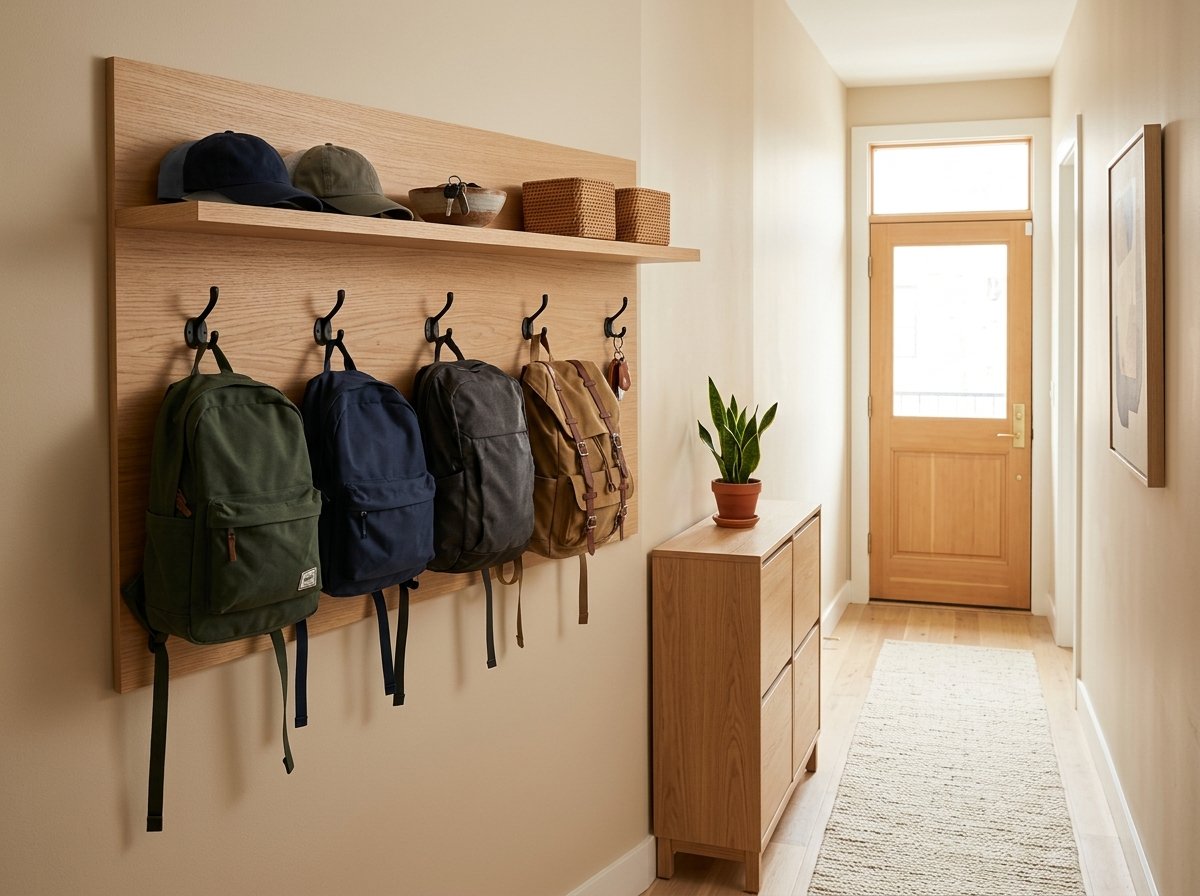
A dedicated wall mounted station can keep backpacks completely off the floor. This is particularly useful in narrow entryways where there is little room for furniture.
Install a long wooden panel with hooks and a shallow shelf. The shelf can hold small baskets, sunglasses, hats or other things that are usually left near the door.
Use several hooks at the same height for adults, or place lower hooks within easy reach of children.
If you have a small entryway, keep the station shallow so people can still walk comfortably through the space.
6. Turn the Space Under the Stairs Into a Drop Zone
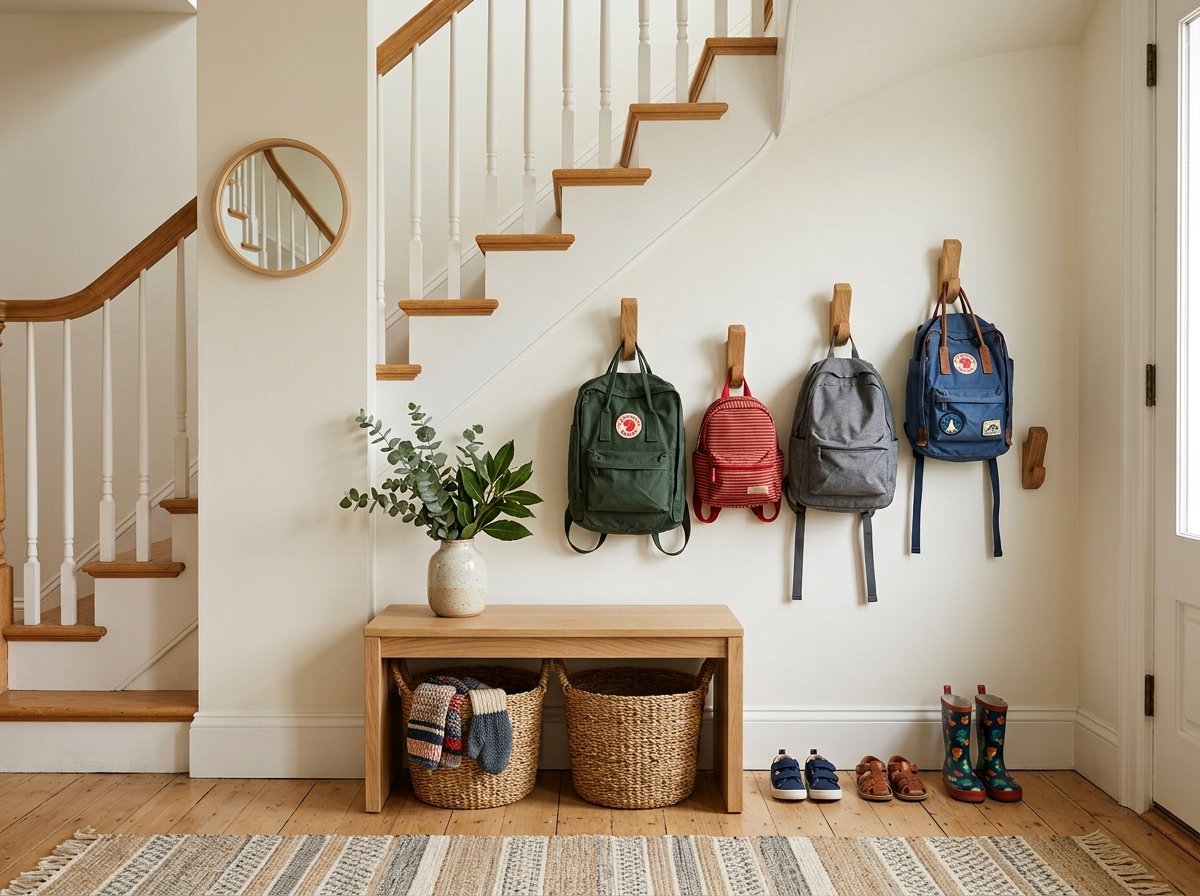
The area underneath a staircase often becomes wasted space, but it can be an excellent place for backpacks.
Install hooks along the wall beneath the stairs and add a small bench or low cabinet if there is enough room. The angled ceiling can actually make the area feel like a natural storage nook.
Use the lowest part of the space for shoes and baskets. Keep taller items closer to the highest part of the wall.
A simple setup can turn an awkward architectural area into one of the most useful storage spots in the house.
7. Use a Narrow Hallway Cabinet
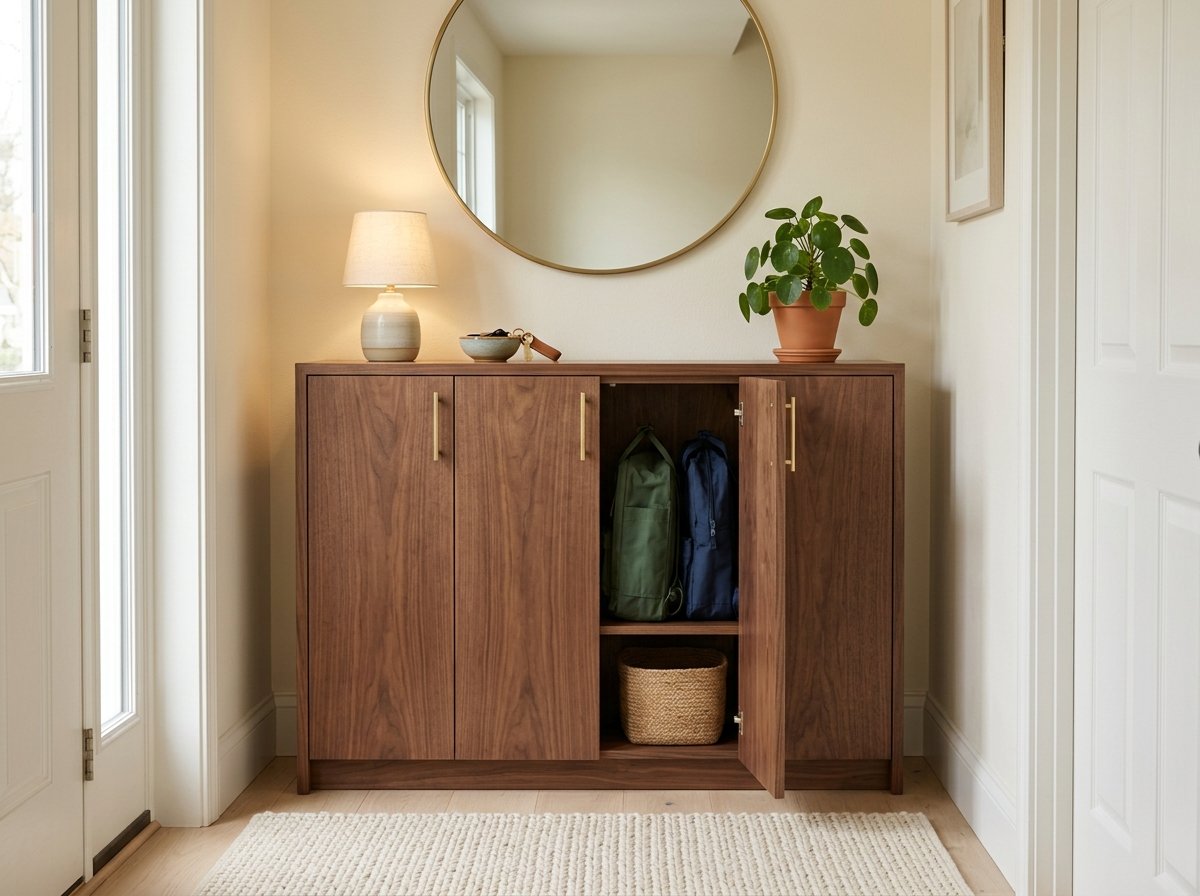
A shallow hallway cabinet can hide backpacks and other everyday clutter while keeping the entryway visually clean.
Choose a cabinet with enough depth for backpacks to sit comfortably inside. Adjustable shelves can help accommodate different bag sizes.
If the cabinet has doors, consider assigning each section to a different person. This makes it easier to keep track of belongings.
Use the top of the cabinet for a small lamp, decorative bowl or plant so the storage piece feels like part of the decor.
8. Add a Backpack Hook to Every Bedroom Door
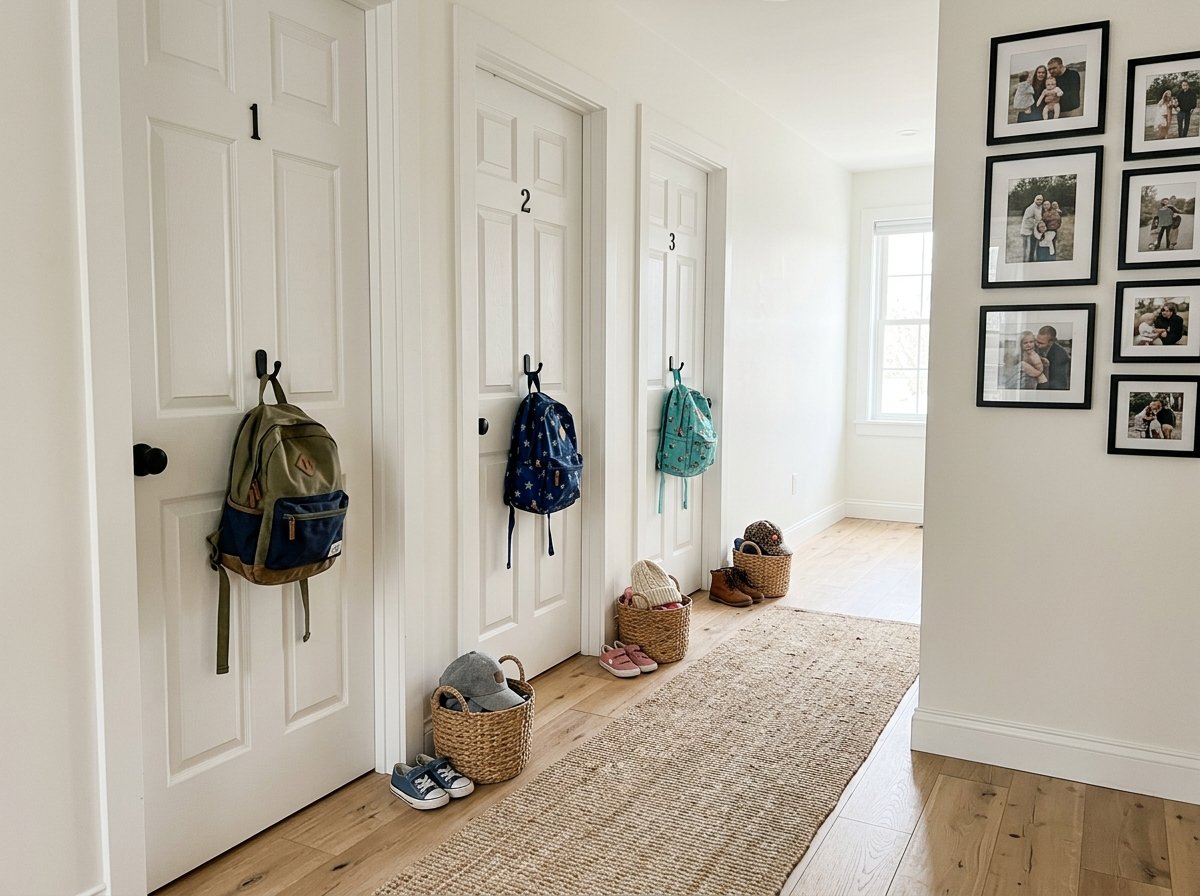
If your entryway is too small for a dedicated drop zone, move the backpacks to the bedroom doors. A single hook on the back of each door gives every person a convenient storage spot.
Choose sturdy over door hooks or install simple wall mounted hooks directly onto the door. Make sure the hardware can support the weight of a filled backpack.
This can be especially useful for children because they can grab their bag on the way out without searching through the house.
A small basket beside the door can hold shoes, hats or other items that need to leave the house with them.
9. Create a Locker Style Drop Zone
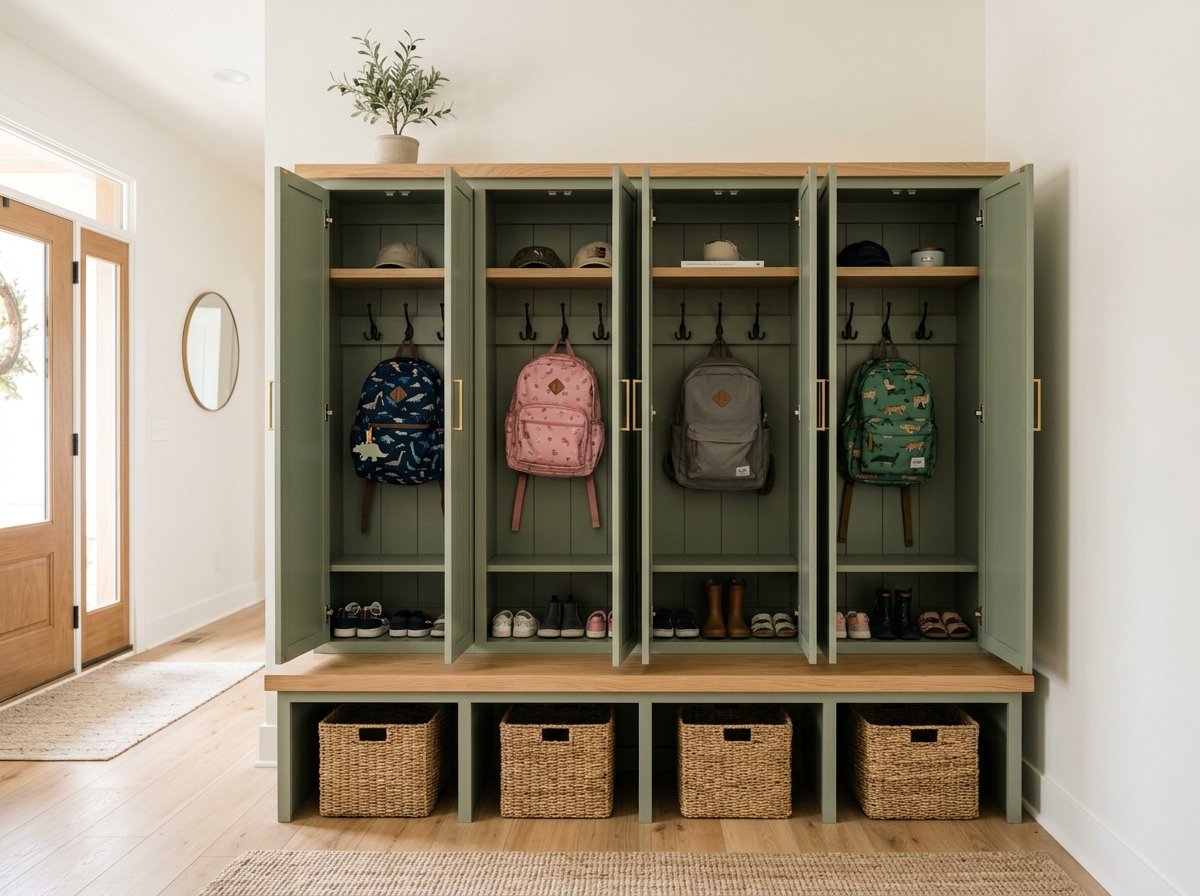
A locker style storage unit can give every family member their own compact area. It is particularly useful for households with several children.
Each section can include hooks, a shelf and a lower compartment for shoes. This makes it easier to separate backpacks from smaller belongings.
Metal locker doors can create a more industrial look, while painted wood can feel warmer and more traditional.
Add a bench underneath if space allows. This creates a complete entryway station that can handle much more than backpacks.
10. Add Hooks Above a Shoe Cabinet
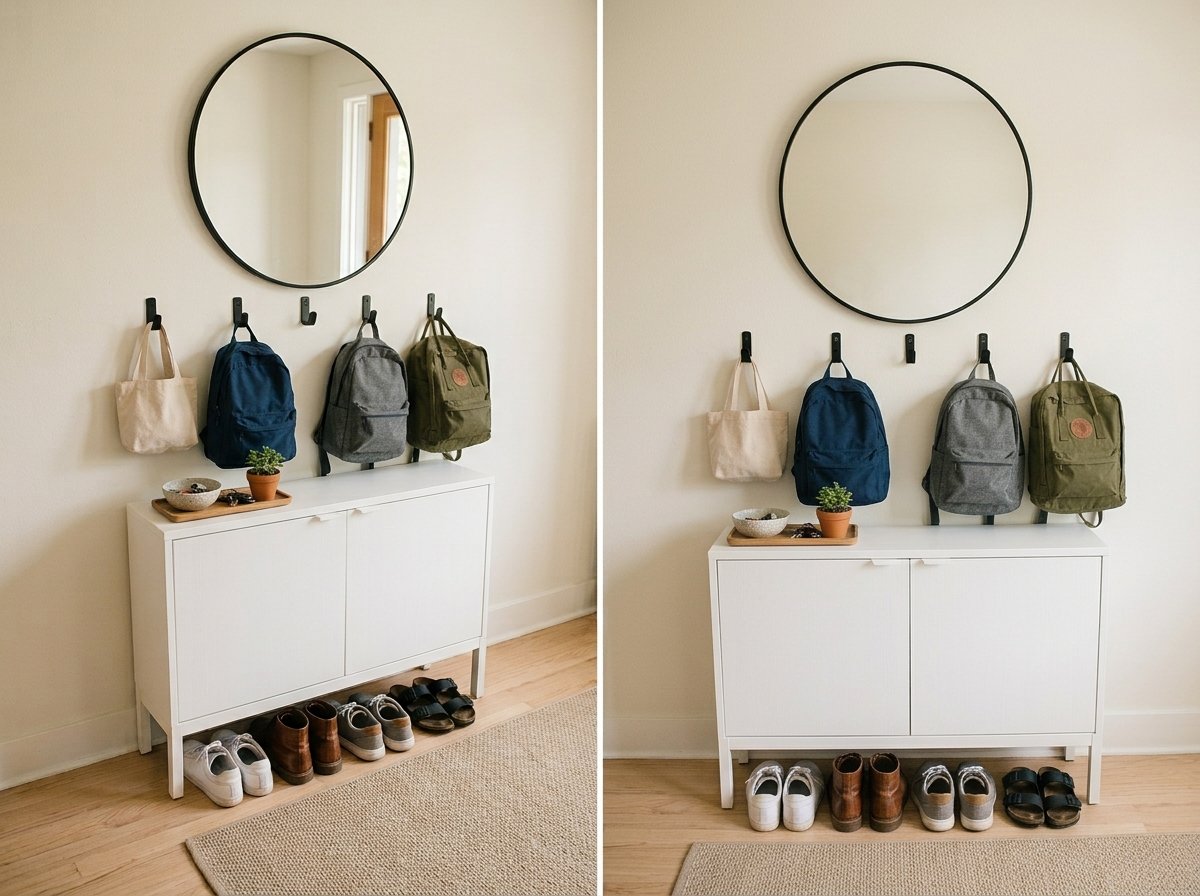
A shoe cabinet already has a natural relationship with a backpack drop zone. Adding hooks directly above it allows you to store bags, shoes and accessories in one location.
Choose a slim shoe cabinet so it does not obstruct the entryway. The top can hold a small tray for keys and other essentials.
Mount the hooks high enough that the backpacks do not interfere with the cabinet doors.
A mirror above the hooks can complete the arrangement and make the entryway feel larger.
11. Use a Bench With Hidden Backpack Storage
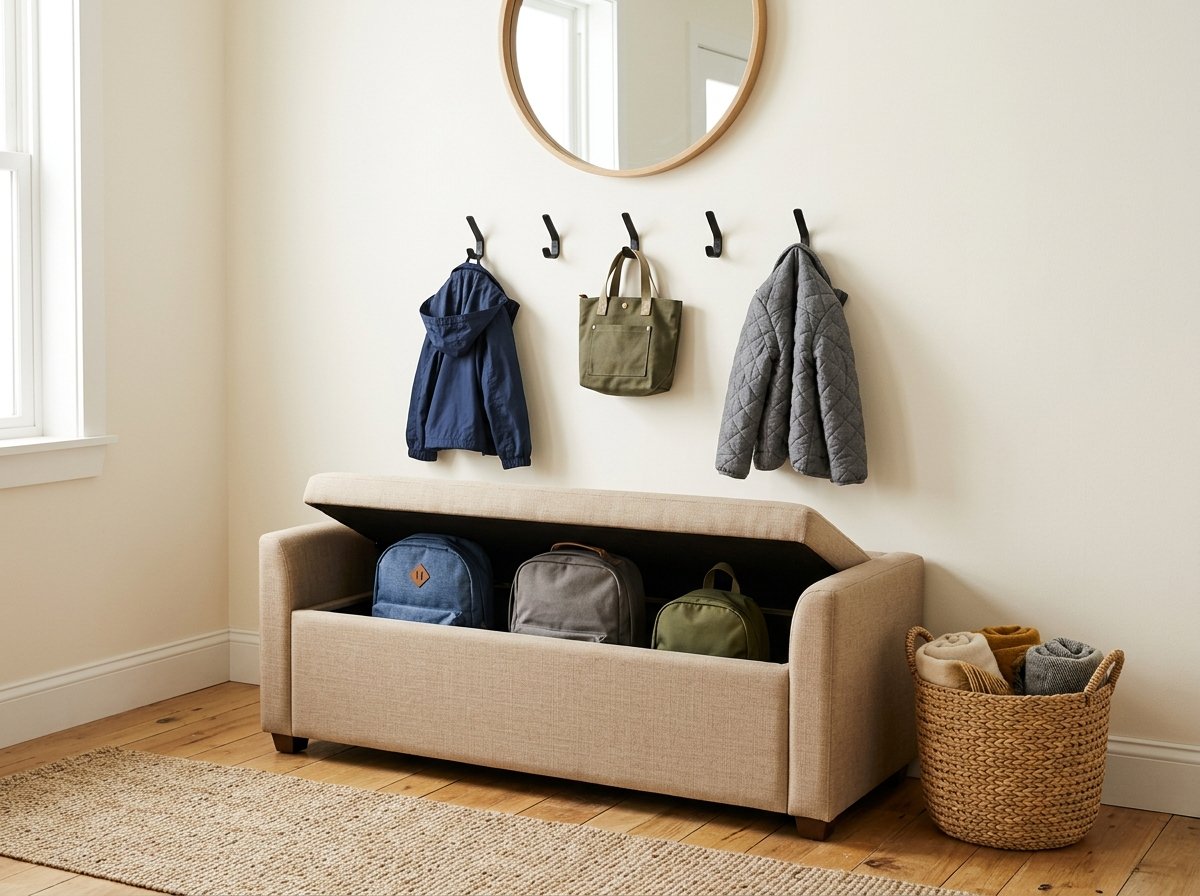
Hidden storage is ideal if you prefer a clean entryway. A bench with a lift up seat or large internal compartment can keep several backpacks out of sight.
This approach is particularly useful when bags are not needed throughout the day. Everyone can place their backpack inside after arriving home.
Add a few wall hooks above the bench for jackets and hats. Keeping the bags hidden makes the entire area feel less cluttered.
Choose a bench with a durable surface that can handle everyday use.
12. Create a Backpack and Sports Gear Station
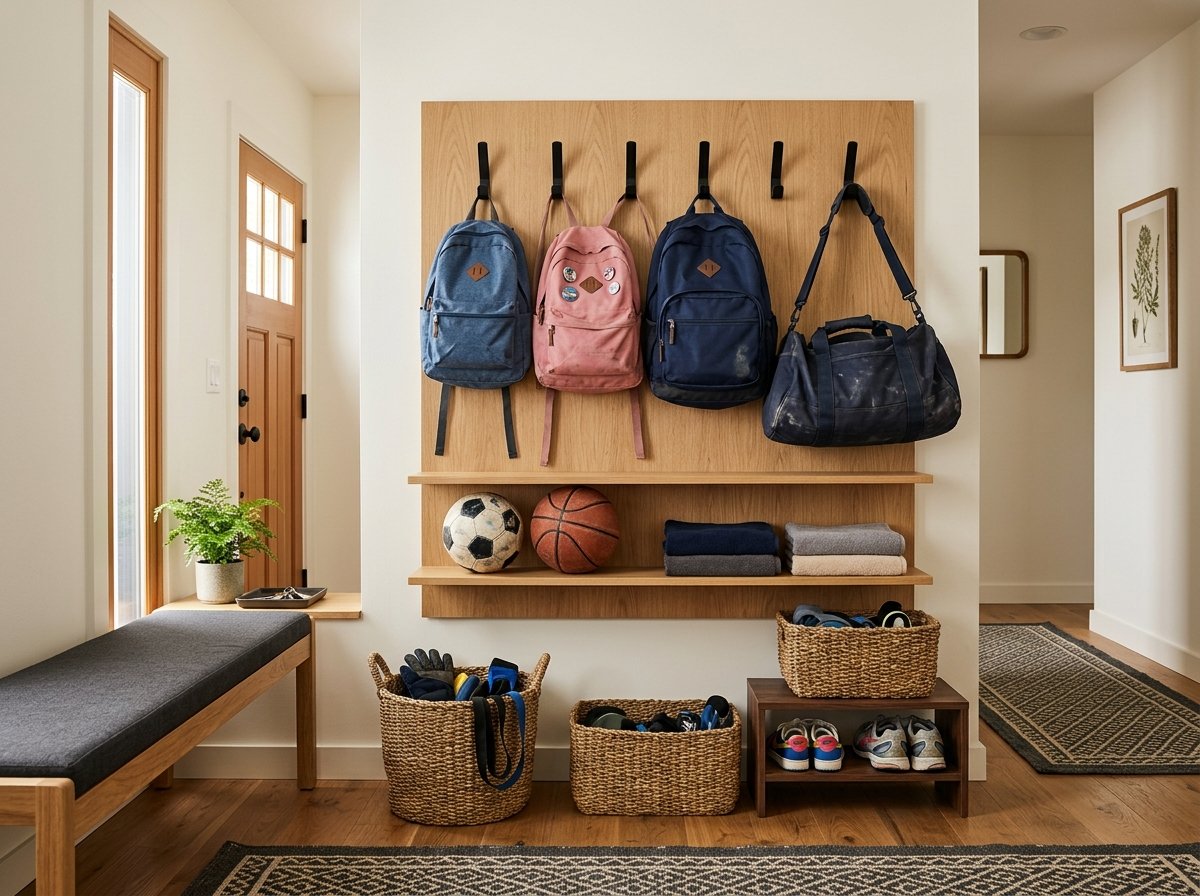
For children involved in sports, the backpack drop zone can do more than store school bags. Add storage for soccer balls, helmets, sports shoes and other equipment.
Use large hooks for backpacks and shelves or baskets for equipment. A lower cubby can hold shoes and sports bags.
Keeping all of these things together prevents sports equipment from spreading through the rest of the house.
Choose durable materials that can handle regular use and the occasional muddy shoe.
13. Install a Wall Mounted Shelf With Hooks
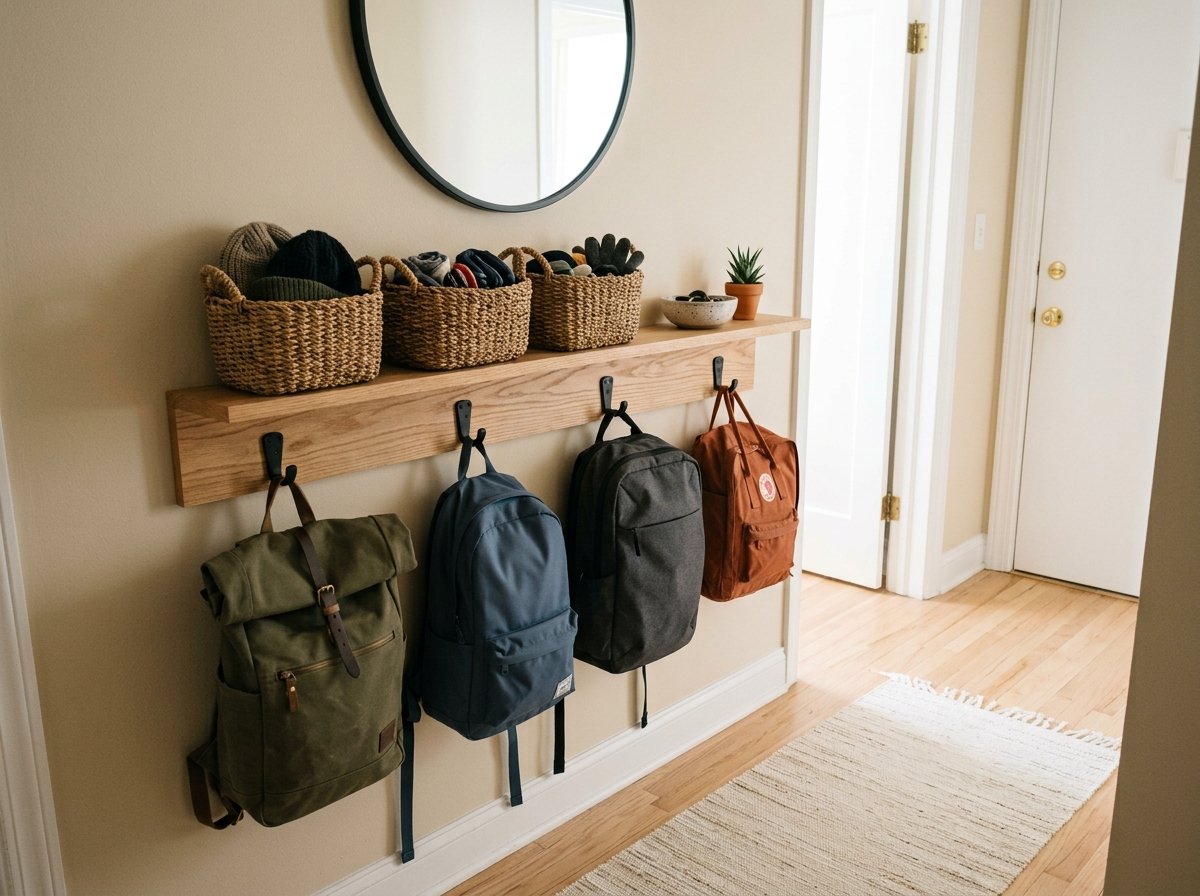
A shelf with integrated hooks gives you two types of storage in one compact piece. The hooks hold backpacks while the shelf provides space for smaller items.
This is a good option for apartments and narrow entryways because the entire unit can stay relatively shallow.
Place baskets on the shelf for gloves, hats and other accessories. Keep the baskets consistent so the arrangement looks tidy.
You can also add a small mirror or artwork above the unit if the wall has enough space.
14. Turn an Entryway Nook Into a Drop Zone
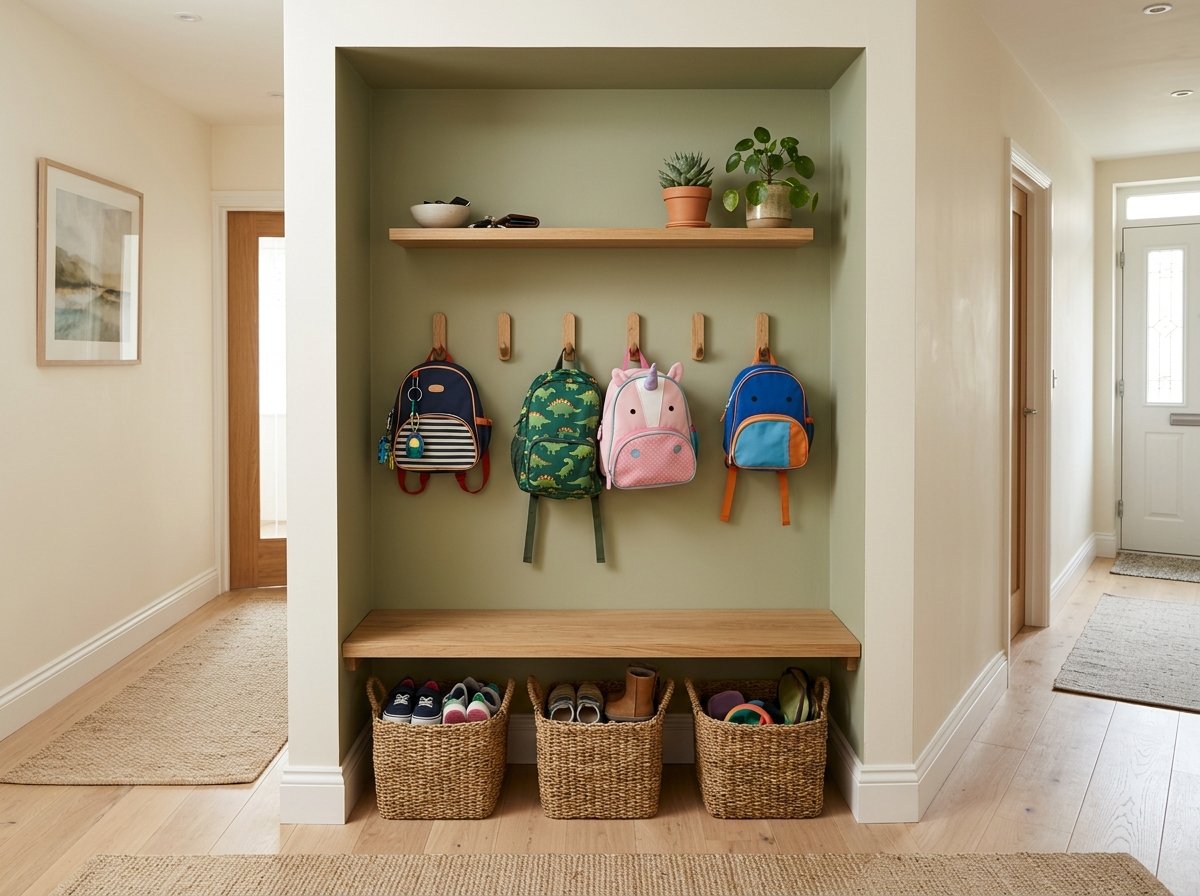
If your entryway has a recessed nook, use the existing architecture to create a dedicated backpack station.
Install hooks along the back wall and add a narrow bench underneath. Because the storage sits inside the recess, it does not protrude as much into the main walkway.
Use the bench for shoes and baskets. The upper wall can hold hooks, shelves or artwork.
Paint the nook a slightly different shade from the rest of the entryway if you want it to feel like a defined feature.
15. Use a Rolling Storage Cart
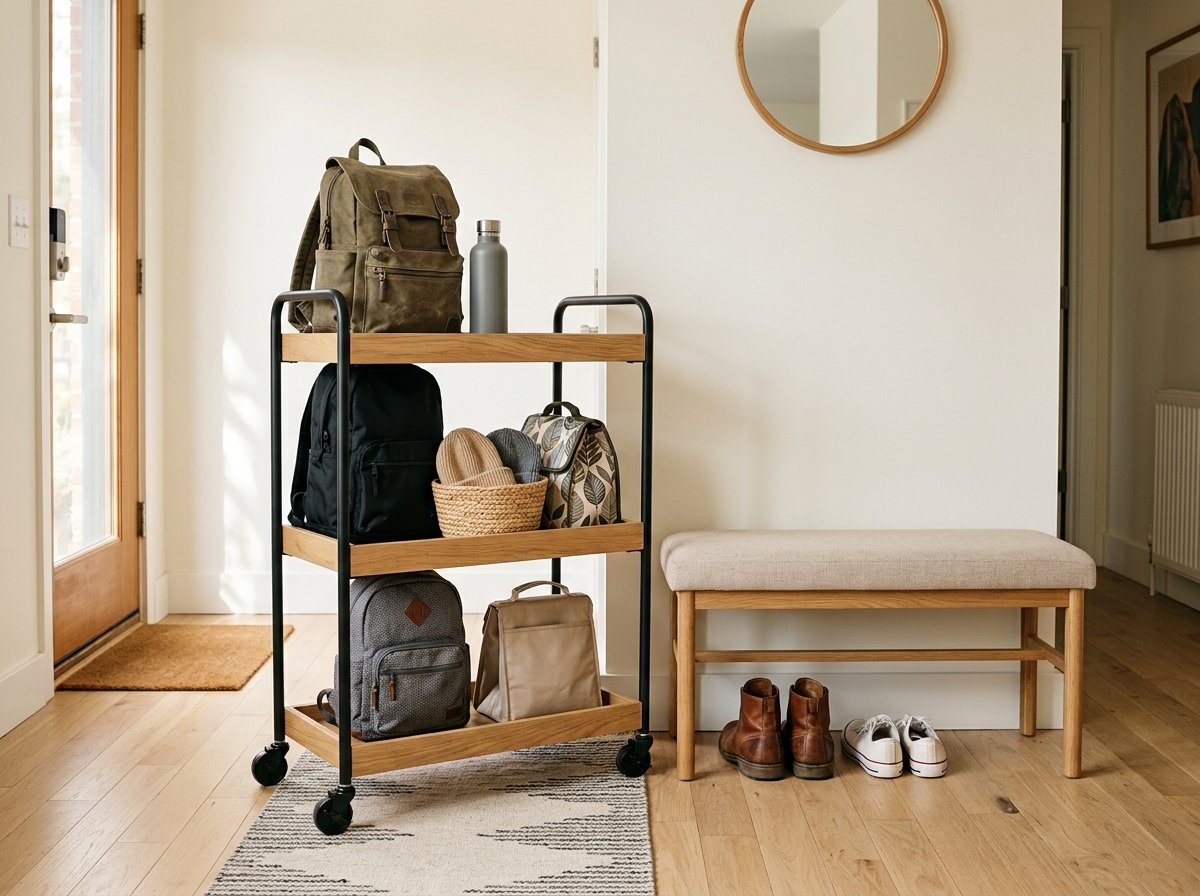
A rolling cart can be useful when you do not want permanent storage. Each person can have a shelf or basket for their own belongings.
The cart can hold backpacks, lunch bags, water bottles and other things that need to leave the house.
Because it can be moved, you can reposition it whenever you need more floor space. This makes it particularly useful in small apartments or multifunctional entryways.
Choose a sturdy cart with locking wheels so it stays in place when loaded.
16. Create a Family Command Center
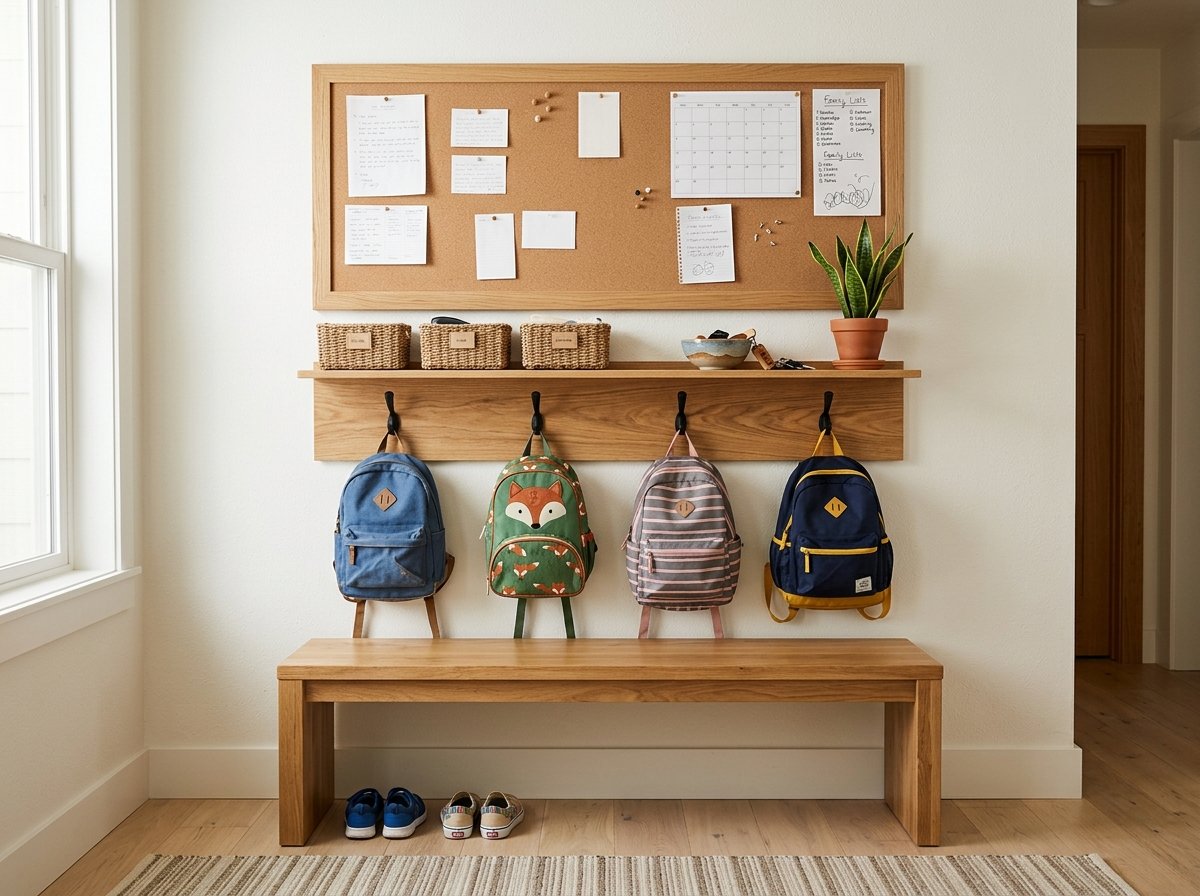
A family command center can combine backpack storage with calendars, reminders and everyday organization.
Place hooks at the bottom of the wall for backpacks and a small bulletin board or magnetic board above them. This gives everyone a place to see schedules and important reminders.
Add a small shelf for mail, keys and paperwork. Keeping these things together can prevent the entryway from becoming a collection point for random items.
Use matching containers and simple labels to keep the system easy to maintain.
17. Use a Ladder Shelf
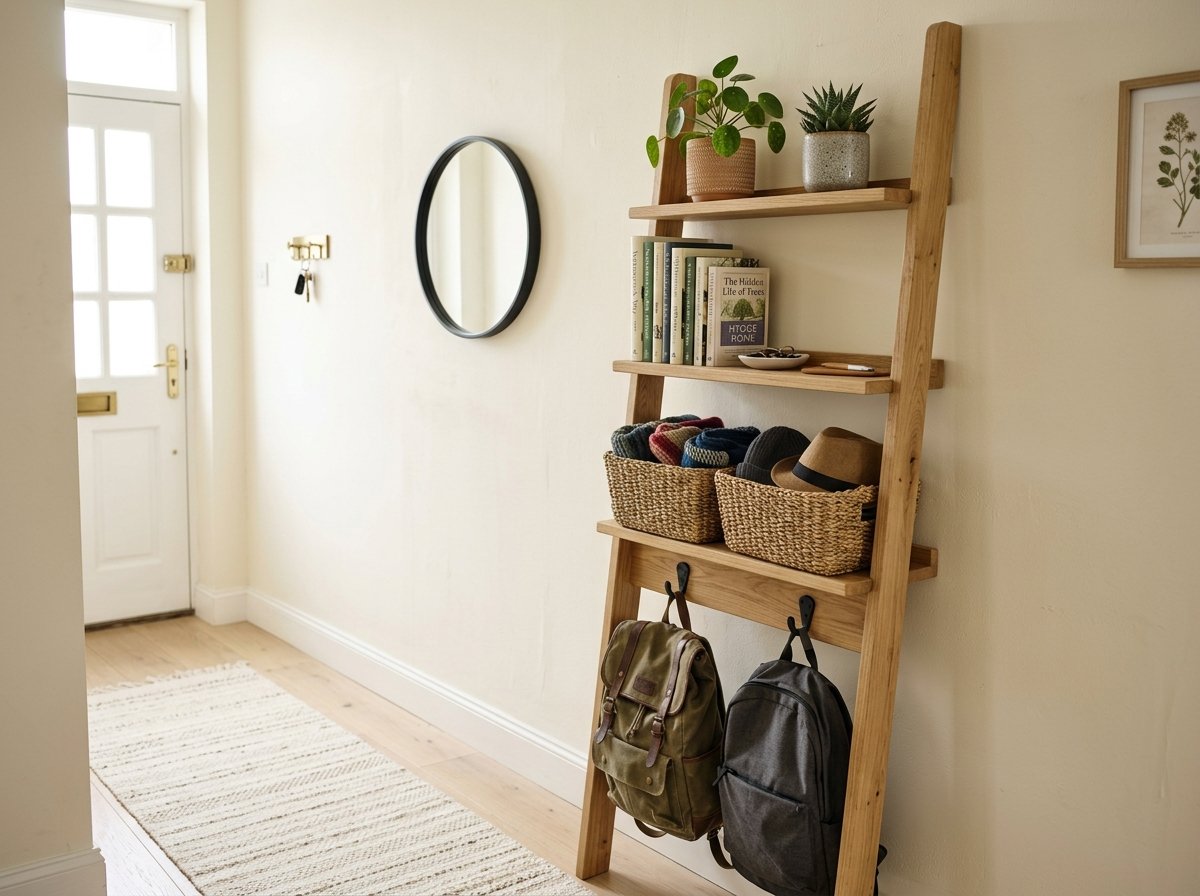
A ladder shelf can create vertical storage without making the entryway feel too heavy. The lower section can hold backpacks while the upper shelves store smaller items.
Place one or two sturdy hooks on the lower portion for bags. Use baskets on the shelves for hats, gloves and other accessories.
Because ladder shelves lean outward slightly, they can add visual interest to an otherwise plain wall.
Choose a narrow design if the entryway is tight. A compact shelf can still provide plenty of useful storage.
18. Add a Dedicated Backpack Bench
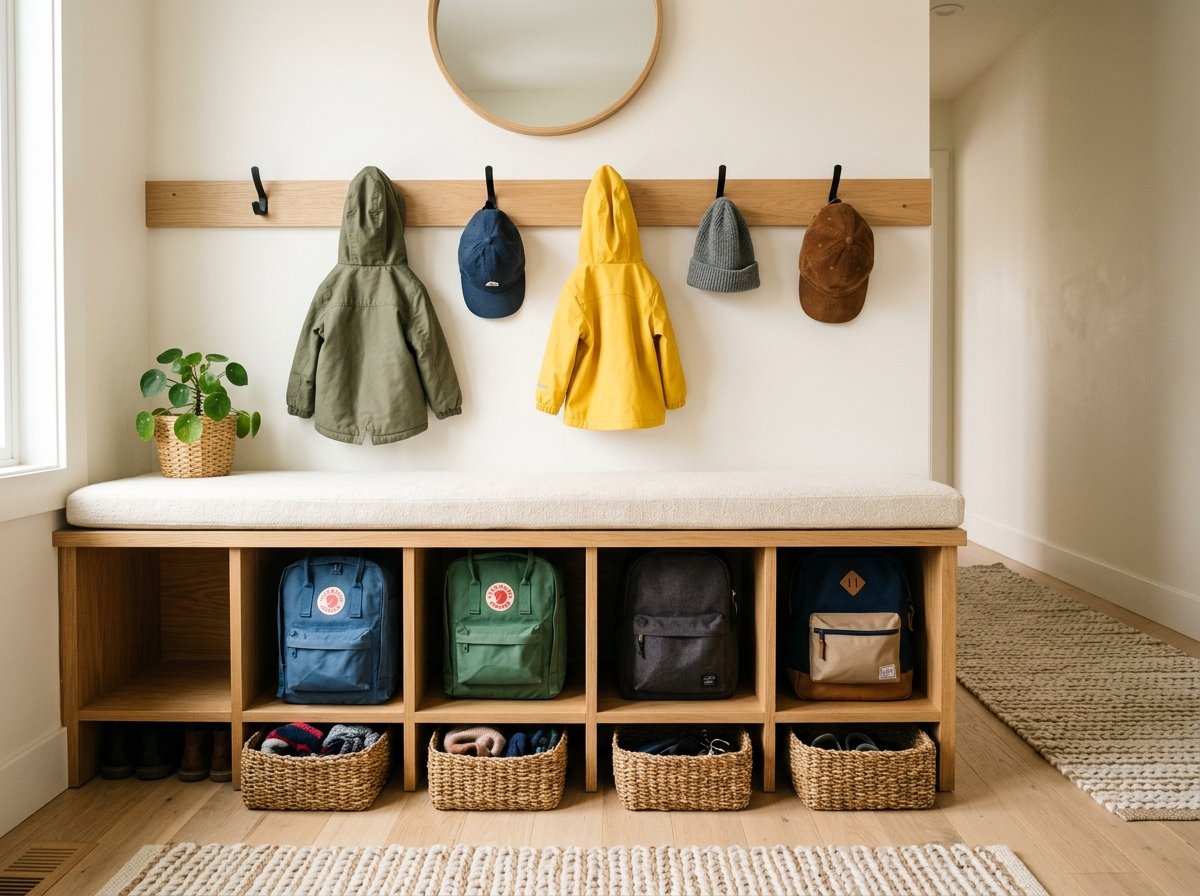
Sometimes a dedicated bench is all you need. Choose one with a broad seat and several open compartments underneath.
Each compartment can be assigned to a different family member. Backpacks can sit inside the compartments while shoes remain underneath or in baskets.
Add hooks above the bench for jackets and hats. This creates a simple drop zone without taking up an entire wall.
A cushion on the bench can also make the entryway more comfortable when putting on shoes.
19. Use a Small Wall Cabinet
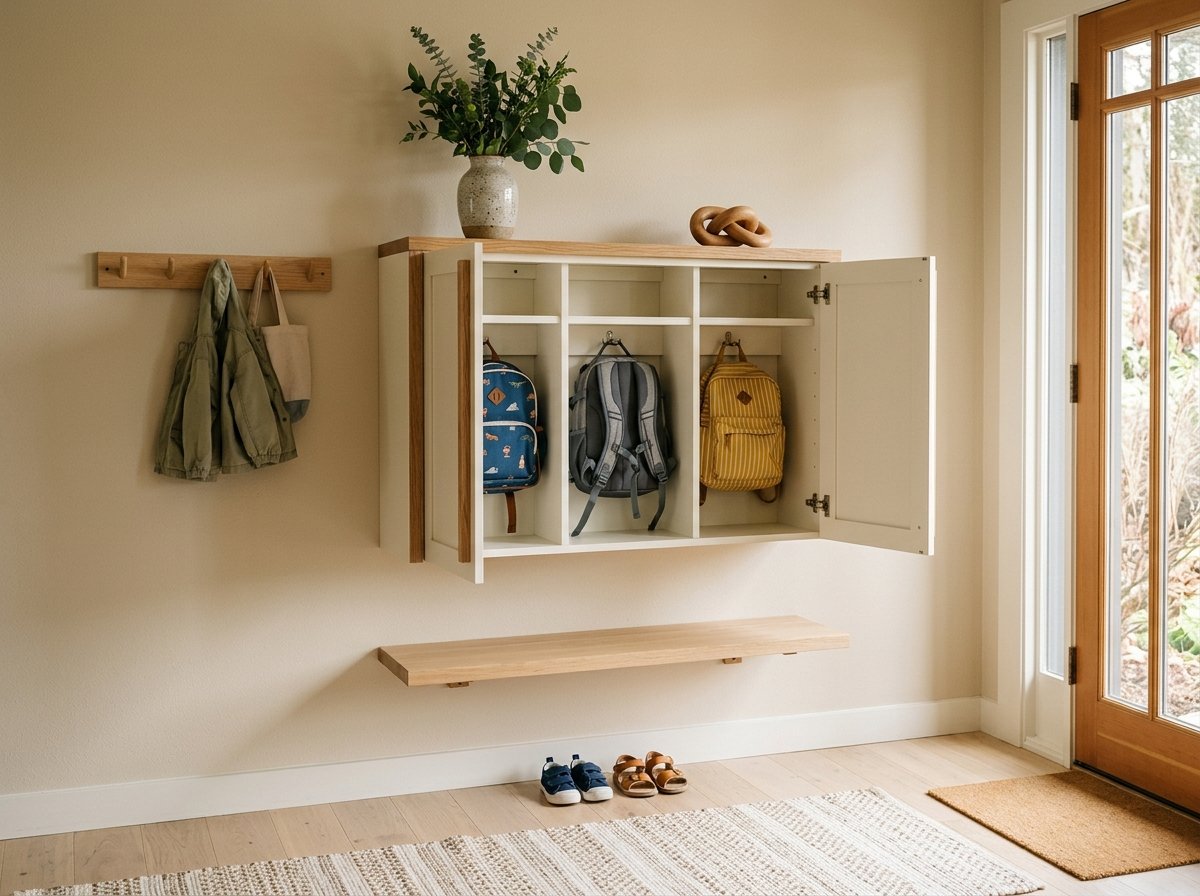
A wall cabinet can keep backpacks hidden while taking almost no floor space. This can be a good choice when the entryway is especially narrow.
Choose a cabinet with doors that open easily and enough internal depth for the bags you need to store.
If you have children, make sure the lower sections are accessible to them. Higher compartments can be used for items that adults need to store.
Keep the outside simple and use the top for one or two decorative pieces.
20. Create a Drop Zone With Baskets
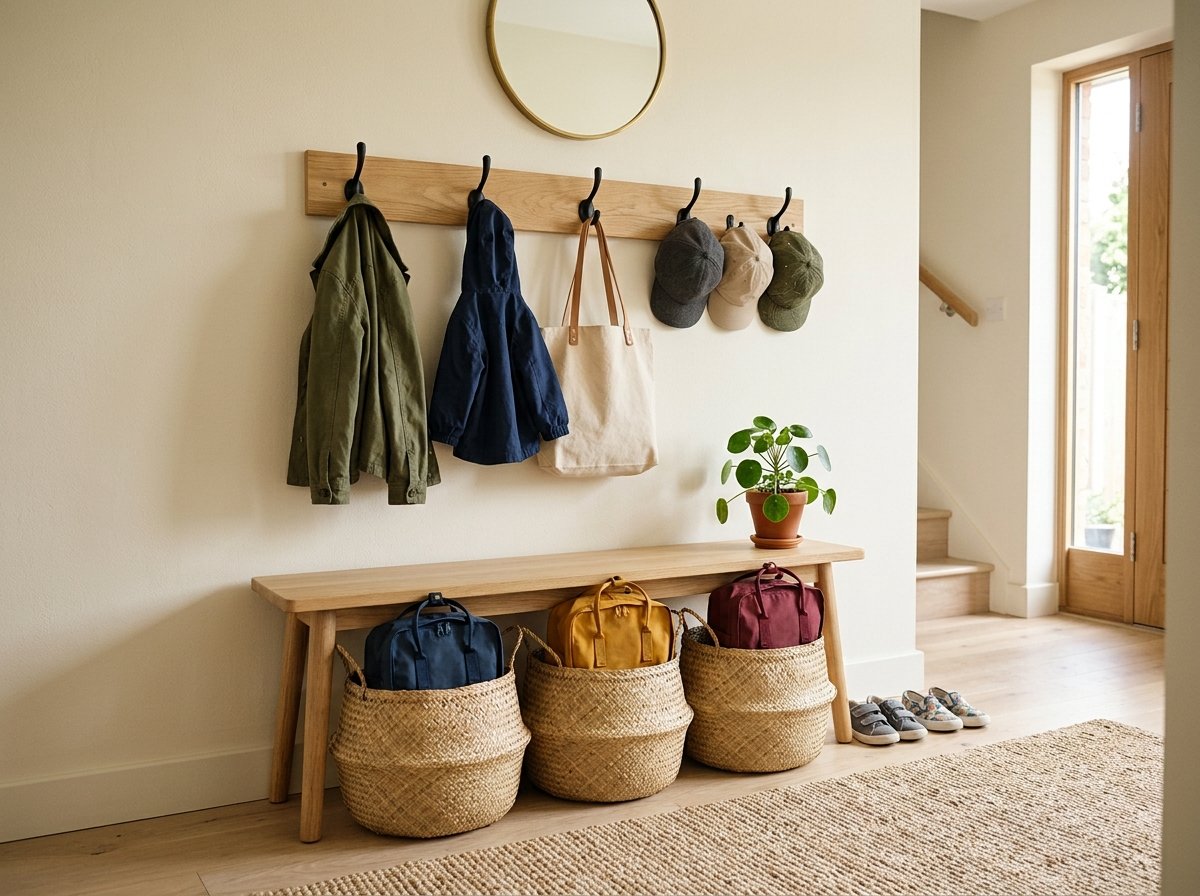
Large floor baskets can be an easy solution when you do not want to install anything on the wall.
Choose one basket per person and place them underneath a bench or beside the entryway furniture. Backpacks can be dropped inside instead of being left on the floor.
Woven baskets add texture and work particularly well with warm, casual interiors. They can also hold shoes, blankets or sports equipment when the backpacks are not there.
Add a few wall hooks above the baskets if you also need a place for jackets and hats.
21. Make a Magnetic Entryway Station
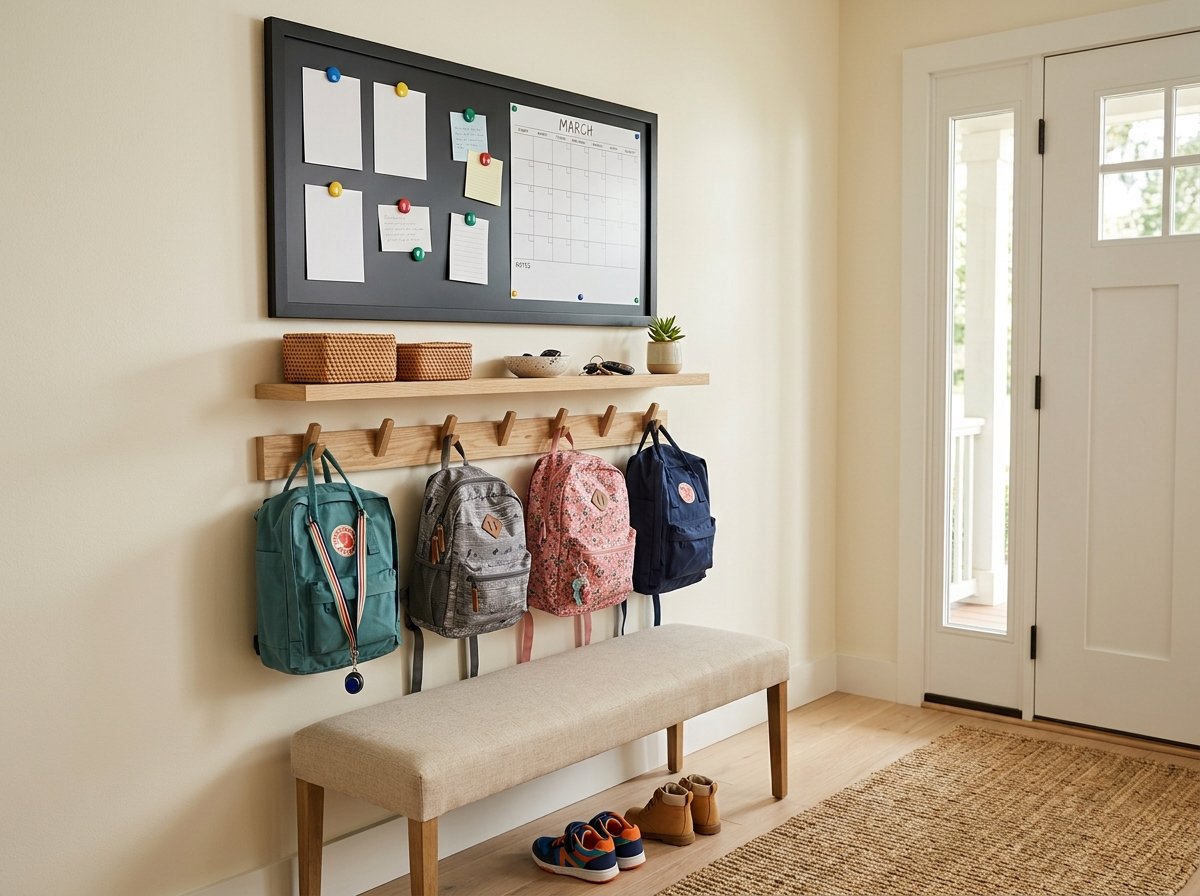
A magnetic board can give the entryway a place for reminders, schedules and small notes while the backpacks stay on hooks underneath.
Choose a large framed magnetic board that matches the rest of your entryway. Keep it simple enough that it does not become visually overwhelming.
Use small magnetic containers for things such as spare keys, school notes or appointment cards. A shelf beneath the board can hold lunch bags and small accessories.
The backpack hooks below create a natural transition from information to storage.
22. Use an Overhead Shelf Above the Door
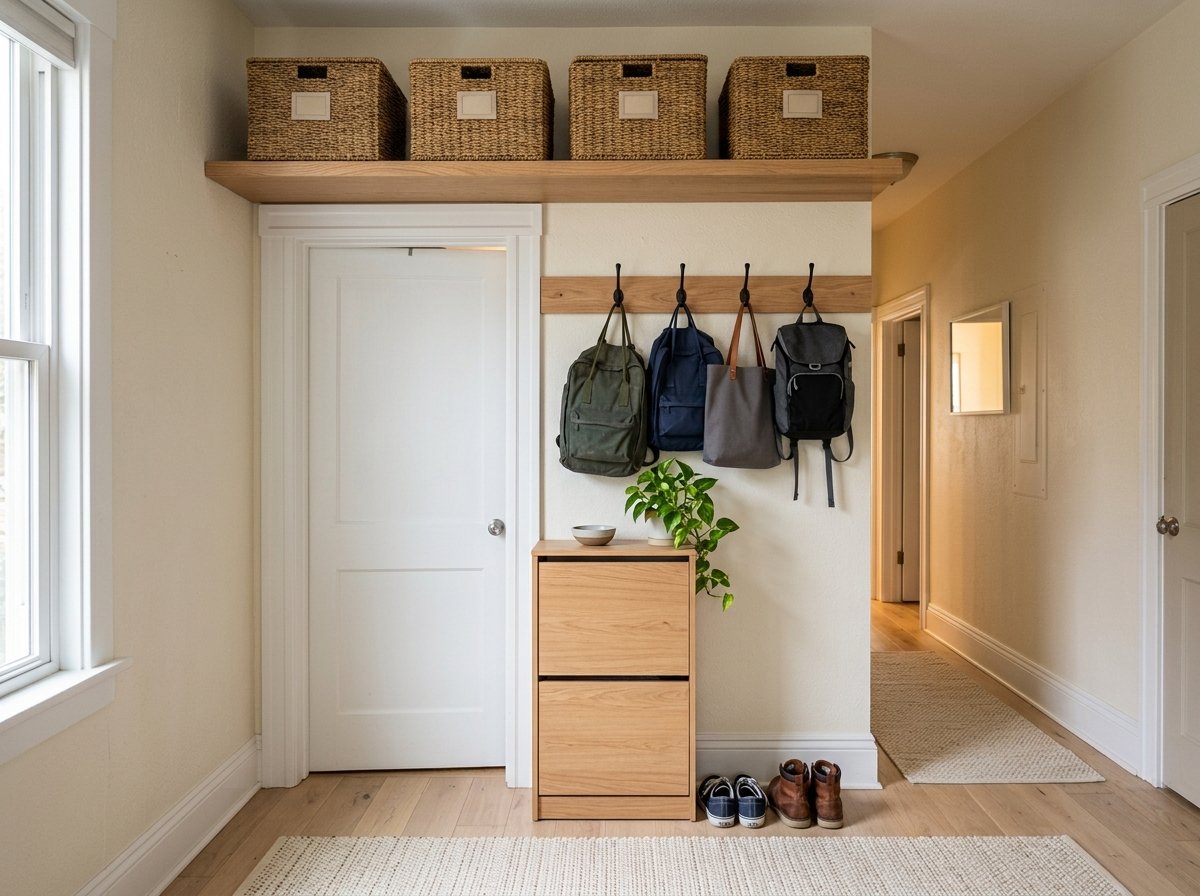
The wall space above a doorway often goes unused. A high shelf can provide extra storage for items that are not needed constantly.
This is a good place for seasonal bags, rarely used backpacks or larger storage baskets. Keep everyday backpacks on hooks at a more accessible height.
Use matching baskets on the upper shelf so the area looks intentional instead of becoming a place where random objects collect.
Make sure the shelf is securely mounted and does not interfere with the door.
23. Create a Color Coded Backpack Station
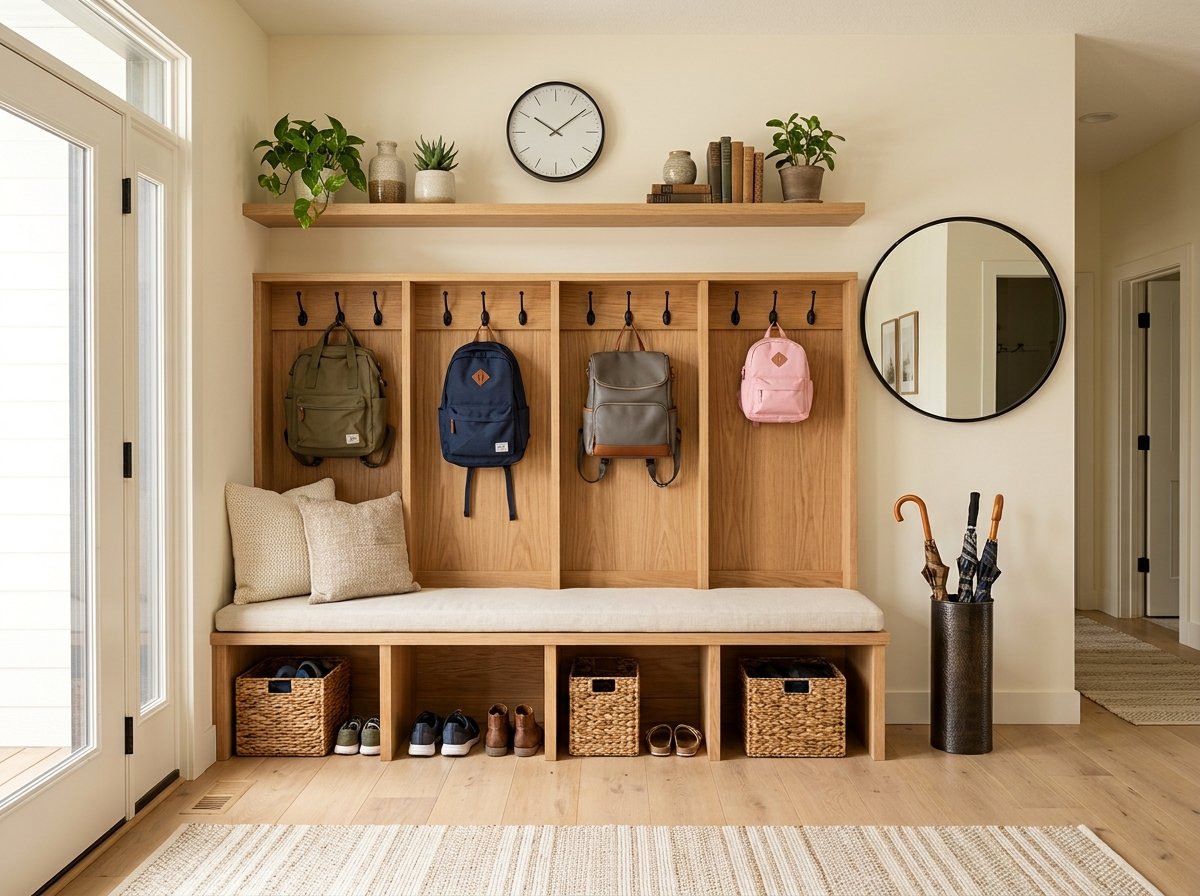
Color coding can make it easier for children to recognize their storage space without needing labels.
Assign each person a different hook, basket or cubby color. The colors do not need to be bright. Muted shades can work just as well in a carefully decorated entryway.
Keep the overall furniture neutral and use color only for small details. This prevents the drop zone from looking too busy.
The same color can be repeated in each person’s basket, hook or storage container to make the system easy to follow.
24. Combine Backpack Storage With a Charging Station
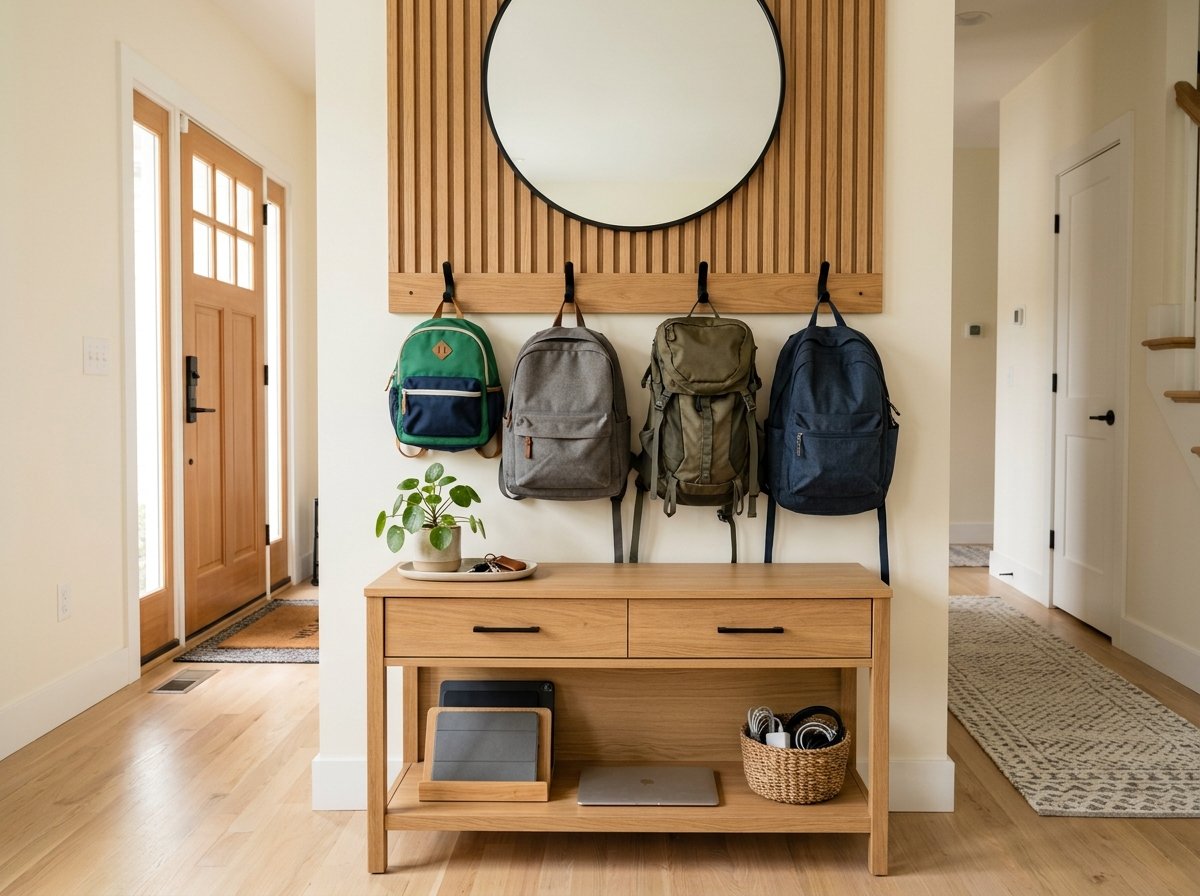
If backpacks usually contain tablets, laptops or other electronics, adding a charging station can make the drop zone even more useful.
Place a small cabinet or shelf near the backpack hooks with concealed charging cables. Devices can be plugged in as soon as everyone gets home.
Use cable management clips or a hidden power strip so the charging area does not become tangled.
A small basket can hold chargers and other accessories that need to travel with the backpacks.
25. Build a Complete Entryway Drop Zone
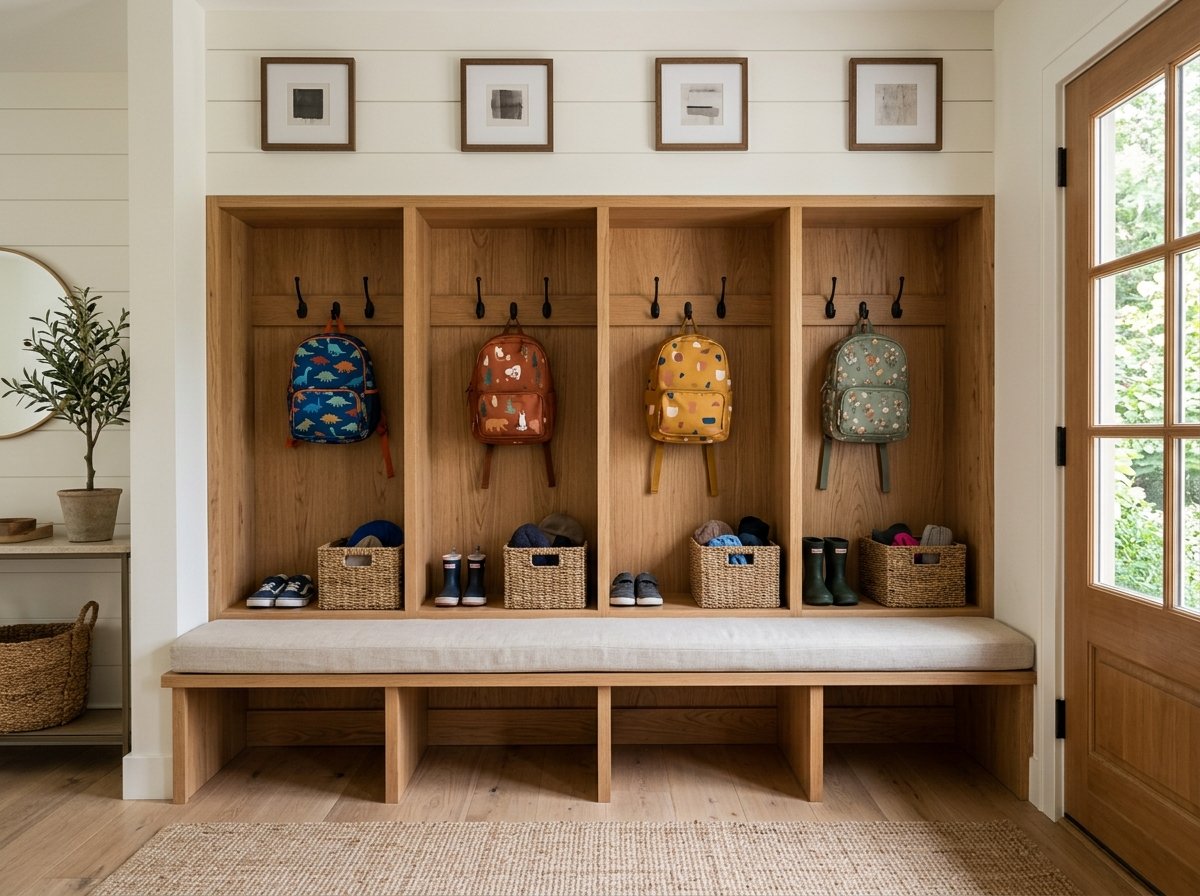
If you have enough space, combine several of these ideas into one complete system. A bench, hooks, cubbies, baskets and a shelf can all work together.
The bench provides a place to sit, while the hooks handle backpacks and jackets. Cubbies can hold shoes and baskets can take care of smaller accessories.
A shelf above everything can hold decorative pieces while keeping frequently used items within reach.
The important thing is to give every category of belongings its own place. When the system is simple enough to use every day, keeping the entryway organized becomes much easier.
Final Thoughts
A backpack drop zone does not have to take up an entire room or require an expensive built in system. Even a small section of wall can become useful with a few sturdy hooks and a shelf.
If you have more room, combining hooks with a bench, cubbies and baskets can create a complete entryway system that handles backpacks, shoes, jackets and everyday accessories in one place.
The most important part is making the storage easy to use. If someone has to open several doors or move things around before putting away a backpack, the system probably will not stay organized for long. Open hooks, accessible cubbies and clearly defined spaces tend to work best for everyday routines.
Take a look at what usually ends up on your entryway floor. Once you know what needs a home, you can design the drop zone around those specific items instead of adding storage that you may never use.
A well planned backpack station can make a surprisingly big difference. When everyone knows where their bag goes, the entryway stays clearer, mornings become easier and the whole home feels more organized.