
21 Small Workout Space Ideas to Create a Home Gym Anywhere
You do not need an entire room filled with expensive equipment to create a useful home gym. A small corner of a bedroom, an unused section of the basement or even a quiet part of the living room can become a surprisingly effective workout space.
The biggest challenge with a small home gym is usually organization. When equipment is left on the floor or stored randomly, even a decent sized space can start feeling cramped.
The trick is to choose equipment that serves several purposes, use vertical storage whenever possible and keep enough open floor space for the exercises you actually do.
Whether you prefer strength training, yoga, cardio or quick full body workouts, these small workout space ideas can help you create a home gym that fits naturally into your home.
1. Turn an Empty Corner Into a Workout Zone
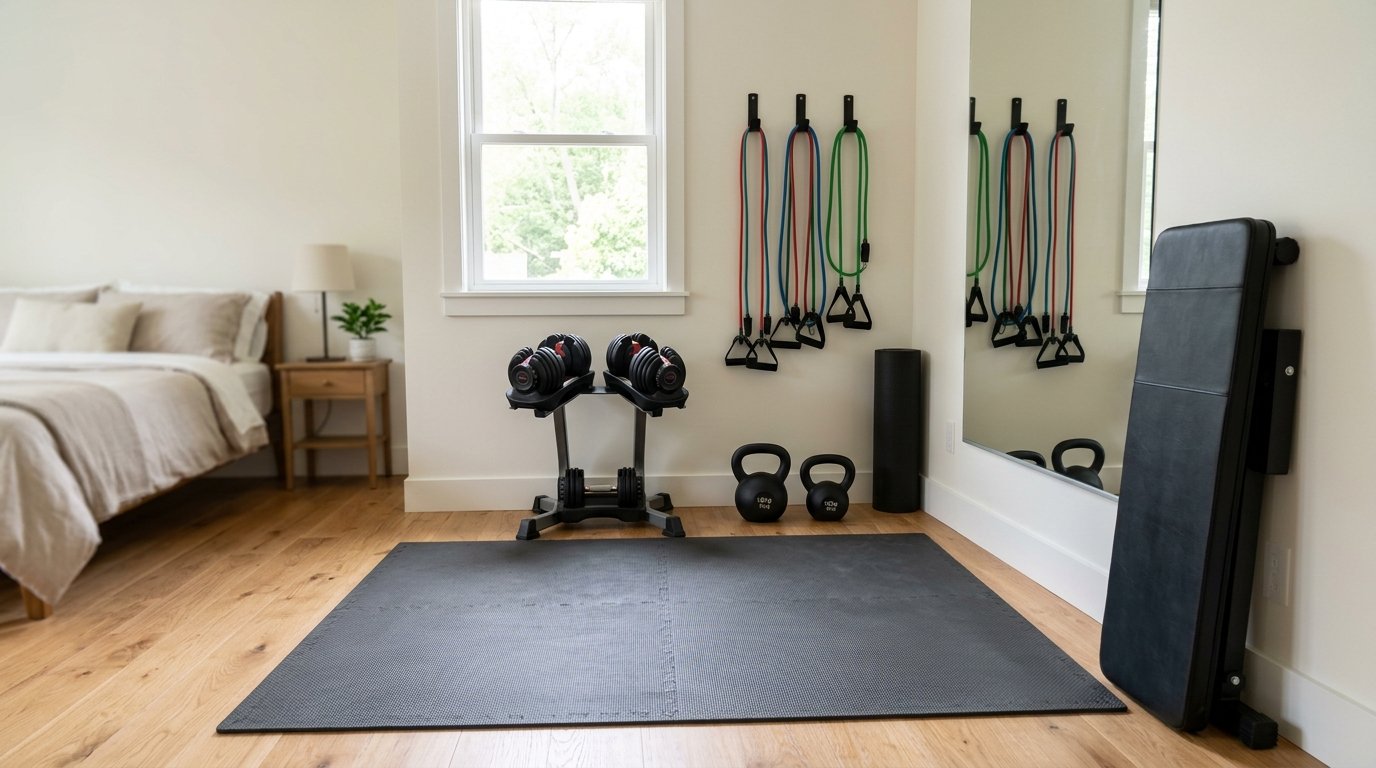
An unused corner can be one of the easiest places to create a compact gym.
Start by clearing the floor and placing a durable exercise mat in the area. Then add only the equipment you use regularly.
A pair of adjustable dumbbells, resistance bands and a small bench can cover a surprising number of exercises without requiring much room.
Keep the equipment against one wall when it is not being used so the center of the space remains open.
2. Use a Fold Away Workout Bench
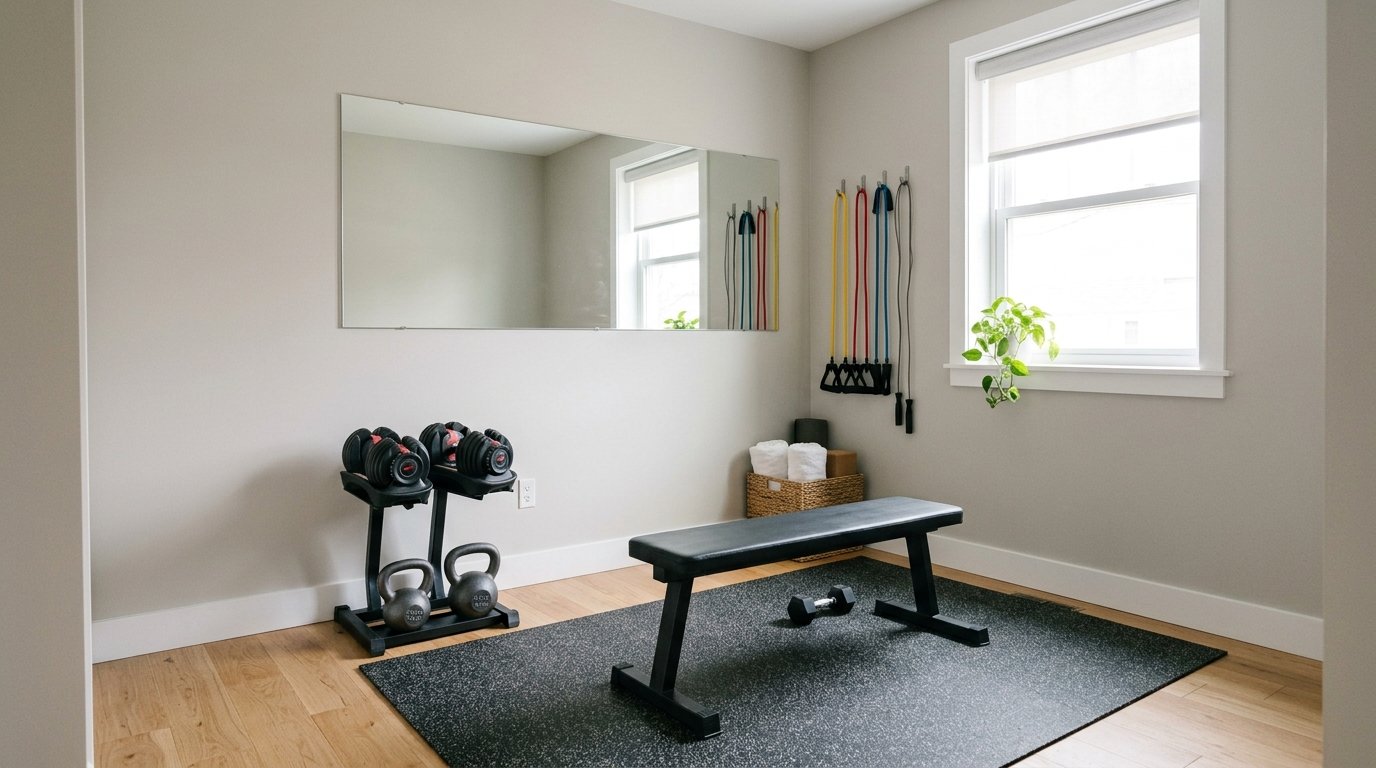
A traditional workout bench can consume valuable floor space when it is not being used.
A foldable or compact adjustable bench gives you more flexibility.
Choose one that can be stored vertically against the wall or tucked underneath a bed or storage unit.
When you want to work out, simply pull it into the open floor area and return it afterward.
3. Create a Home Gym in a Bedroom Corner
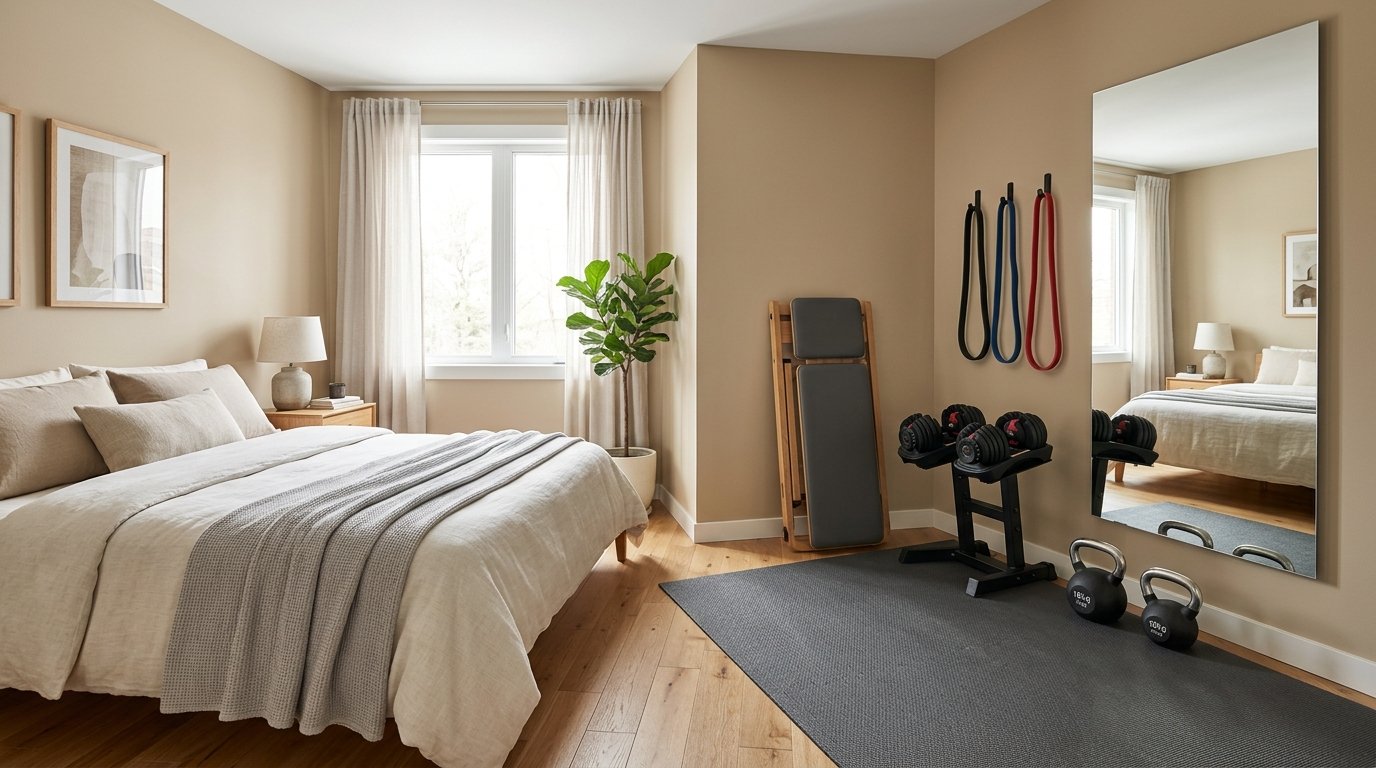
A bedroom can accommodate a small gym without looking like a commercial fitness studio.
Use a visually consistent mat and storage system so the workout area feels like part of the room.
Keep equipment in one concentrated zone rather than spreading it throughout the bedroom.
A full length mirror can also make the workout corner feel larger while helping with exercise form.
4. Use Wall Mounted Storage
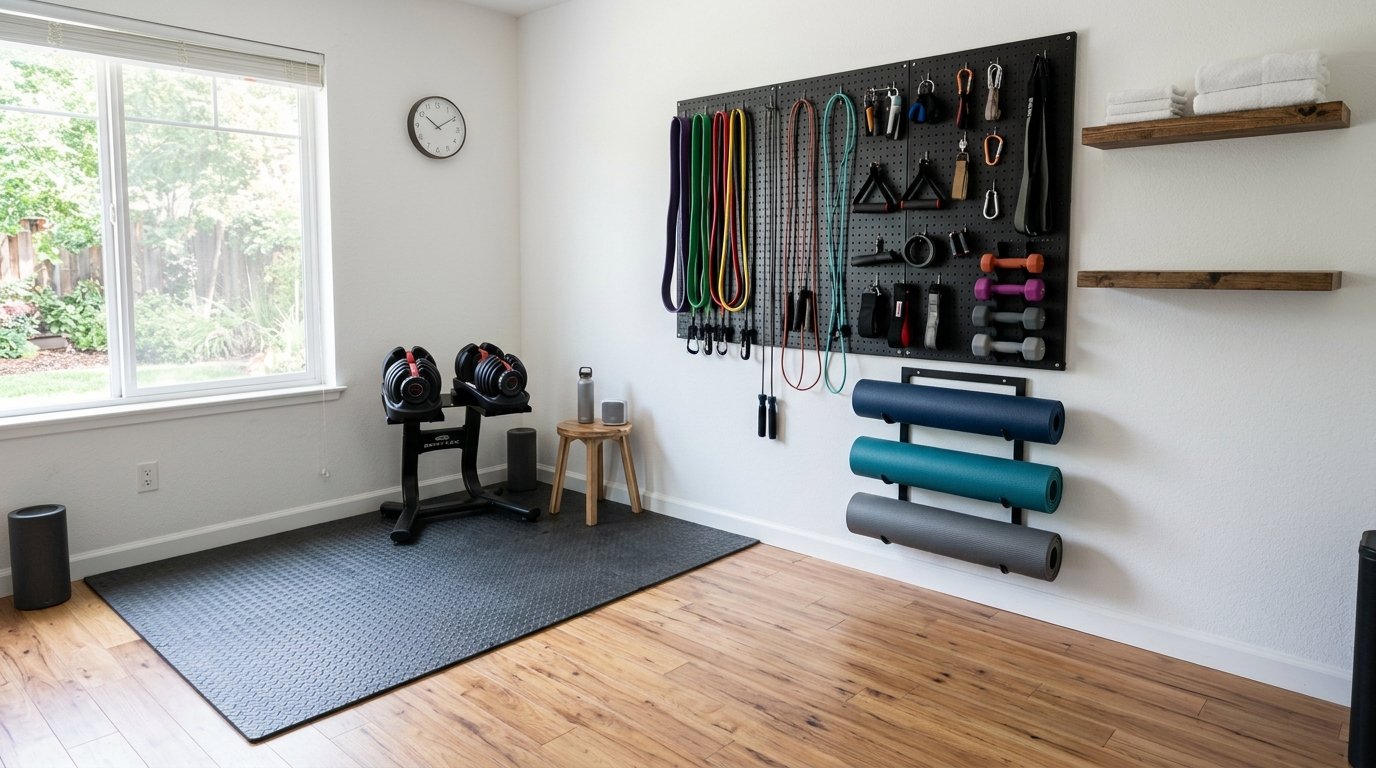
Walls can hold much more equipment than most people realize.
Install hooks for resistance bands, jump ropes and yoga mats. A narrow shelf can hold smaller accessories such as workout gloves and towels.
Wall storage keeps the floor open and makes it easier to find equipment.
Use a consistent storage system so the area looks organized rather than cluttered.
5. Build a Garage Gym
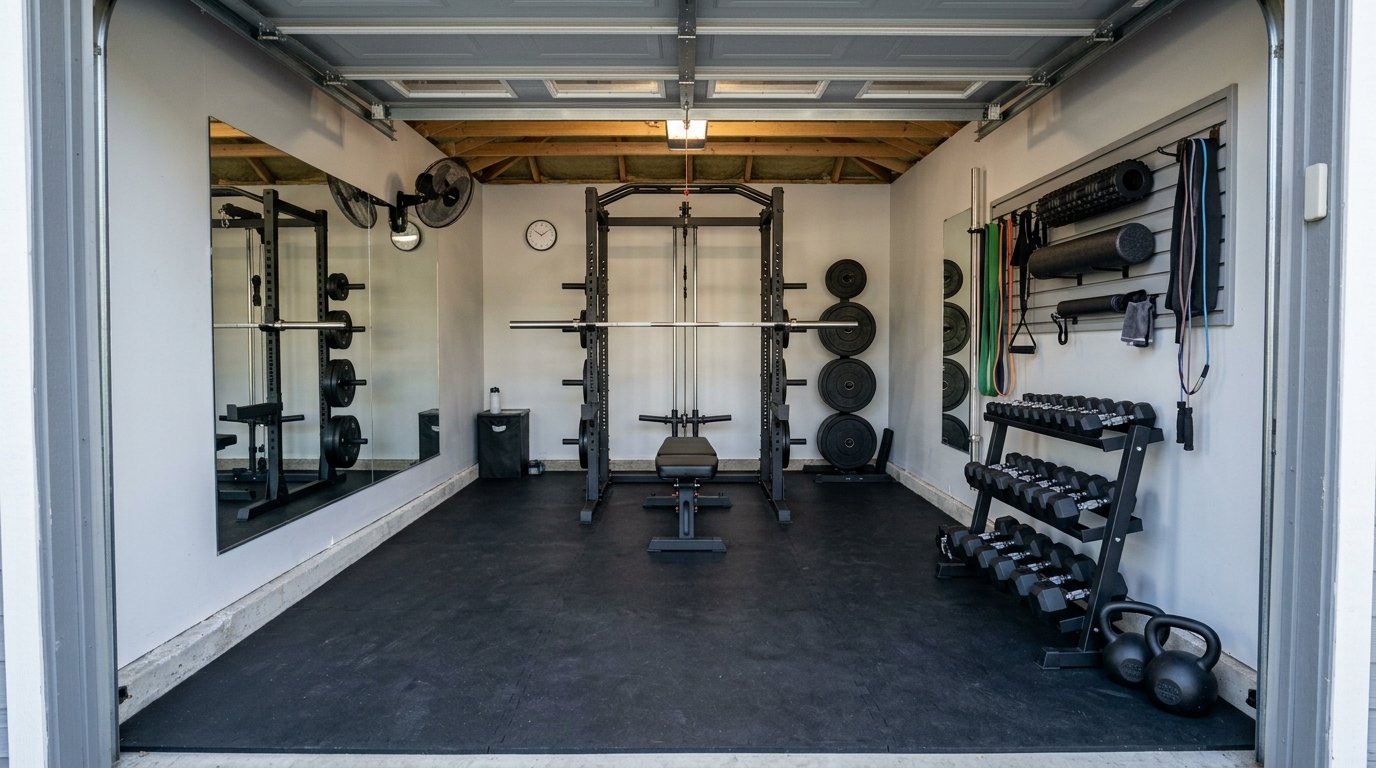
A garage can be an excellent place for a home gym because you do not have to sacrifice living space.
Clear one side of the garage and install durable rubber flooring.
A wall mounted rack, adjustable weights and a compact bench can create a serious strength training setup.
Keep enough clearance around the equipment so the space remains safe and comfortable to use.
6. Create a Yoga and Stretching Corner
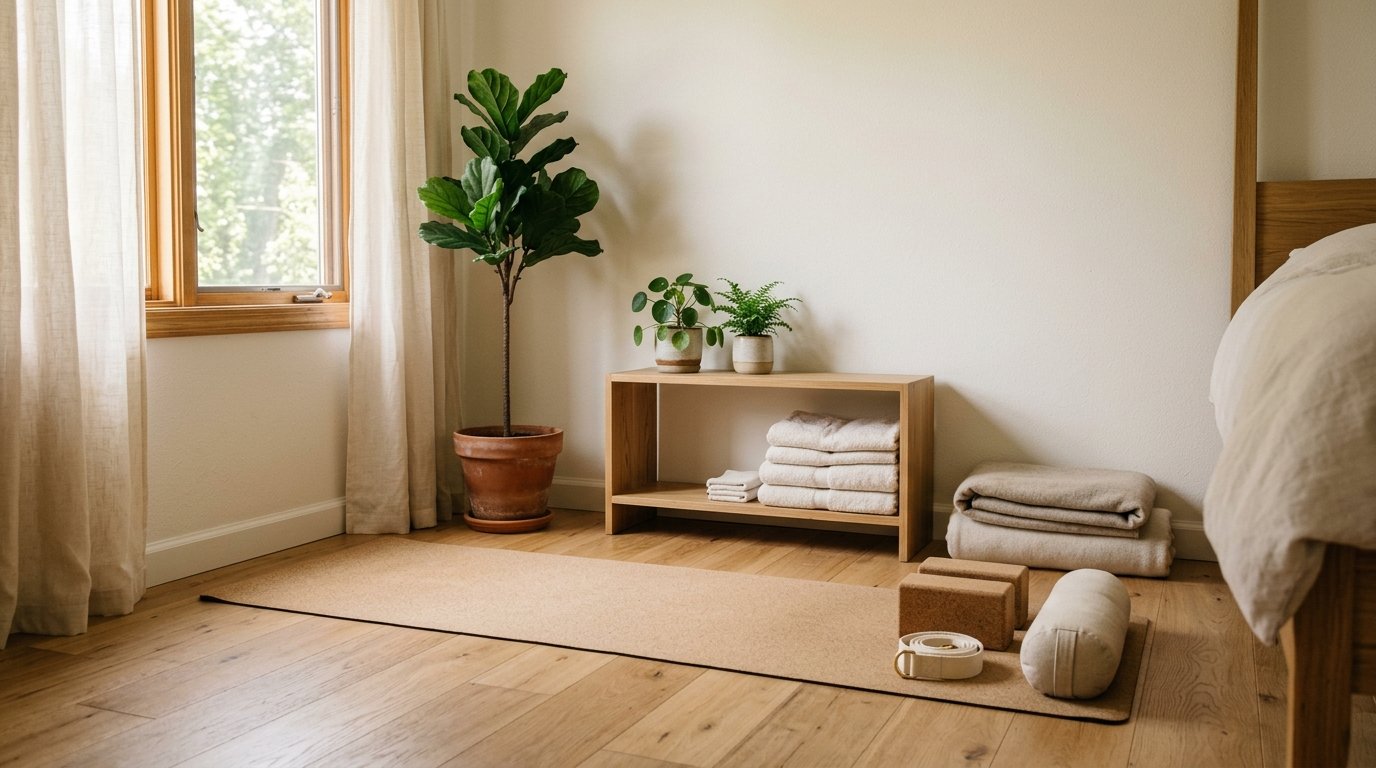
Not every home gym needs heavy equipment.
A quiet corner with a yoga mat, blocks, straps and a few cushions can be enough for stretching and mobility work.
Use calming colors and keep the floor area open.
A small plant and soft natural lighting can make the space feel more relaxing.
7. Add a Wall Mounted TV
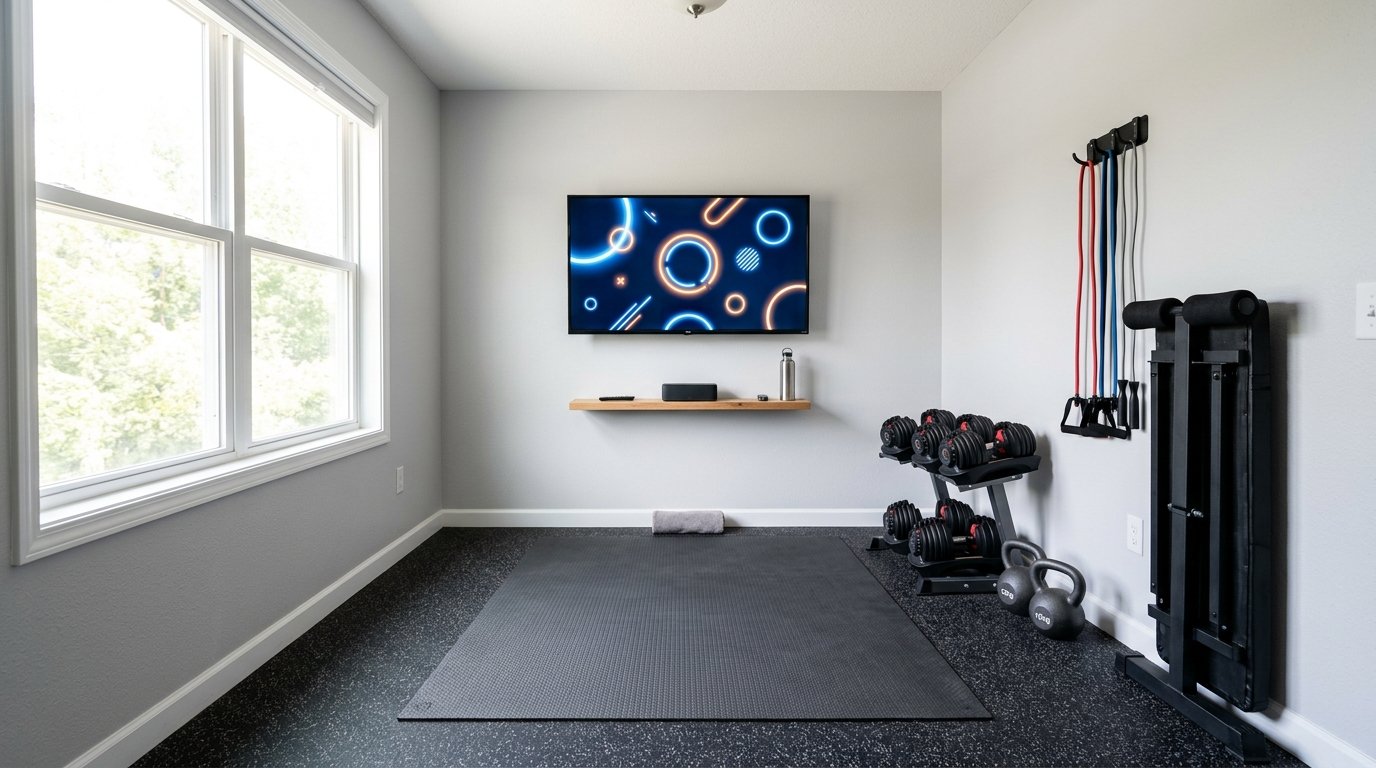
A television can make workouts more enjoyable if you follow exercise classes or use guided training videos.
Mount it directly on the wall to avoid taking up valuable floor space.
Keep the screen at a comfortable height where it can be viewed from both standing and floor exercises.
A narrow shelf underneath can hold a small speaker or streaming device.
8. Use a Pegboard for Small Equipment
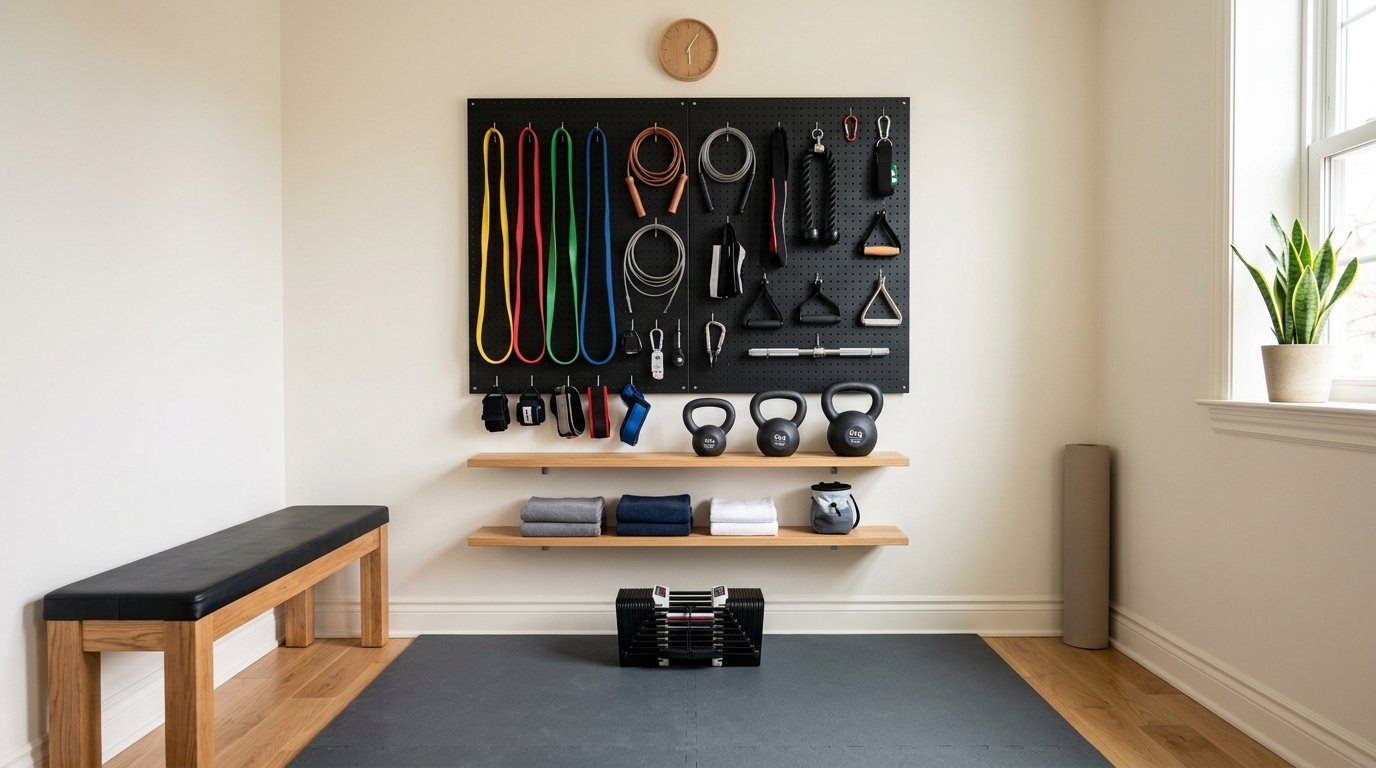
A pegboard can make a small gym dramatically easier to organize.
Use it to store resistance bands, jump ropes, lifting straps and other small equipment.
Because the hooks can be moved, the setup can change as your equipment collection grows.
Paint the pegboard a color that matches the room so it looks intentional.
9. Create a Hidden Home Gym
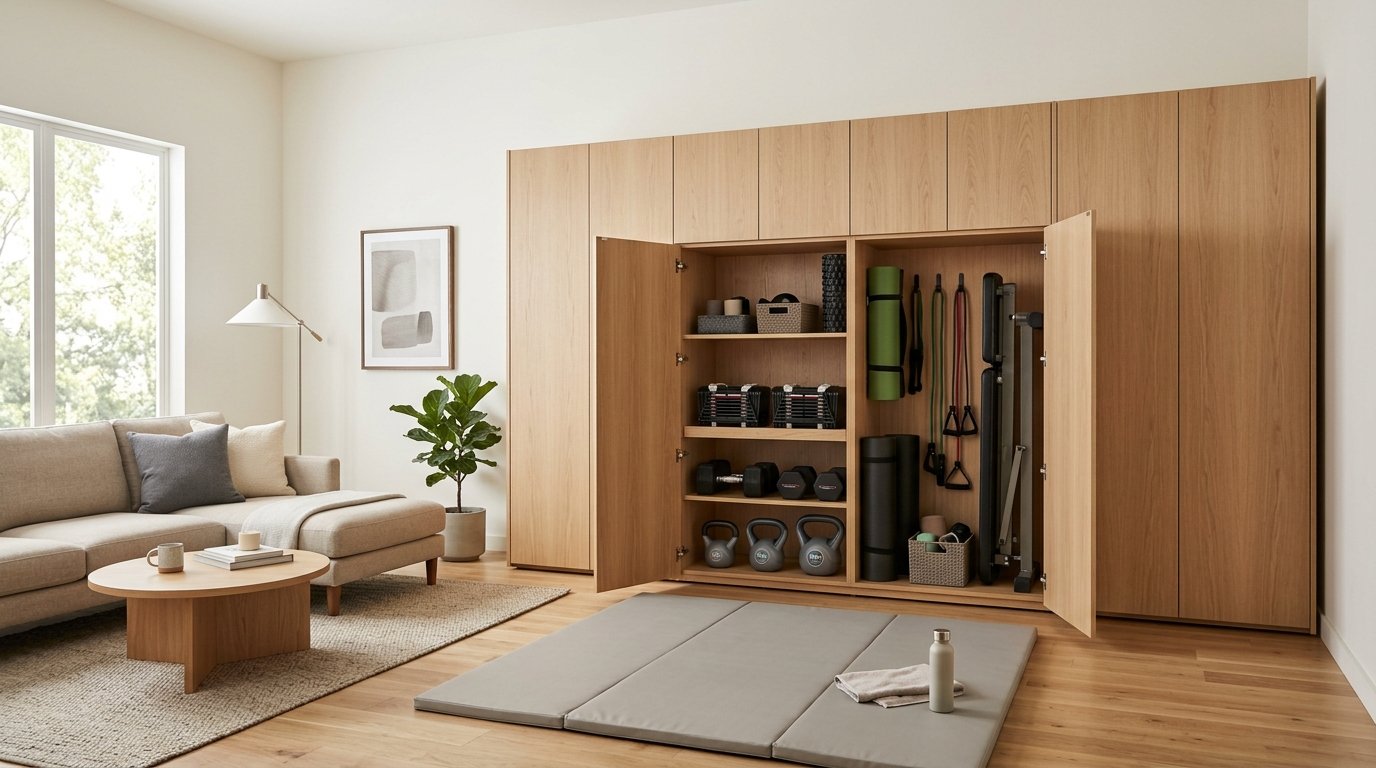
If you do not want exercise equipment visible all the time, consider building storage that can hide it.
A large cabinet can hold weights, bands, yoga equipment and other accessories.
When the doors are closed, the room can look like an ordinary living space.
This works particularly well in apartments and multipurpose rooms.
10. Turn a Closet Into a Mini Gym
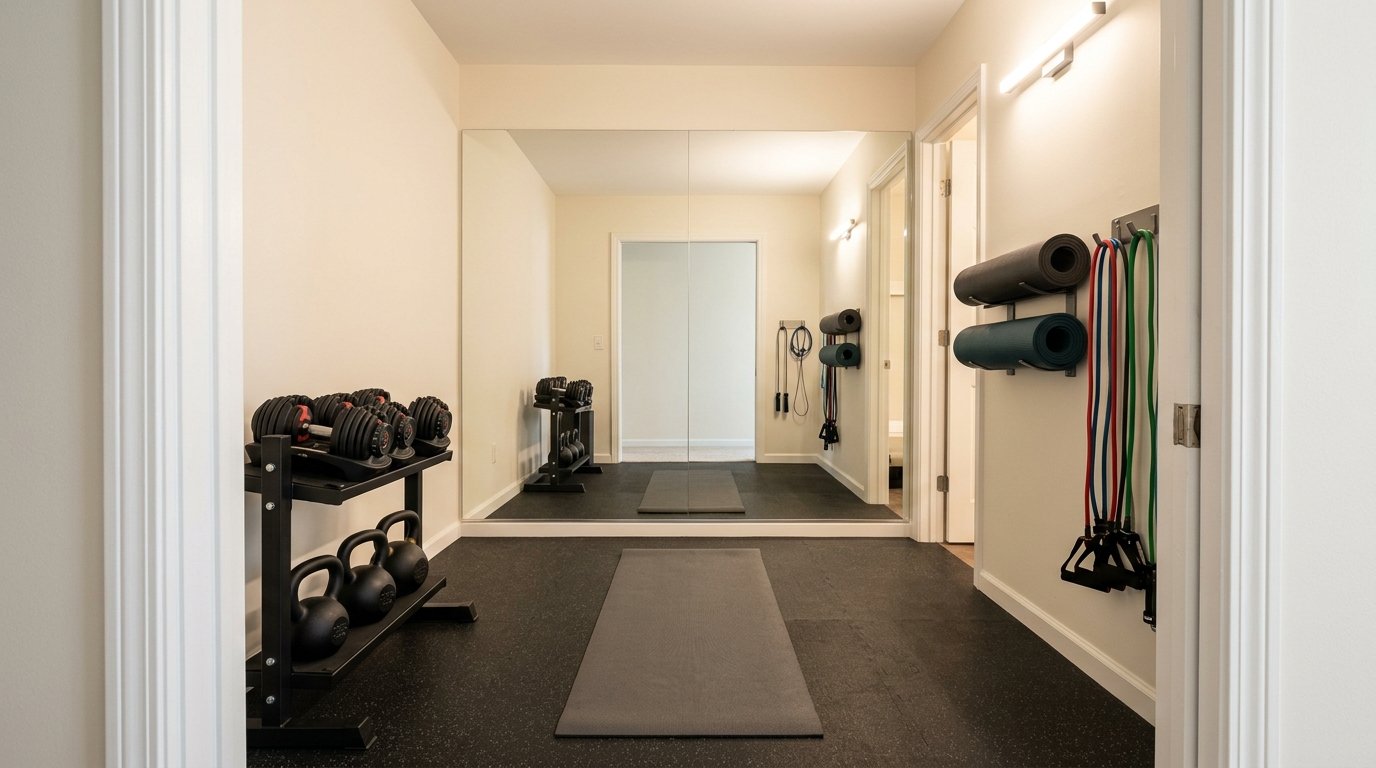
A large walk in closet or unused storage closet can become a surprisingly useful workout zone.
Remove unnecessary shelving and use the vertical wall space for equipment storage.
Keep the floor mostly open so you can perform bodyweight exercises comfortably.
A mirror on the back wall can make the compact area feel less enclosed.
11. Use a Small Basement Area
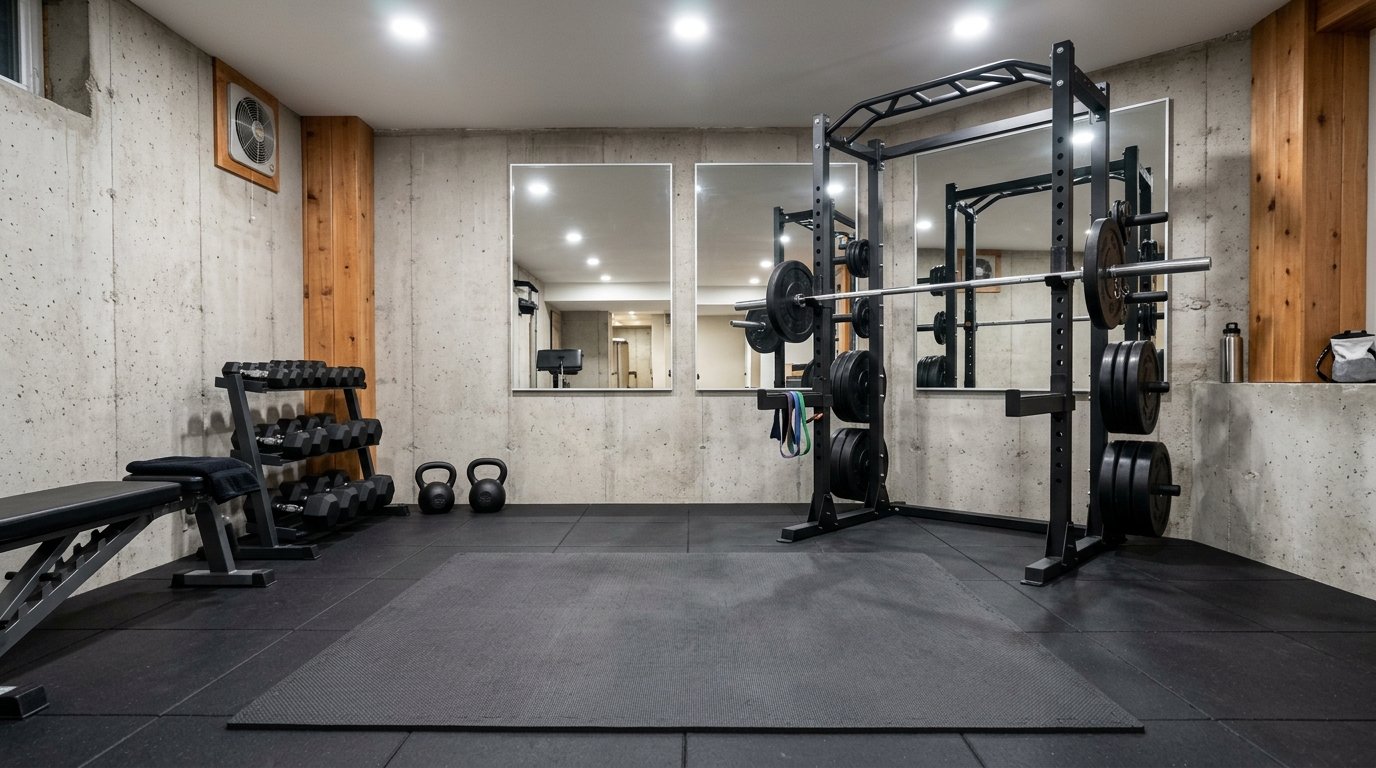
A basement corner can provide a dedicated workout space without taking over the rest of your home.
Use rubber flooring to protect the existing floor and reduce noise.
A compact rack or adjustable weights can provide strength training without requiring a full commercial setup.
Good lighting is especially important in basements, so combine overhead lighting with wall or floor lamps.
12. Create a Cardio Corner
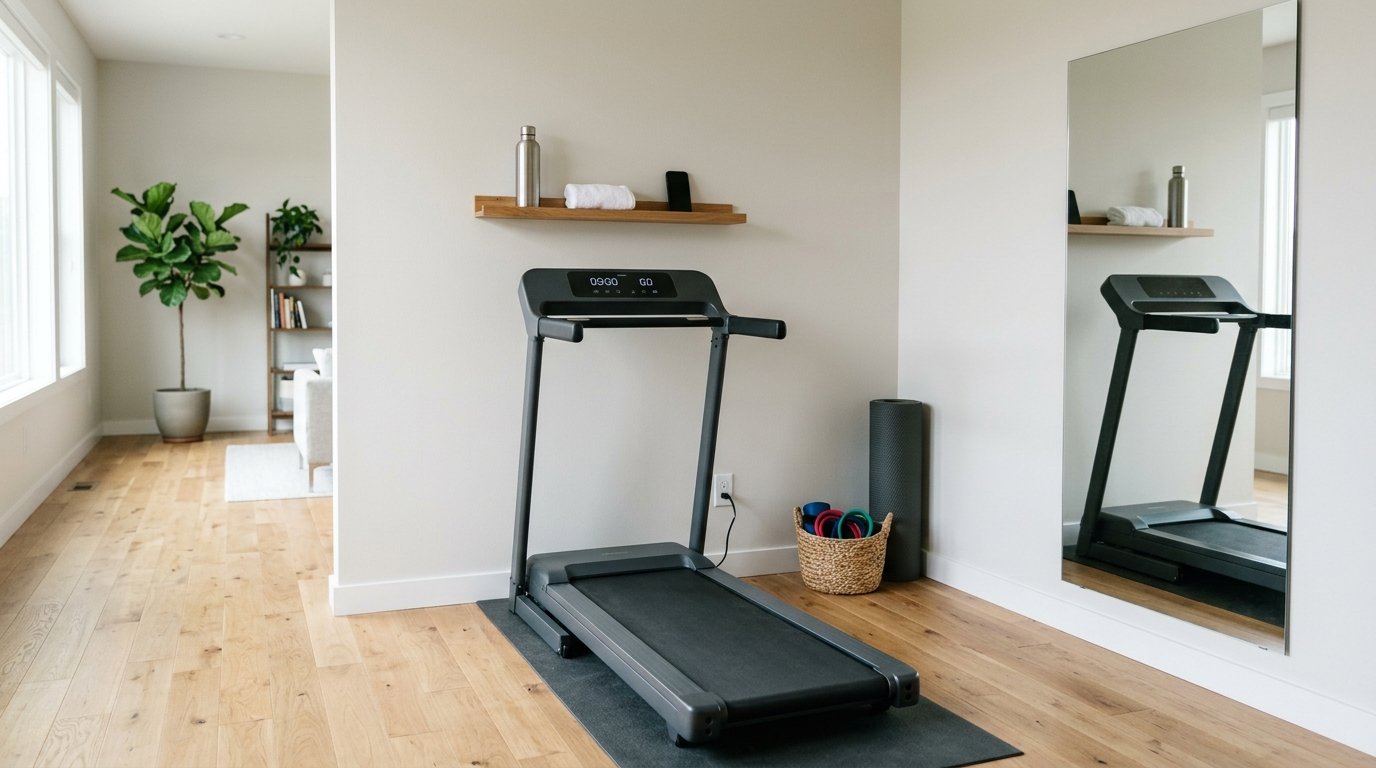
If cardio is your priority, you may only need enough space for one machine.
A compact treadmill, stationary bike or rowing machine can become the main feature.
Choose equipment that can be folded or rolled away if you need the floor space for other activities.
Keep a small shelf nearby for a water bottle, towel and phone.
13. Use Adjustable Dumbbells
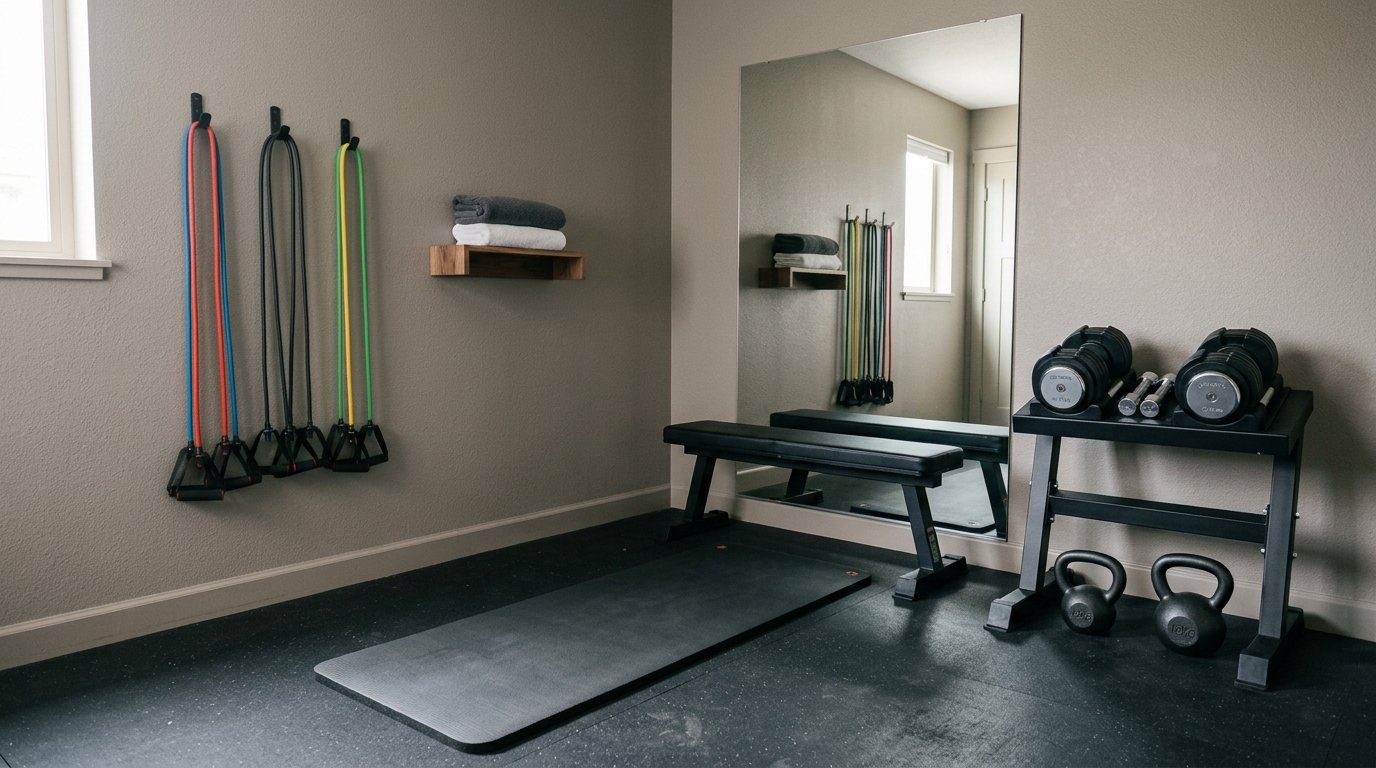
Traditional dumbbells can quickly take over a small room because every weight requires its own space.
Adjustable dumbbells combine several weight options into one compact pair.
Keep them on a small stand or directly beneath a bench when possible.
This gives you a wide range of strength exercises without filling the room with equipment.
14. Build a Home Gym Under the Stairs
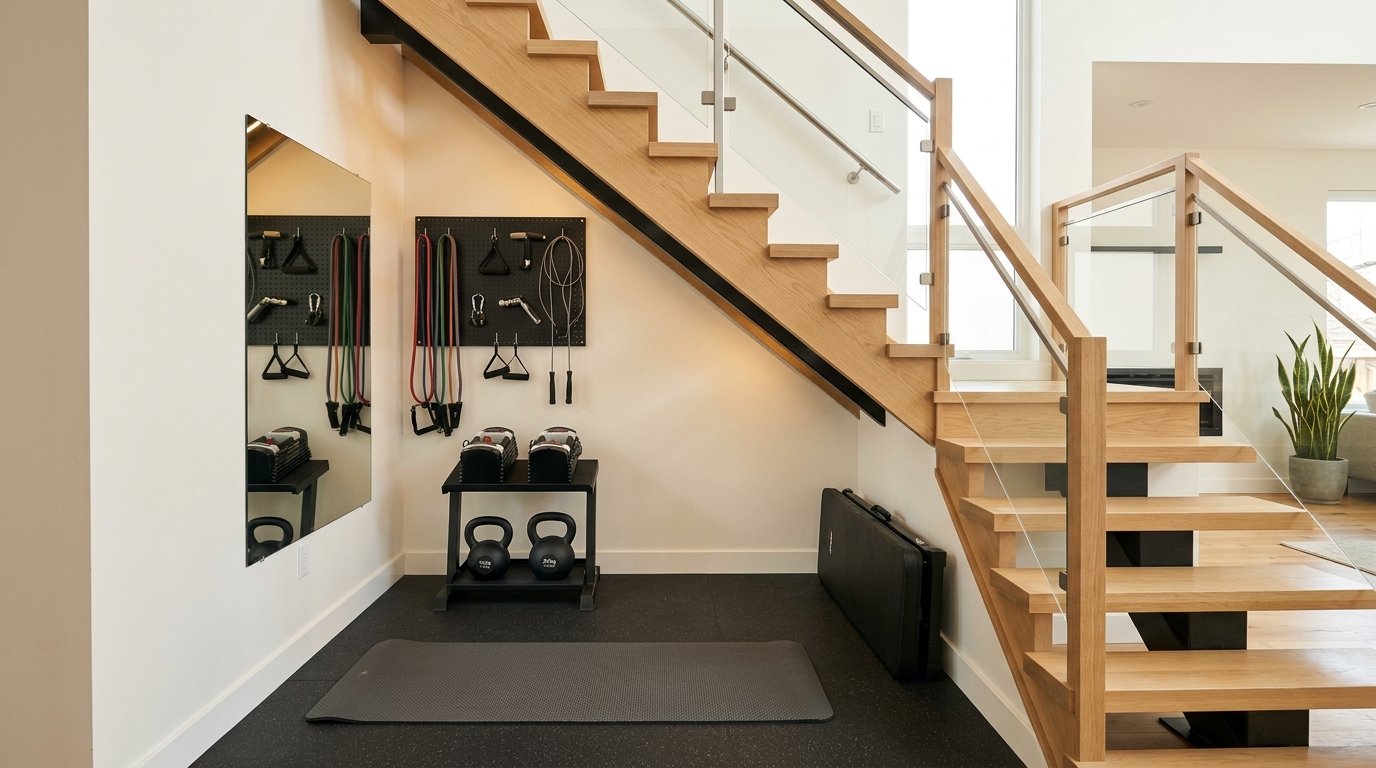
The space beneath a staircase is often difficult to furnish traditionally.
Its unusual shape can actually make it ideal for a compact gym.
Place smaller equipment beneath the lower section and keep the tallest equipment toward the side with more ceiling clearance.
A wall mirror can help visually expand the space.
15. Add a Full Length Mirror
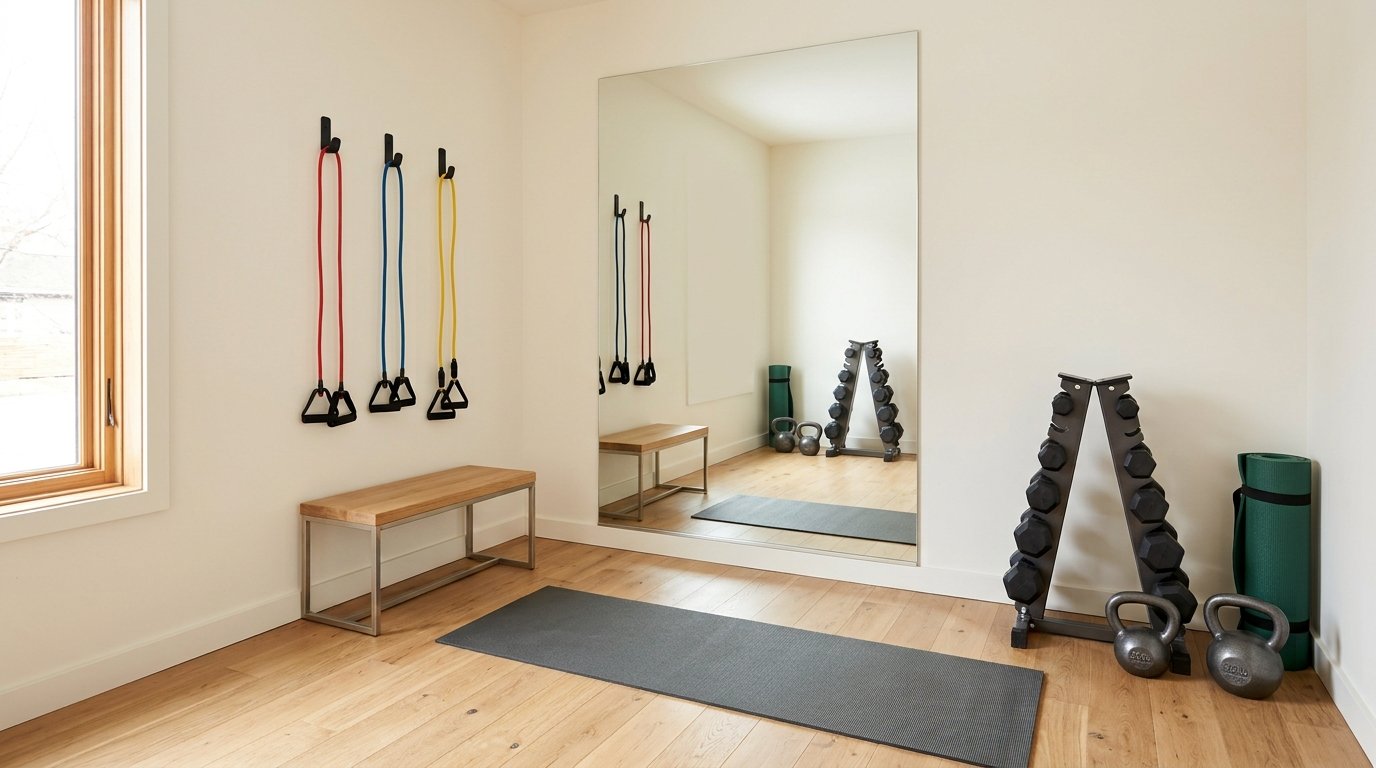
A mirror can serve a practical purpose while making a small workout area appear larger.
It lets you check your form during exercises and visually opens up the room.
A wall mounted mirror is usually more space efficient than a freestanding version.
Place it where it reflects natural or artificial light rather than a cluttered storage area.
16. Create a Compact Strength Training Station
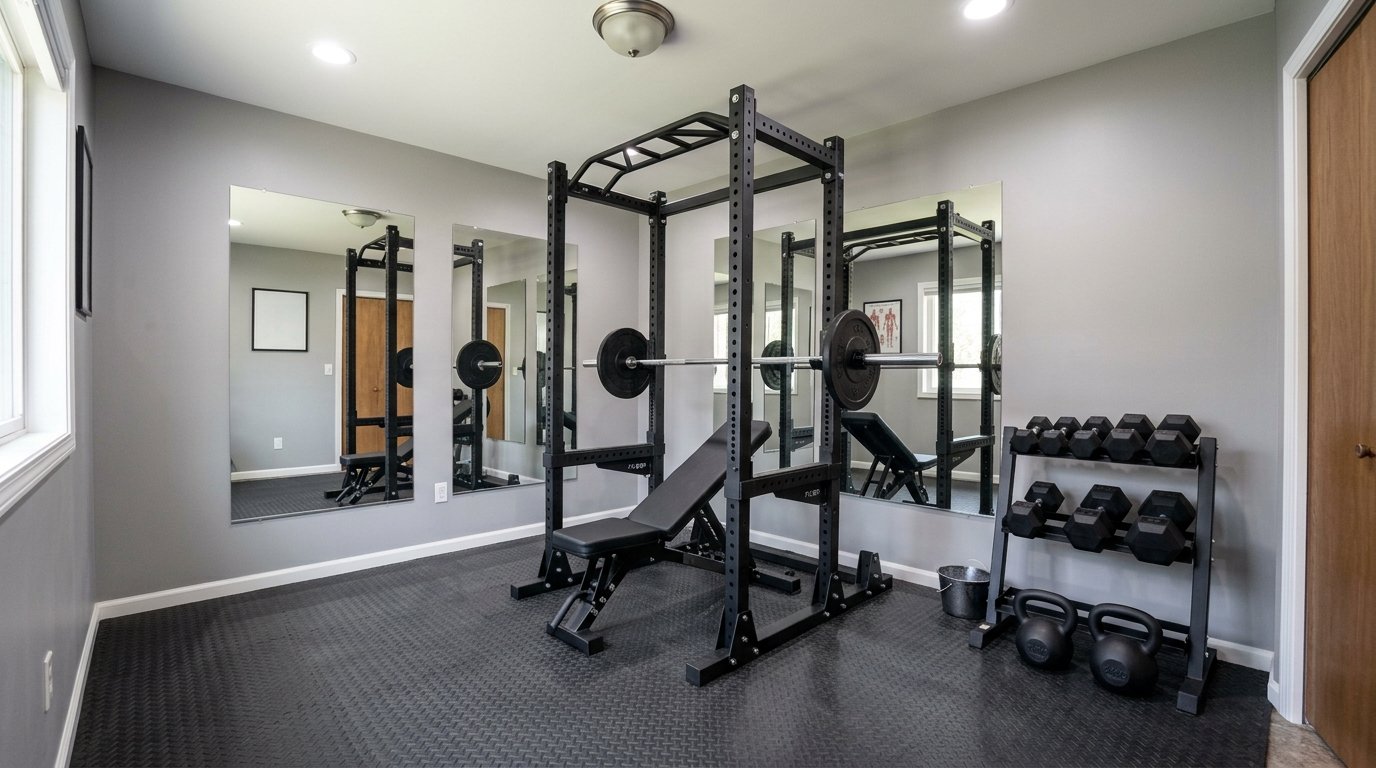
If strength training is your main goal, concentrate the equipment into one station.
A compact rack with an adjustable bench can provide many exercise options.
Add a small selection of plates and dumbbells rather than trying to recreate a full commercial gym.
Keep the rest of the floor open for warmups and accessory exercises.
17. Use a Balcony or Enclosed Outdoor Area
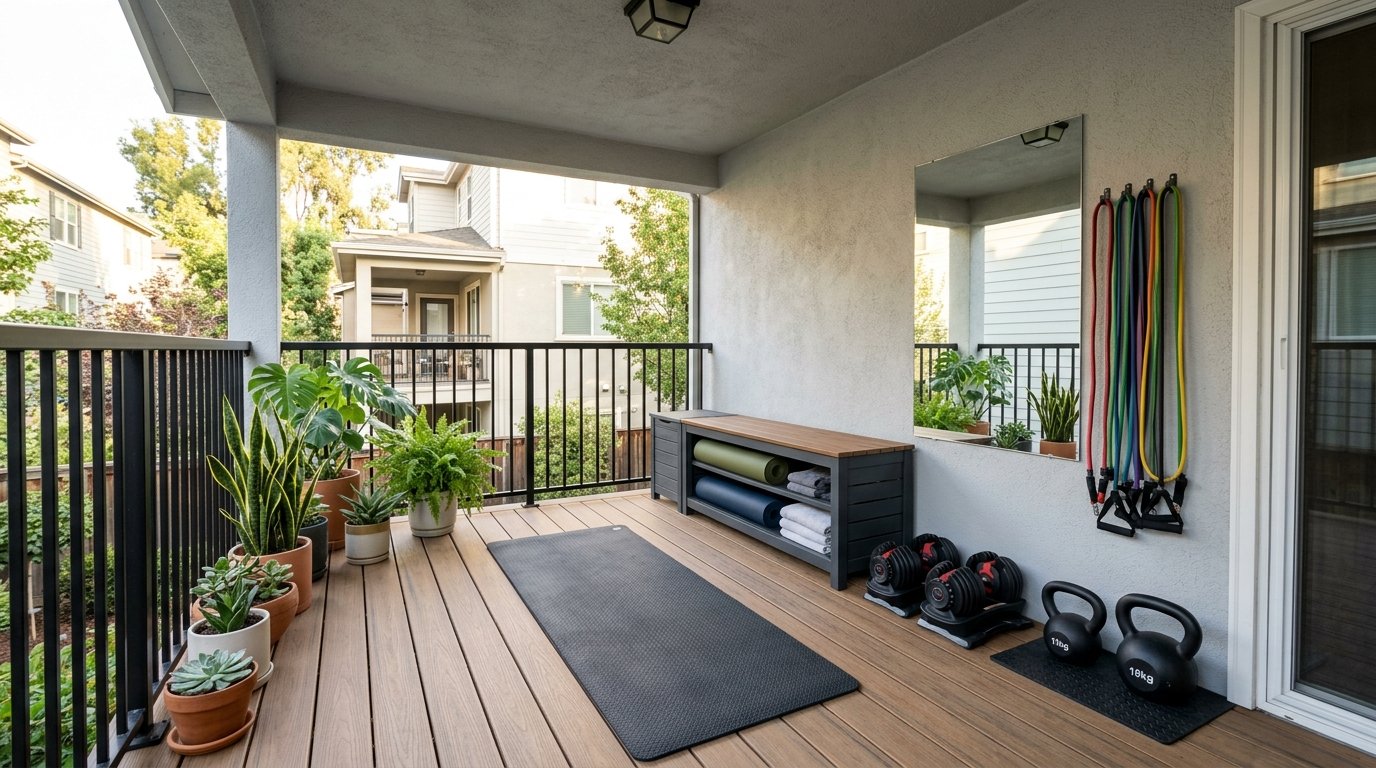
A covered balcony can work as a compact workout space if the weather and building rules allow it.
Choose lightweight equipment that can easily be stored.
A yoga mat, resistance bands and adjustable dumbbells may be enough.
Add a weather resistant storage box so the equipment can be put away when the space is being used for something else.
18. Make a Living Room Workout Zone
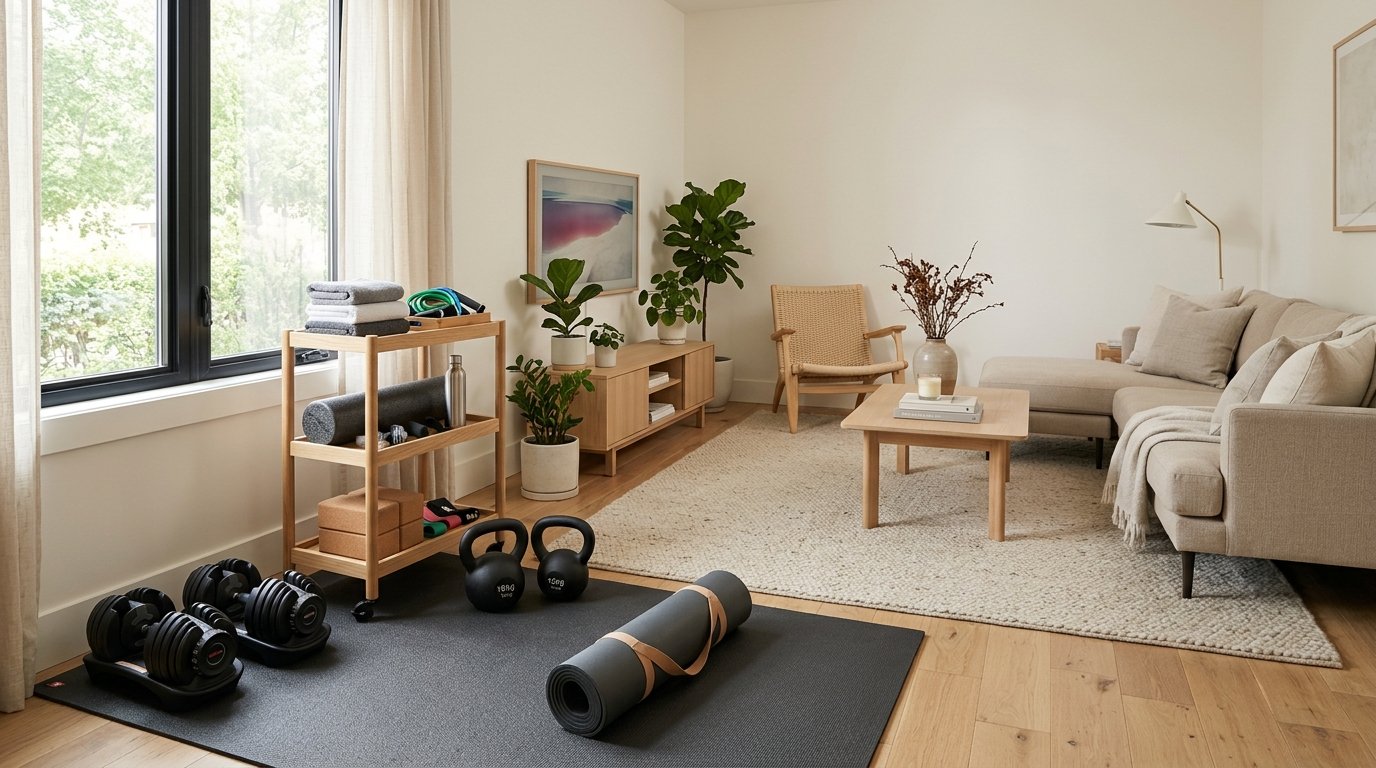
You can create a gym area without changing the purpose of the entire room.
Use a large exercise mat that can be rolled away after a workout.
Keep weights and accessories inside a nearby storage basket or cabinet.
A small rolling cart can also hold equipment and move into a closet afterward.
19. Create a Small HIIT Station
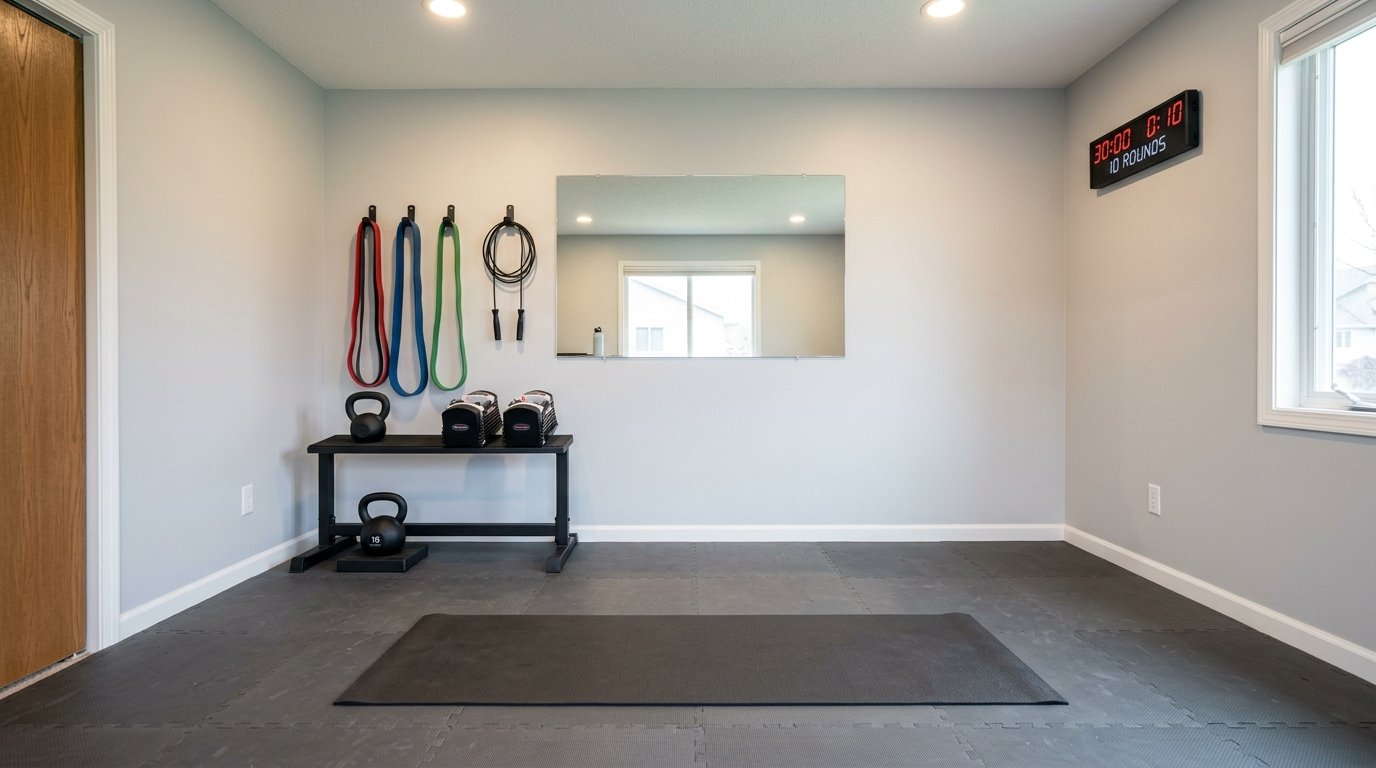
High intensity interval training does not require much equipment.
A clear floor area, a jump rope, kettlebell and resistance bands can provide enough variety for many workouts.
Keep the floor free from unnecessary furniture so you can move safely.
A timer mounted on the wall can help keep workouts organized.
20. Add a Small Dumbbell Wall
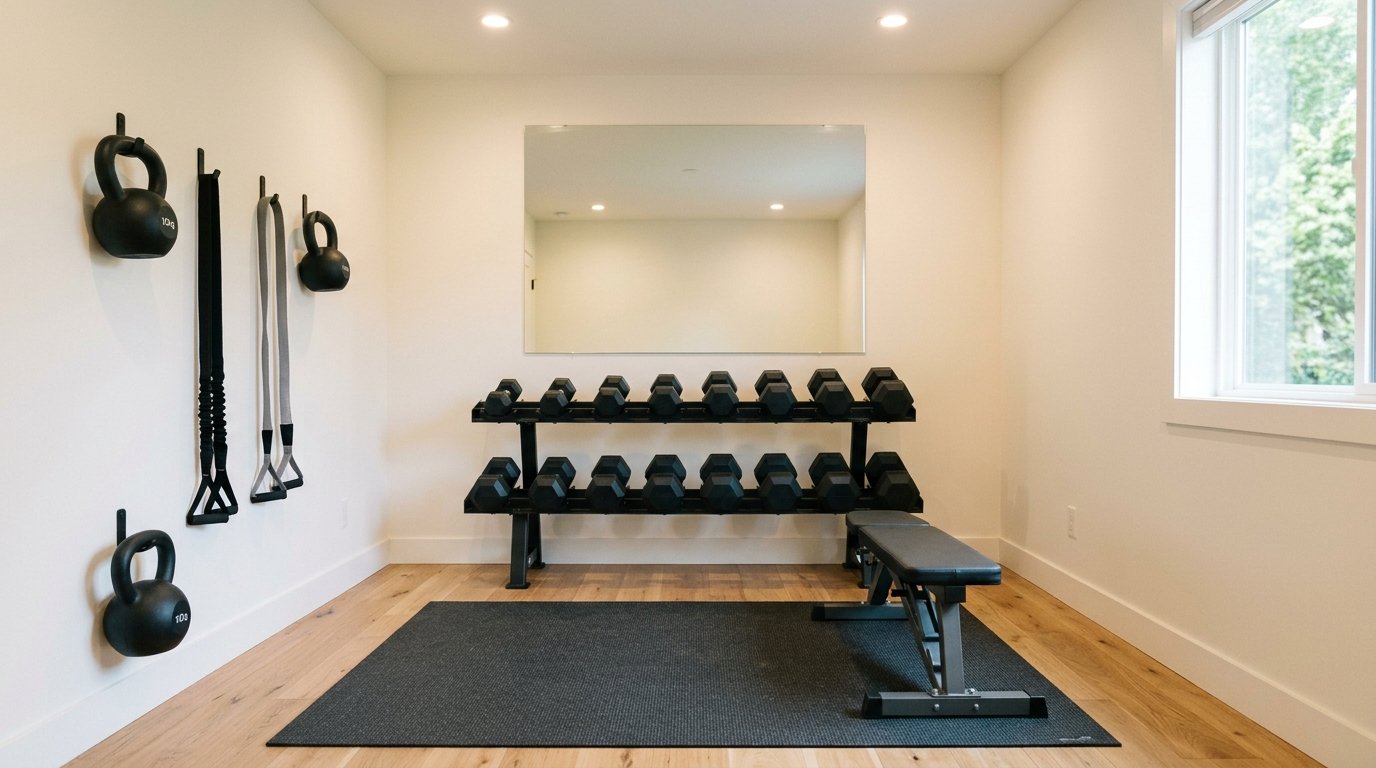
If you prefer dumbbell workouts, a dedicated wall can keep the equipment organized and accessible.
Use a narrow rack that holds multiple weights vertically or across two levels.
Place the rack against the wall so it does not interfere with movement.
A mirror above or beside it can make the equipment area look more intentional.
21. Build a Flexible Multi Purpose Gym
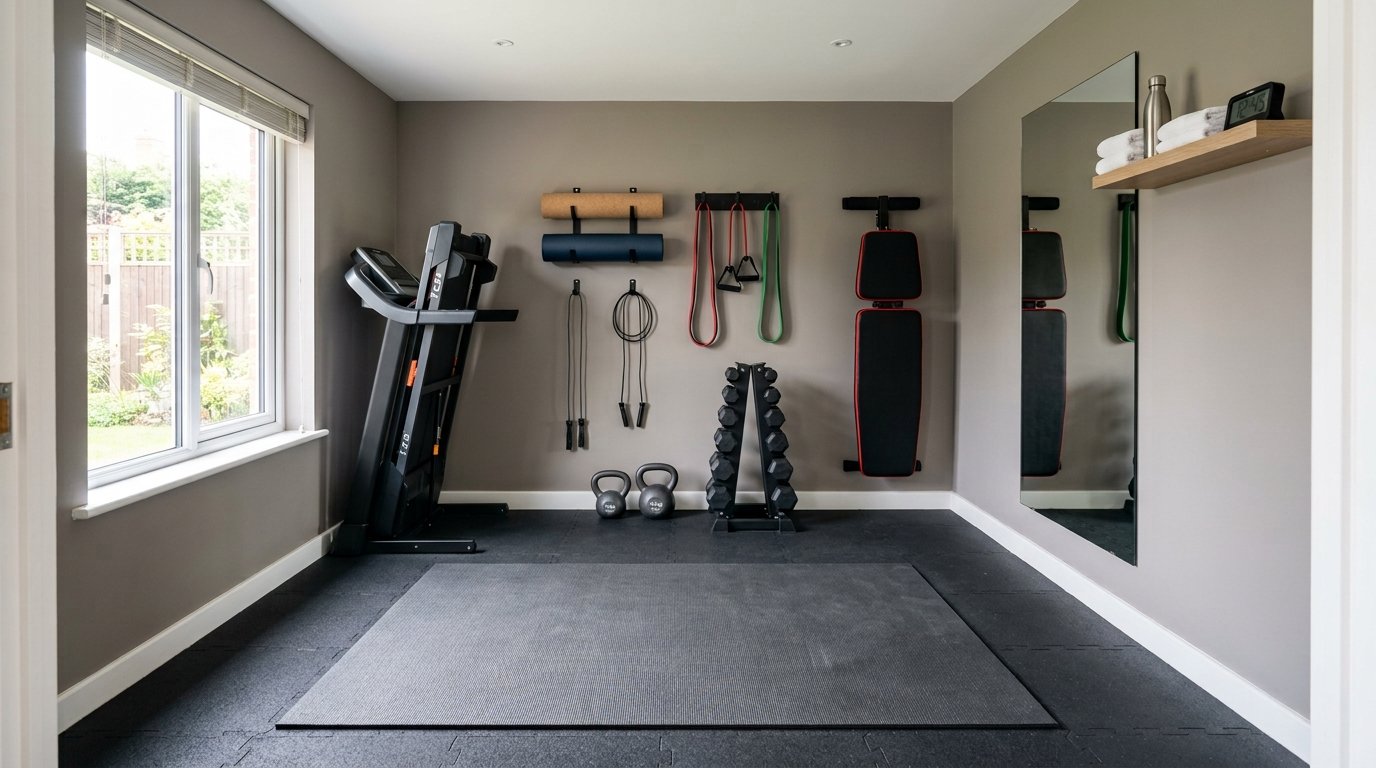
A small home gym does not have to be designed around one type of exercise.
Use equipment that can support strength training, cardio, stretching and mobility work.
A foldable bench, adjustable weights, resistance bands and a large mat can cover a huge variety of workouts.
When you finish exercising, everything can be stored against the wall and the center of the room can return to an open space.
How to Plan a Small Workout Space
The first thing to consider is not the equipment. It is the movement space.
Before buying anything, measure the area and decide which exercises you want to perform. You need enough room to move safely, particularly for exercises that involve swinging weights, jumping or lying on the floor.
Once you know how much open space you need, choose equipment that fits around it.
Storage should also be part of the plan from the beginning. A few pieces of equipment scattered around the room can make it feel much smaller than it actually is.
Vertical storage is usually one of the easiest solutions. Wall hooks, pegboards, shelves and narrow racks can keep equipment off the floor while making everything easy to access.
Choose Equipment That Does More
Small gyms work best when every piece of equipment has multiple uses.
Adjustable dumbbells are a great example because one pair can replace several traditional dumbbell sets. Resistance bands take almost no space and can be used for strength, mobility and warmups.
A foldable bench can also provide several functions while disappearing against the wall when you need more floor space.
Instead of asking what equipment you can fit into the room, ask what equipment will give you the most exercises for the least amount of space.
Keep the Room Easy to Reset
A home gym is much more useful when it takes only a few minutes to clean up.
Give every piece of equipment a specific storage location. When your workout is finished, return everything to that location.
If the space doubles as a bedroom, living room or office, this becomes even more important.
A simple storage system can make the difference between a workout area that gets used every day and one that slowly becomes a pile of equipment in the corner.
Final Thoughts
Creating a home gym in a small space is mostly an exercise in organization.
You do not need dozens of machines or an entire basement filled with weights. A clear floor, a good mat, adjustable equipment and smart storage can be enough to create a surprisingly capable workout space.
Look around your home for areas that are currently underused. An empty corner, closet, garage wall, basement section or even part of a living room may have more potential than you realize.
Start with the exercises you actually enjoy, choose equipment that supports those workouts and keep the rest of the room as open as possible.
A small gym that you can access easily and keep organized will almost always be more useful than a larger setup that feels complicated to use.