
21 Backyard Zen Garden Ideas for a Peaceful Outdoor Retreat
A backyard does not have to be filled with flowers, furniture and decorations to feel inviting. Sometimes the most relaxing outdoor spaces are the simplest ones.
A Zen garden can turn an ordinary section of the backyard into a quiet place to sit, read, think or simply step away from the noise of everyday life. Gravel, natural stone, carefully placed plants and a few simple structures can completely change the atmosphere.
You also do not need a huge backyard to create one. A small corner beside a patio, an unused side yard or even a narrow strip along a fence can become a peaceful retreat with the right arrangement.
The goal is to create a space that feels balanced rather than crowded. Every element should have a purpose, and empty space should be treated as part of the design.
Here are 21 backyard Zen garden ideas to help you create a calmer and more intentional outdoor space.
1. Create a Simple Gravel Zen Garden
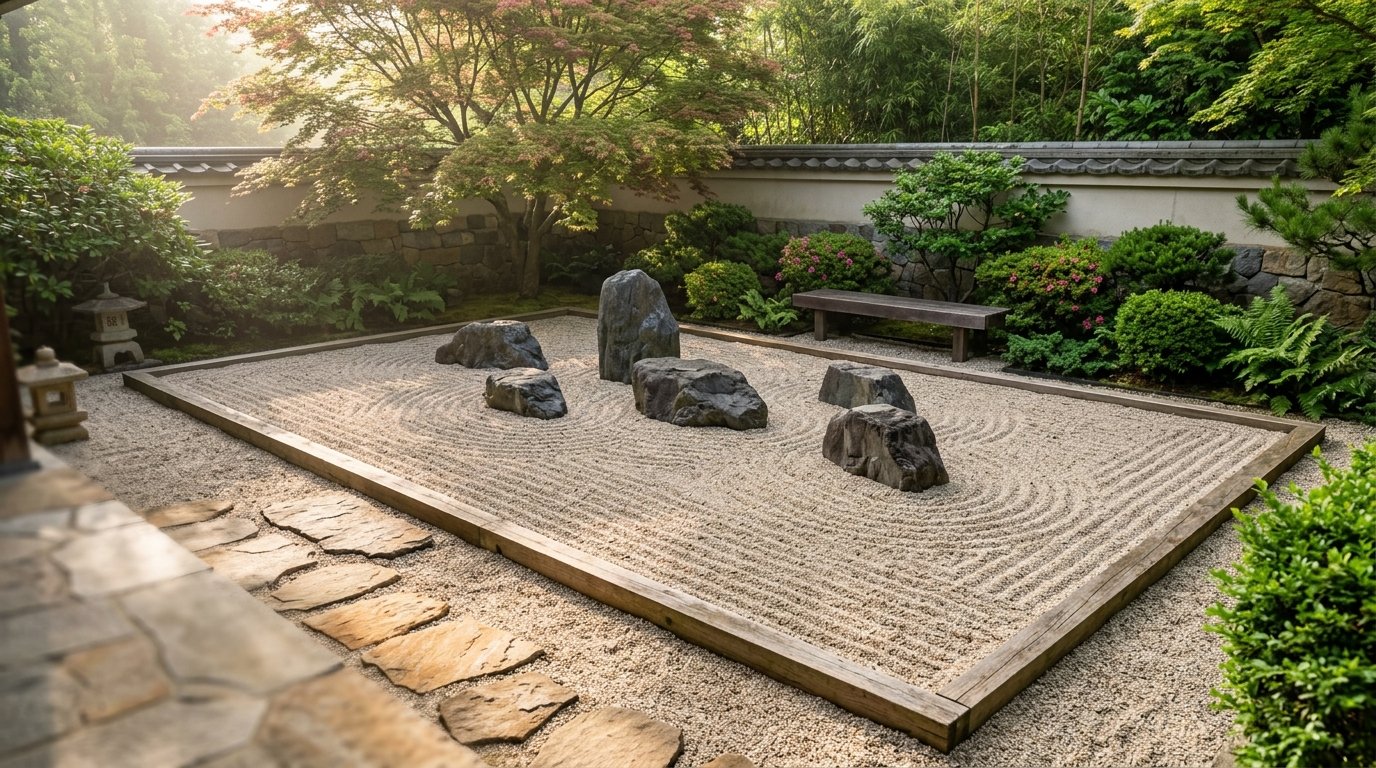
Gravel is one of the easiest ways to establish the foundation of a Zen inspired garden.
Choose fine light colored gravel or small natural stones and spread them across a defined area. You can then rake the surface into simple lines or curved patterns.
The patterns do not need to be complicated. Repeated lines around larger stones can create a surprisingly calming effect.
Keep the surrounding planting simple so the gravel remains the main visual element.
2. Add a Small Stone Path
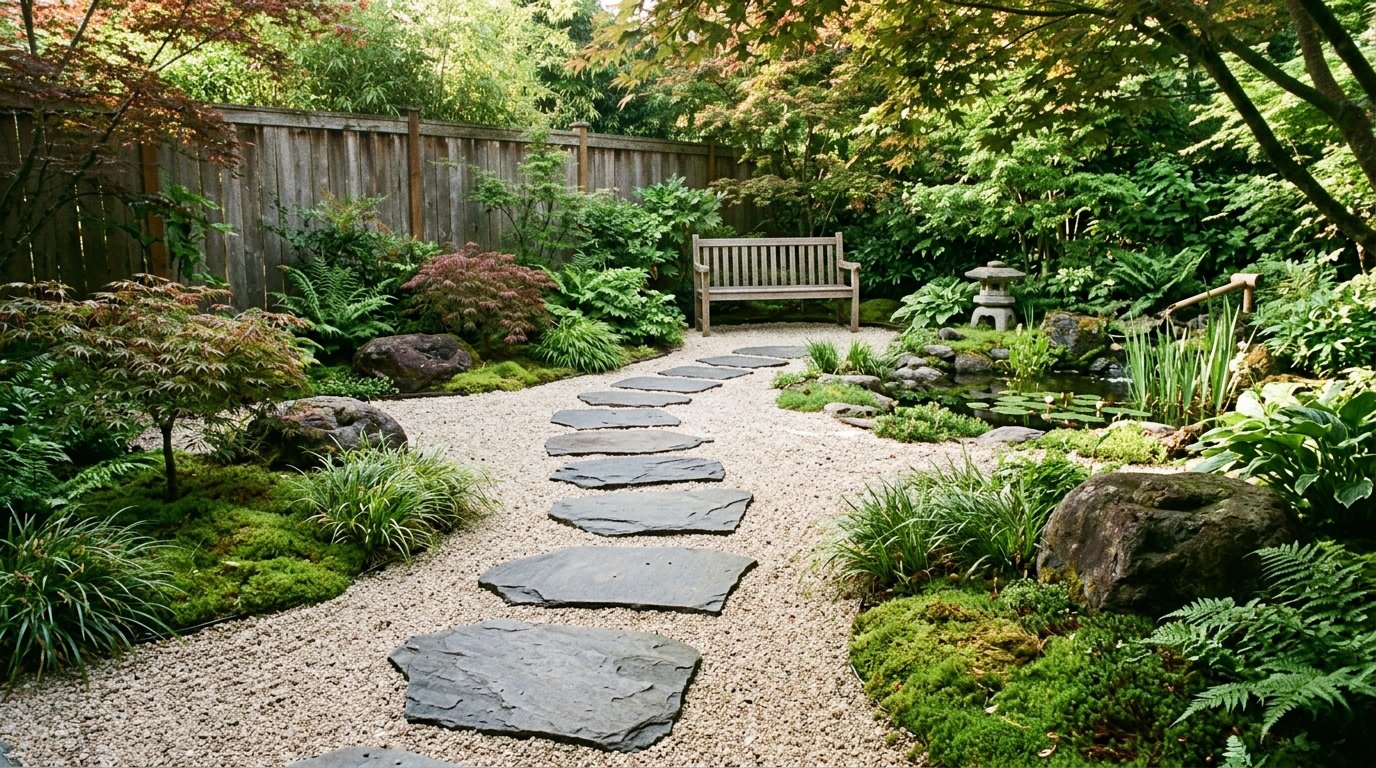
A stepping stone path can give your Zen garden structure while also encouraging you to slow down as you move through the space.
Use irregular natural stones rather than perfectly identical pavers. Their differences in shape and texture make the garden feel more organic.
Leave consistent walking space between each stone while keeping the path slightly curved.
The path can lead toward a bench, water feature or quiet seating area at the back of the garden.
3. Install a Bamboo Privacy Screen
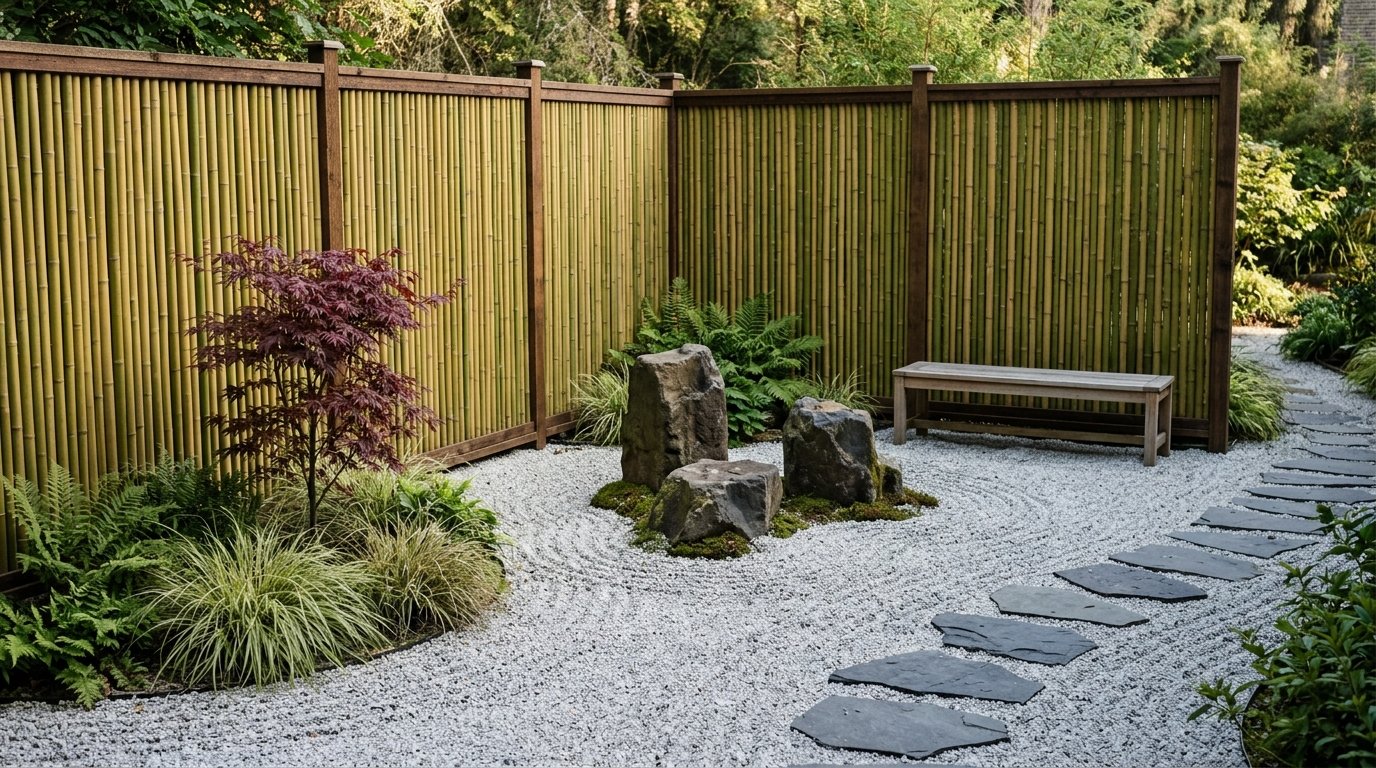
Privacy can make a Zen garden much more relaxing. Bamboo is a natural way to create a visual barrier without making the space feel heavy.
Use tall bamboo panels along one boundary of the garden or combine them with a simple wooden frame.
The warm natural color of bamboo works particularly well with stone and gravel.
Keep the rest of the garden relatively open so the privacy screen becomes a quiet background rather than another focal point.
4. Add a Small Water Feature
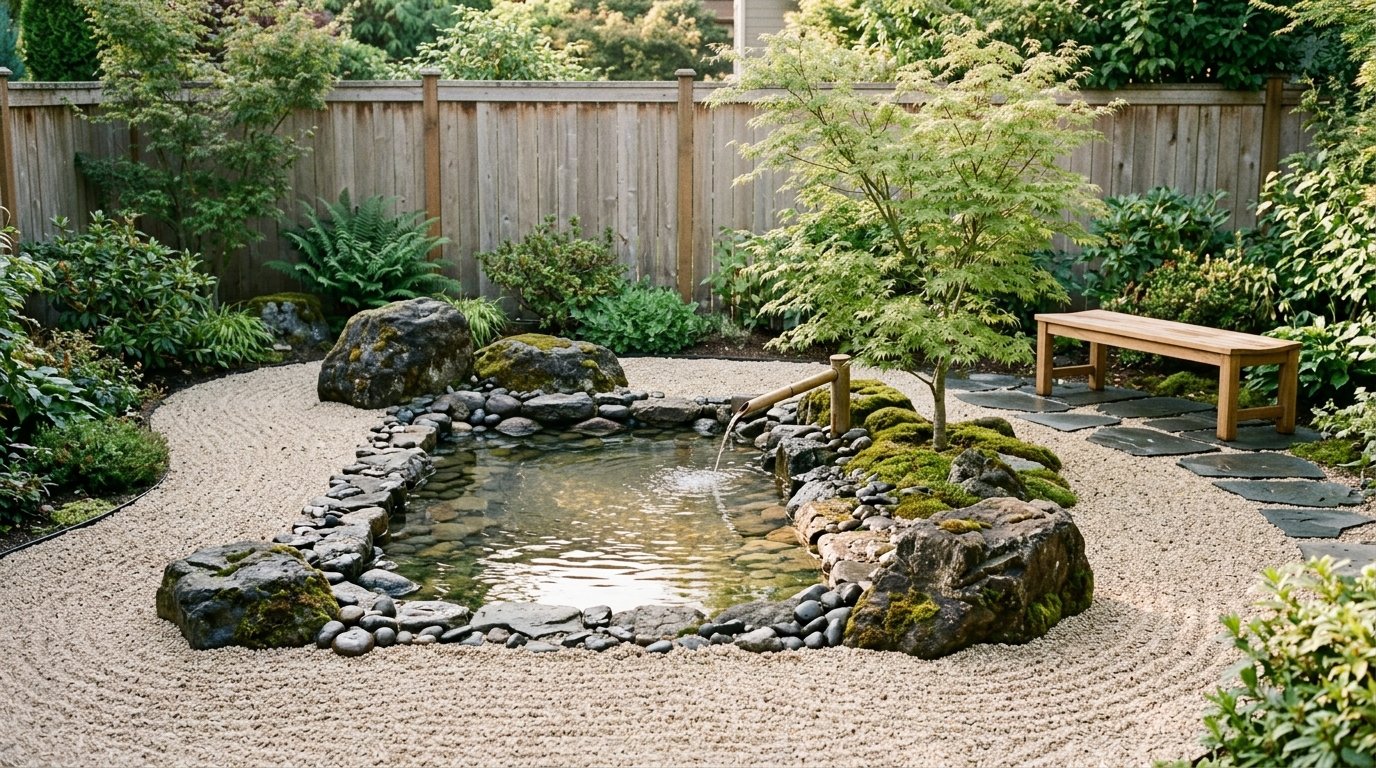
The sound of moving water can make an outdoor space feel much more peaceful.
A small recirculating fountain or shallow pond can be enough. You do not need a large waterfall to create the effect.
Natural stone works well around the water feature because it keeps the design grounded and understated.
Position the feature somewhere where you can hear it from the main seating area.
5. Use a Japanese Maple as a Focal Point
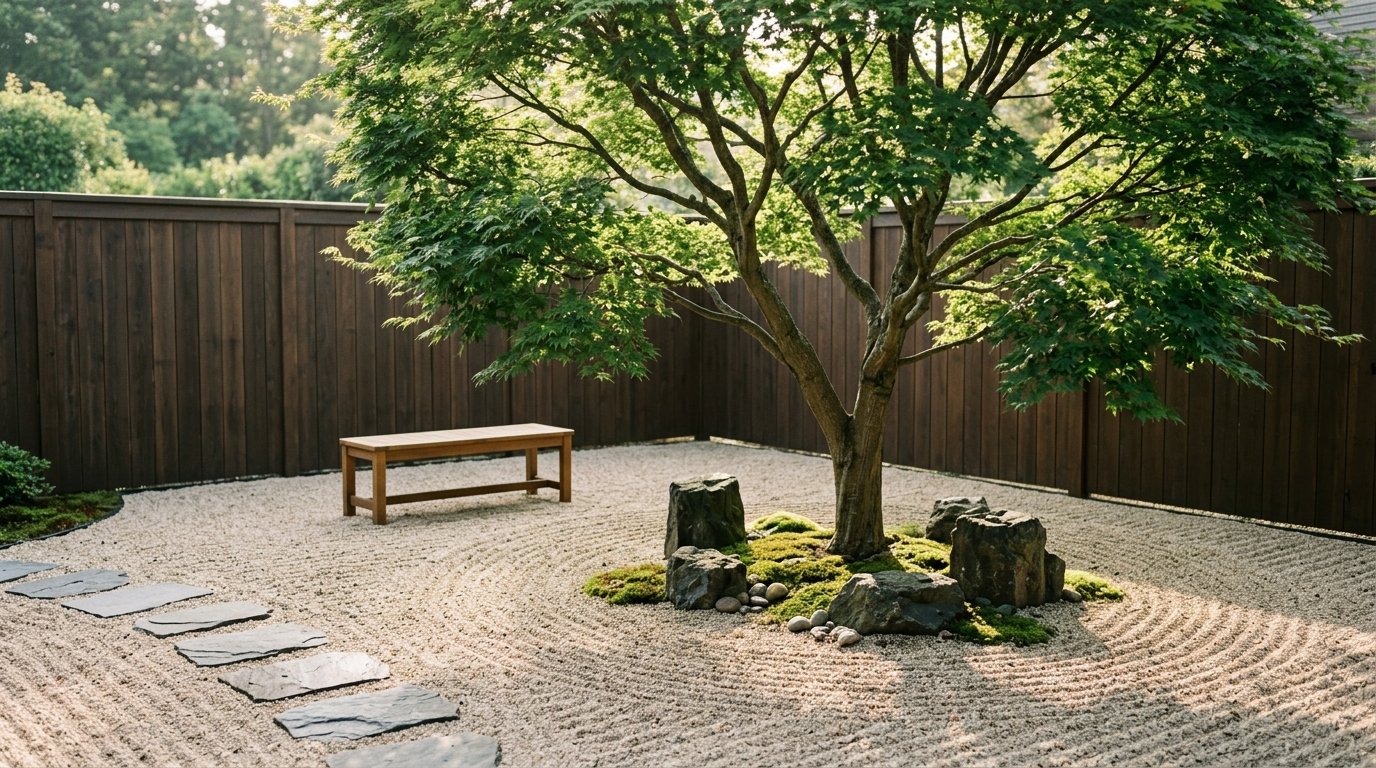
A Japanese maple can become the main visual feature of a Zen inspired garden.
Its delicate foliage and naturally sculptural branches create interest without requiring lots of additional decoration.
Place the tree where it has enough room to develop its shape and avoid surrounding it with too many other plants.
A few large stones beneath the canopy can complete the composition.
6. Create a Moss Garden
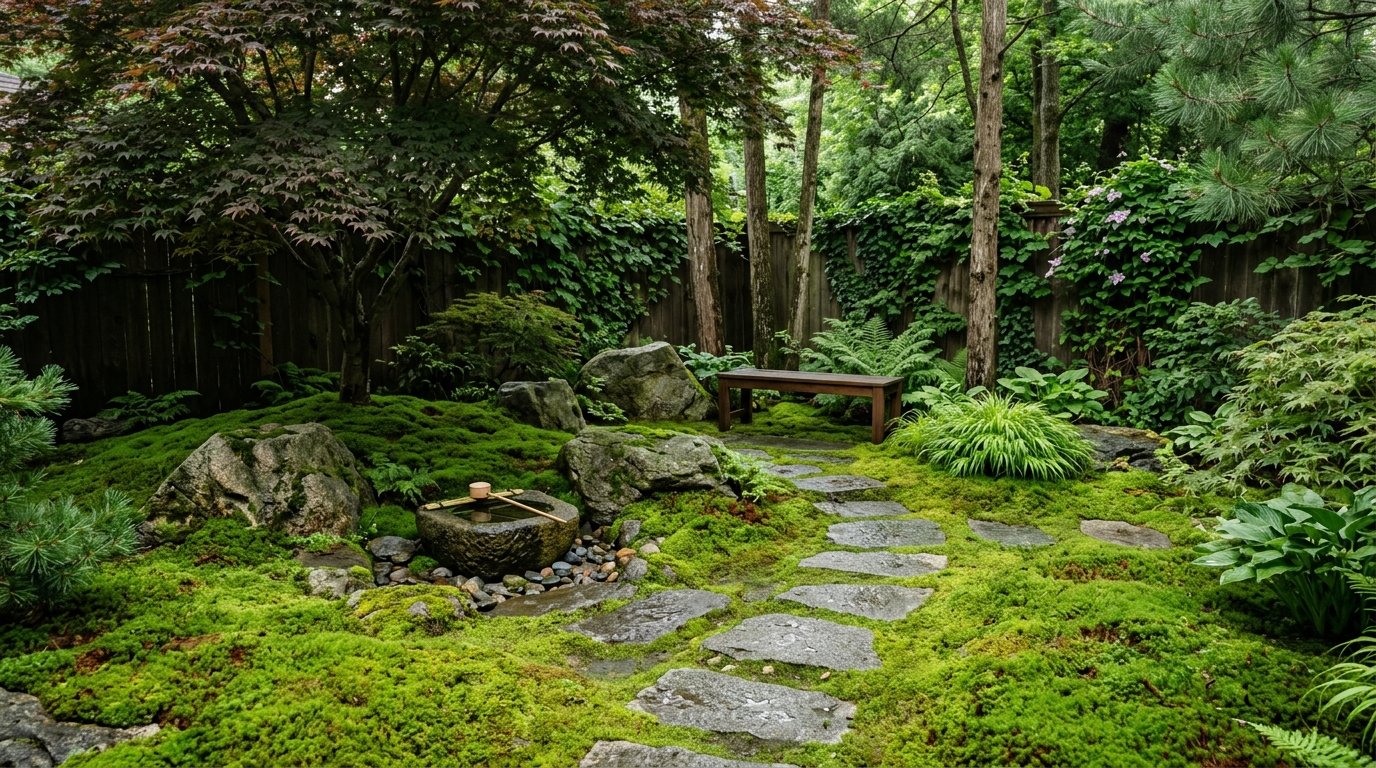
Moss can bring a soft, almost timeless feeling to a Zen garden.
It works particularly well in shaded or partially shaded areas where other plants may struggle.
Use moss between larger stones or around the base of trees to create a natural transition between different materials.
Avoid trying to fill every empty space. A few patches of moss can have more visual impact than a completely covered area.
7. Add a Stone Lantern
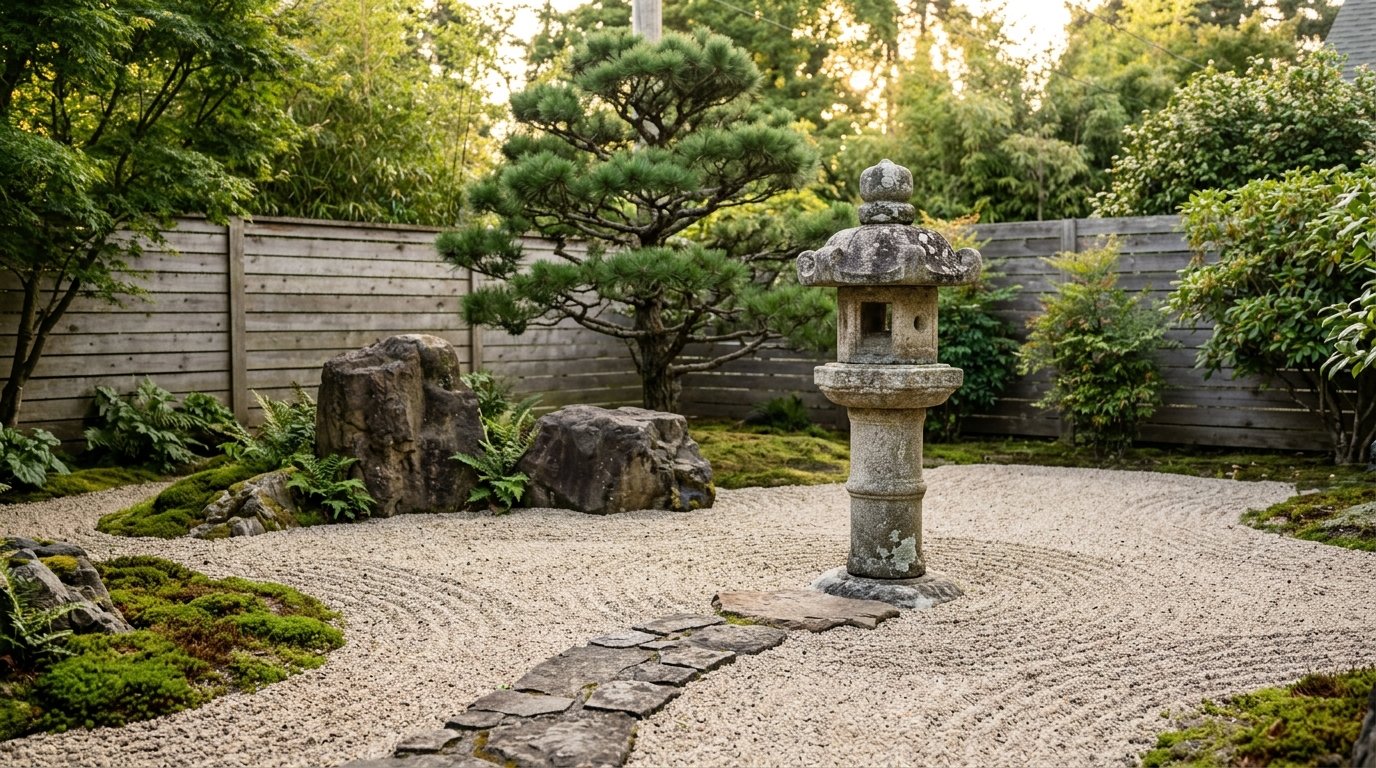
A traditional stone lantern can introduce a strong Japanese garden influence without requiring many additional decorations.
Choose a simple weathered stone design rather than something overly ornate.
Place the lantern slightly away from the center of the garden so it feels naturally integrated into the landscape.
Surround it with gravel, moss and one or two larger stones for a balanced arrangement.
8. Build a Dry River Bed
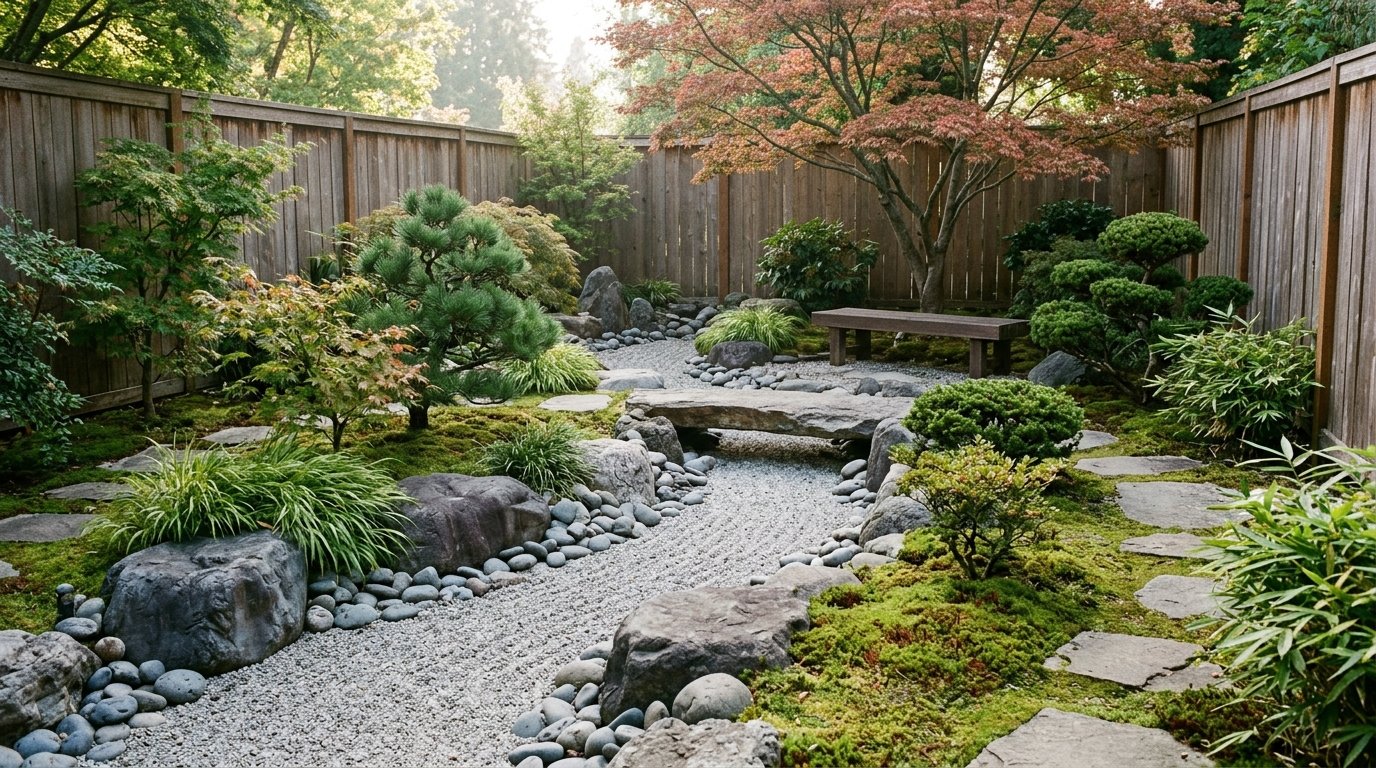
A dry river bed can create the impression of flowing water without requiring an actual pond.
Use stones of different sizes to create a natural channel through the garden.
Larger rocks can define the edges while smaller gravel fills the center.
Add a few plants along the edges to soften the transition and make the river bed look naturally integrated into the landscape.
9. Add a Simple Wooden Bench
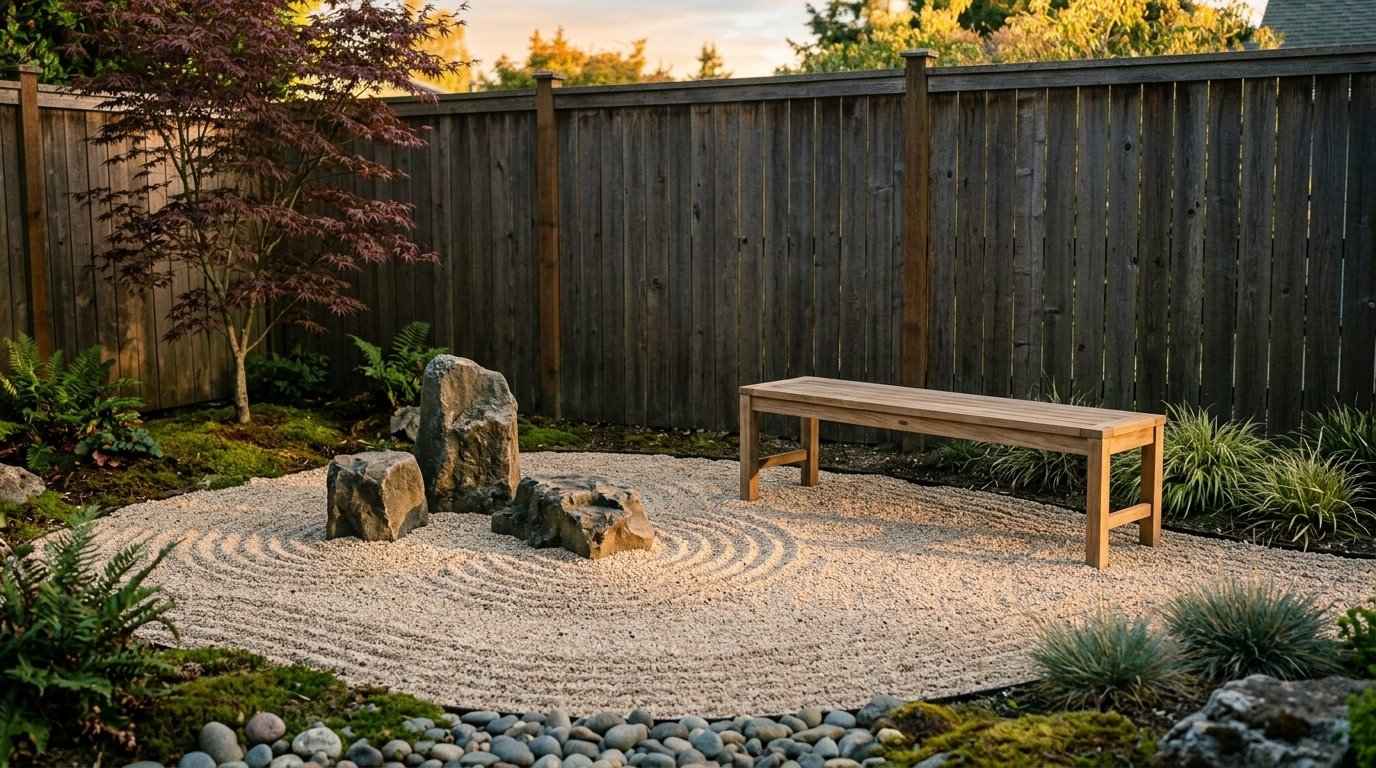
You do not need elaborate outdoor furniture to enjoy a Zen garden.
A simple wooden bench can provide a place to sit while keeping the visual design clean.
Choose natural wood with a simple shape and minimal ornamentation.
Position it so it faces the garden’s main feature rather than the house.
10. Use Large Natural Boulders
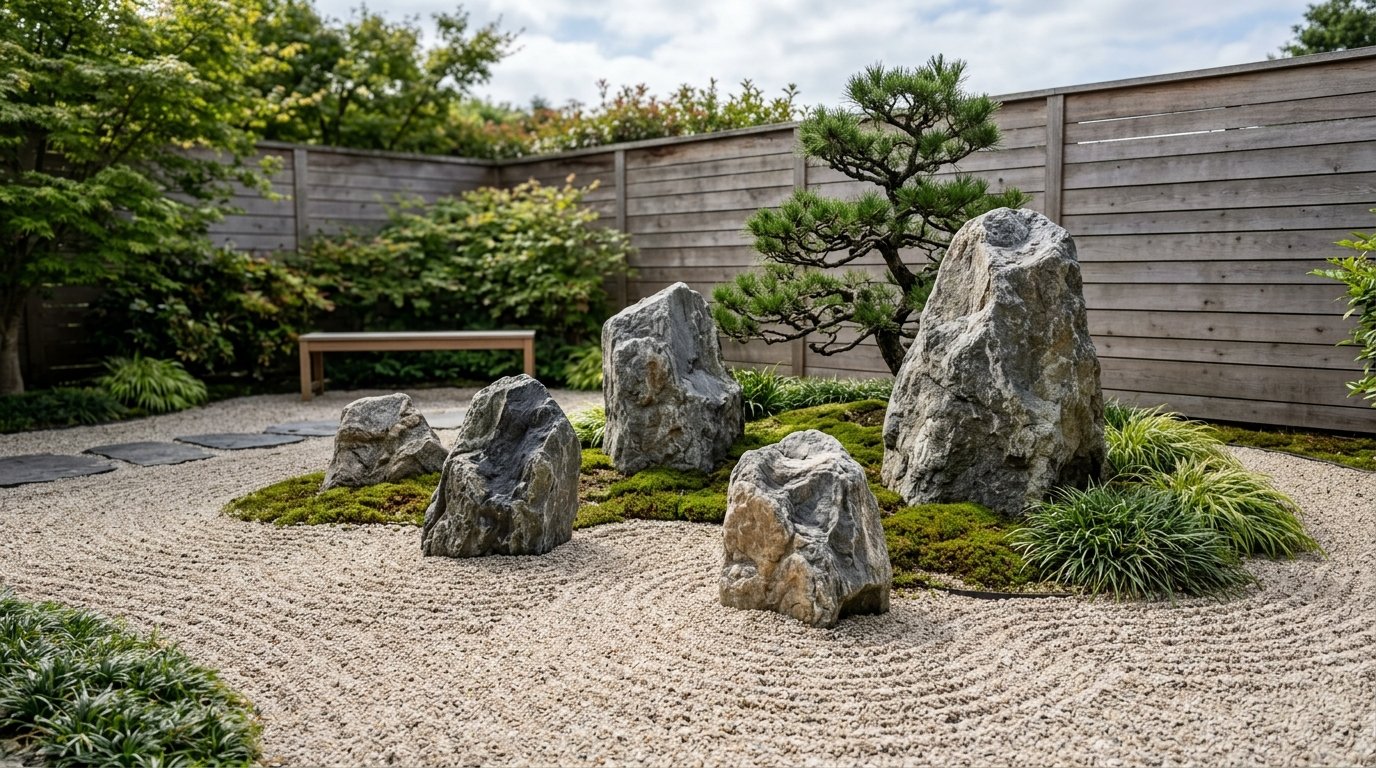
Large stones can give a Zen garden a sense of permanence and grounding.
Choose stones with irregular natural shapes rather than perfectly rounded landscaping rocks.
Place them in groups of three or five rather than scattering individual stones randomly throughout the space.
Partially burying the stones can make them look as though they have always been part of the landscape.
11. Create a Small Meditation Corner
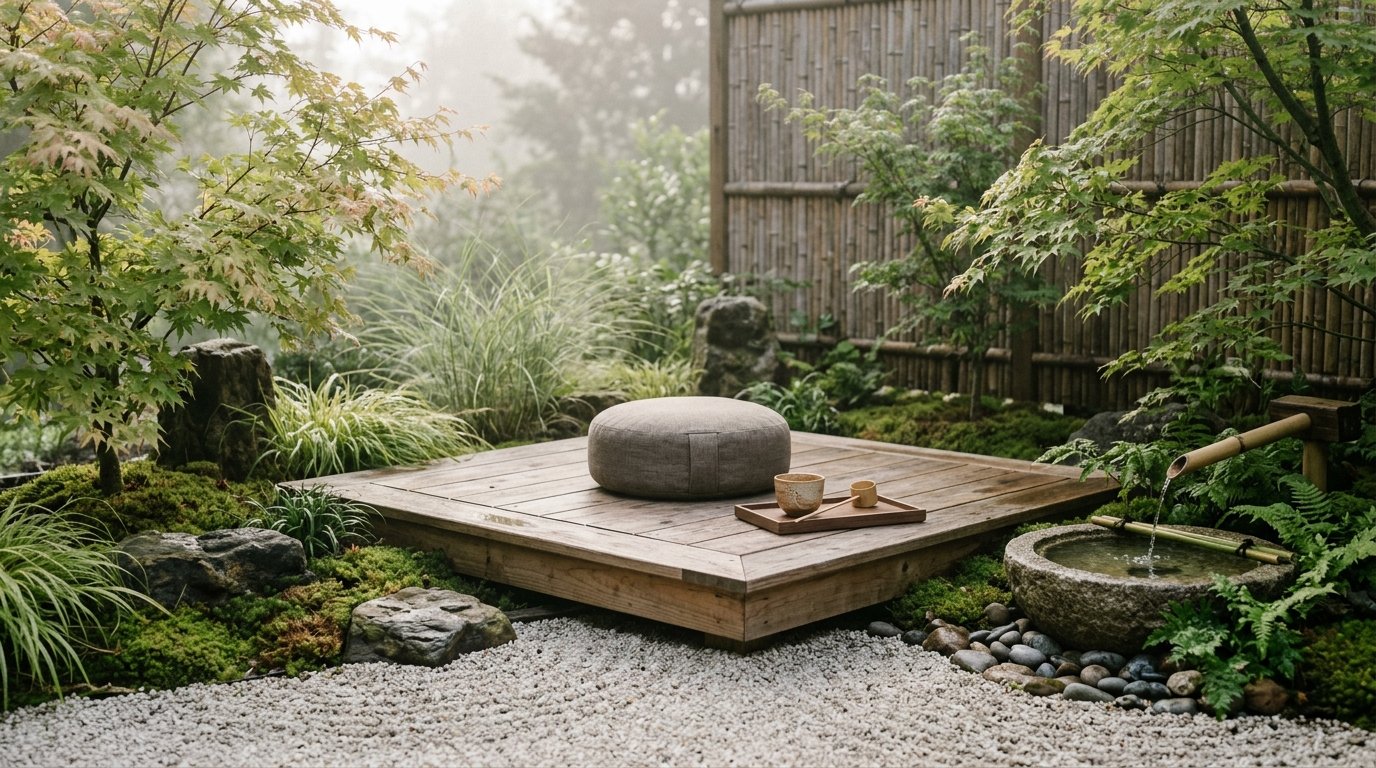
A Zen garden can become a dedicated space for quiet time if you include a comfortable place to sit.
A simple wooden platform, meditation cushion or low bench can define the area without requiring much space.
Keep the surrounding landscape simple so the seating area does not feel visually busy.
Place it near greenery or a water feature if you want a stronger connection with nature.
12. Use a Gravel and Grass Combination
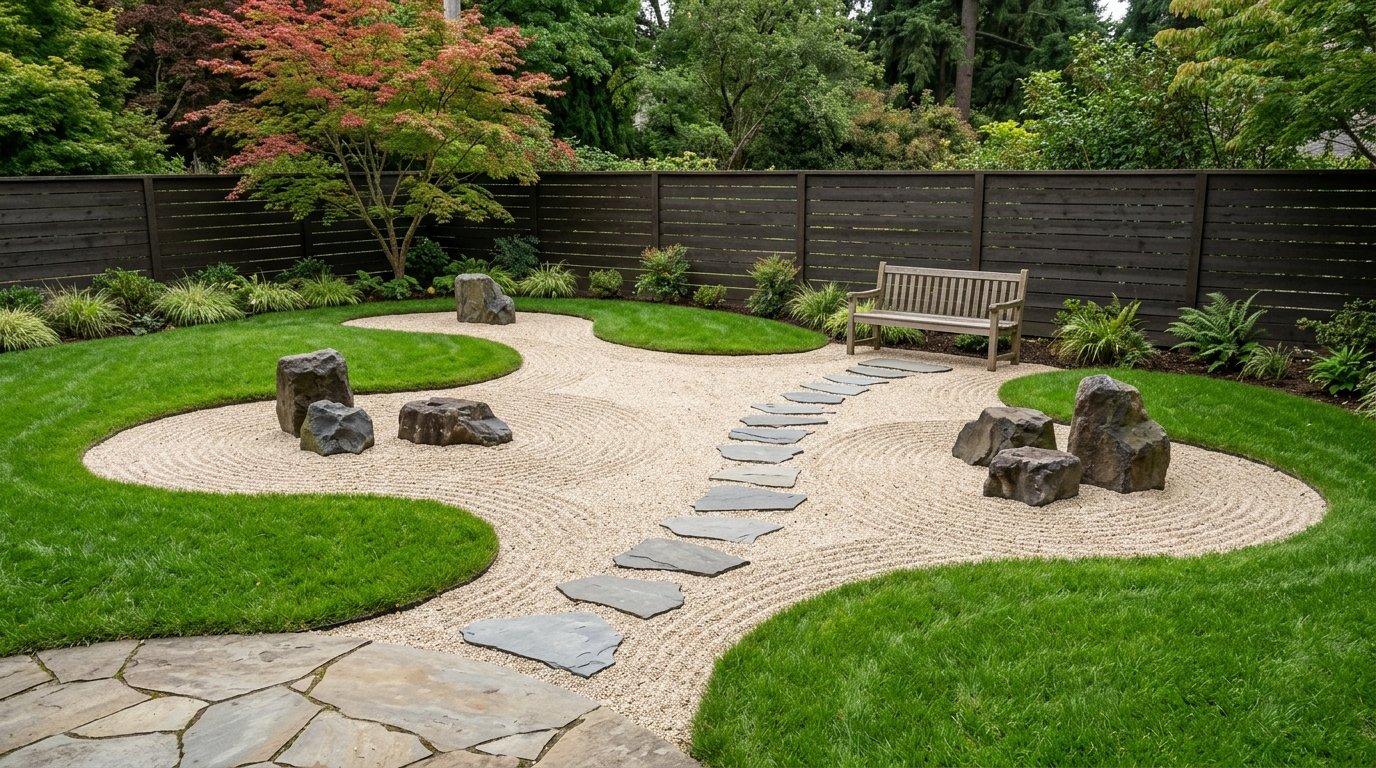
A Zen garden does not have to be entirely gravel.
Combining gravel with small patches of grass can create a softer appearance while maintaining a simple overall structure.
Use clean boundaries between the materials so the design remains intentional.
Curved transitions can work particularly well in larger backyard spaces.
13. Add a Bamboo Fountain
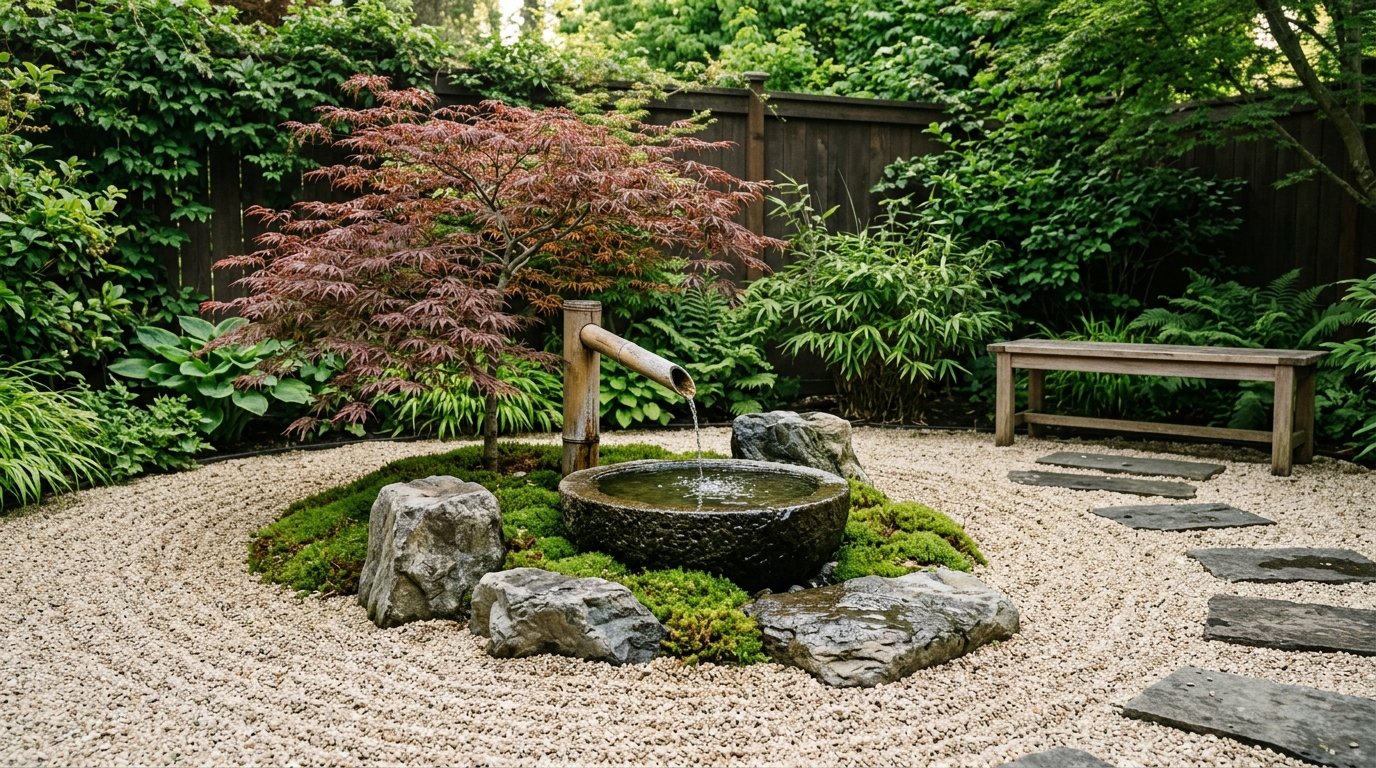
A bamboo fountain can provide both movement and sound while taking up very little space.
It works especially well in smaller gardens where a full pond would be impractical.
Place the fountain beside stones and low plants rather than making it the only feature.
A small catch basin beneath the bamboo spout can keep the installation compact.
14. Design a Tiny Zen Garden
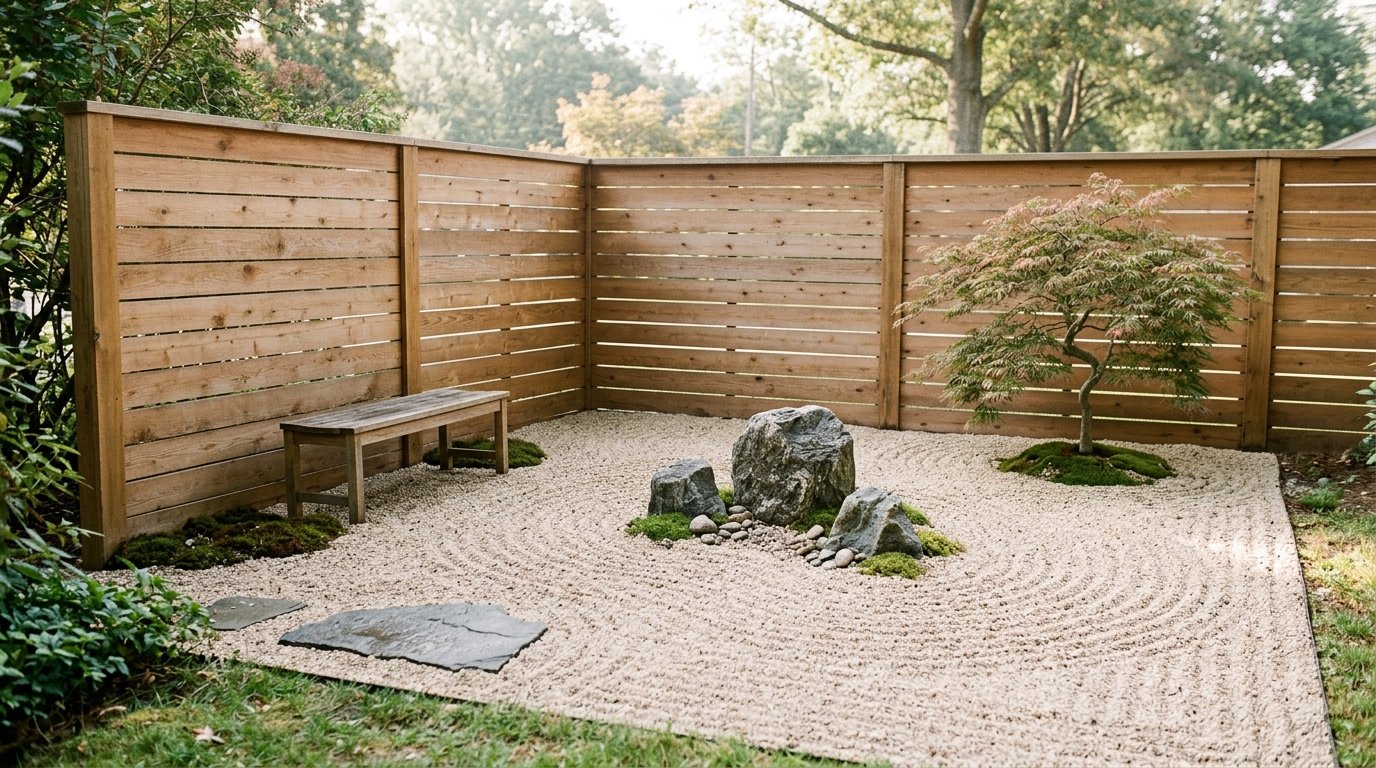
Even a very small backyard corner can become a Zen retreat.
Use a compact gravel bed, two or three stones and one carefully chosen plant.
A narrow bench or floor cushion can provide the seating without taking over the space.
Keeping the design minimal is particularly important when working with limited square footage.
15. Add a Pergola Over the Seating Area
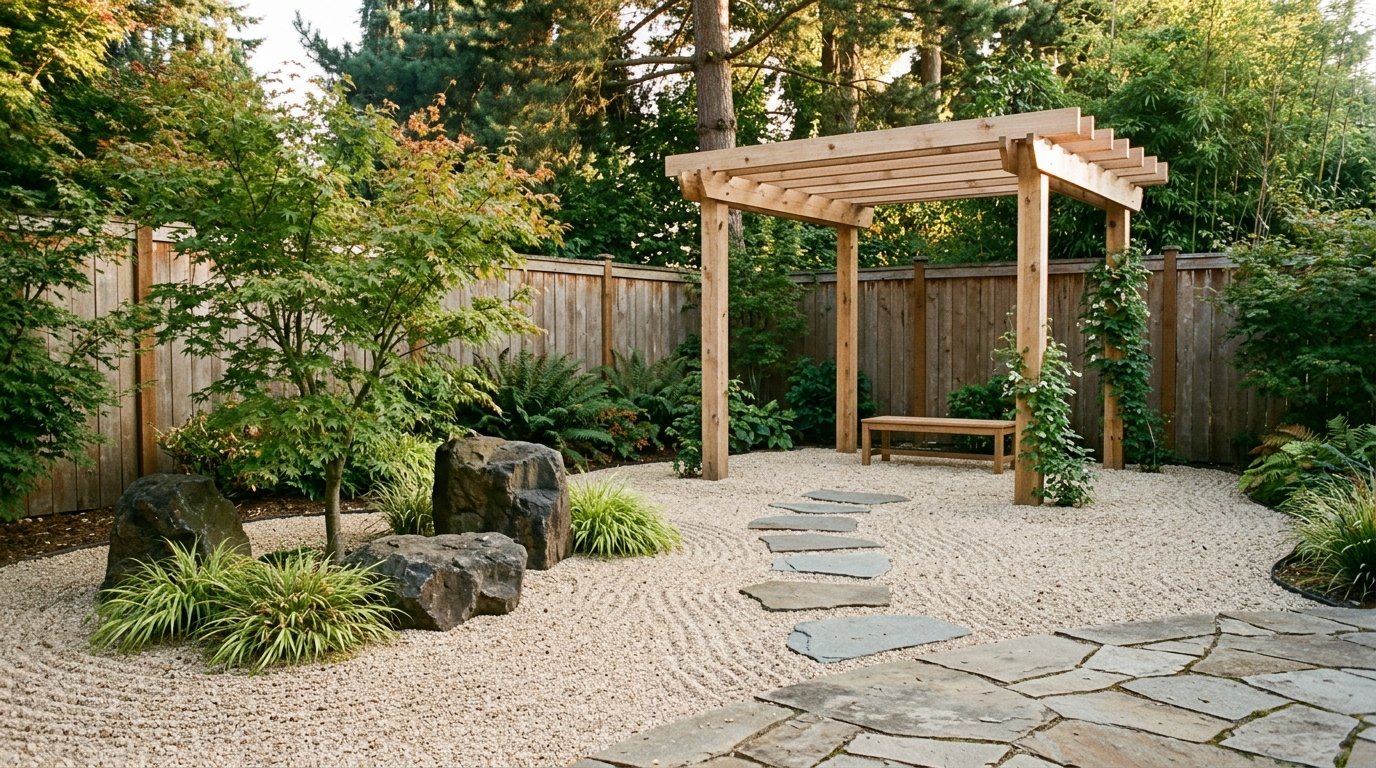
A small pergola can create a defined destination within the garden.
Use natural wood rather than an overly decorative structure.
Climbing plants can eventually soften the pergola, although leaving some of the structure visible can preserve the clean Zen aesthetic.
Place a simple bench or two low chairs beneath it.
16. Use Black and White Stones
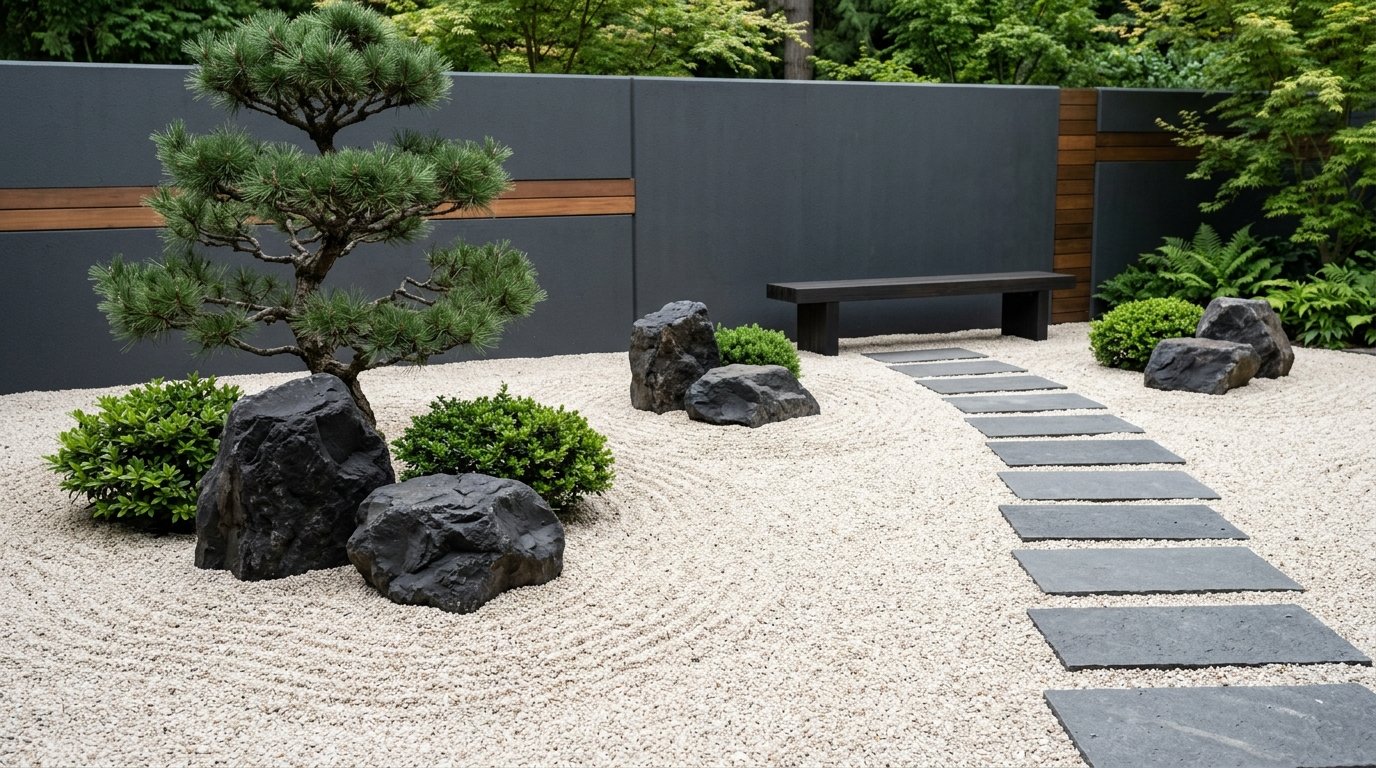
A restrained color palette can make a Zen garden feel especially modern.
Combine pale gravel with darker stones to create visual contrast.
Keep the plants mostly green so the stones remain the main feature.
This approach works particularly well with contemporary homes and simple architectural lines.
17. Add a Japanese Style Bridge
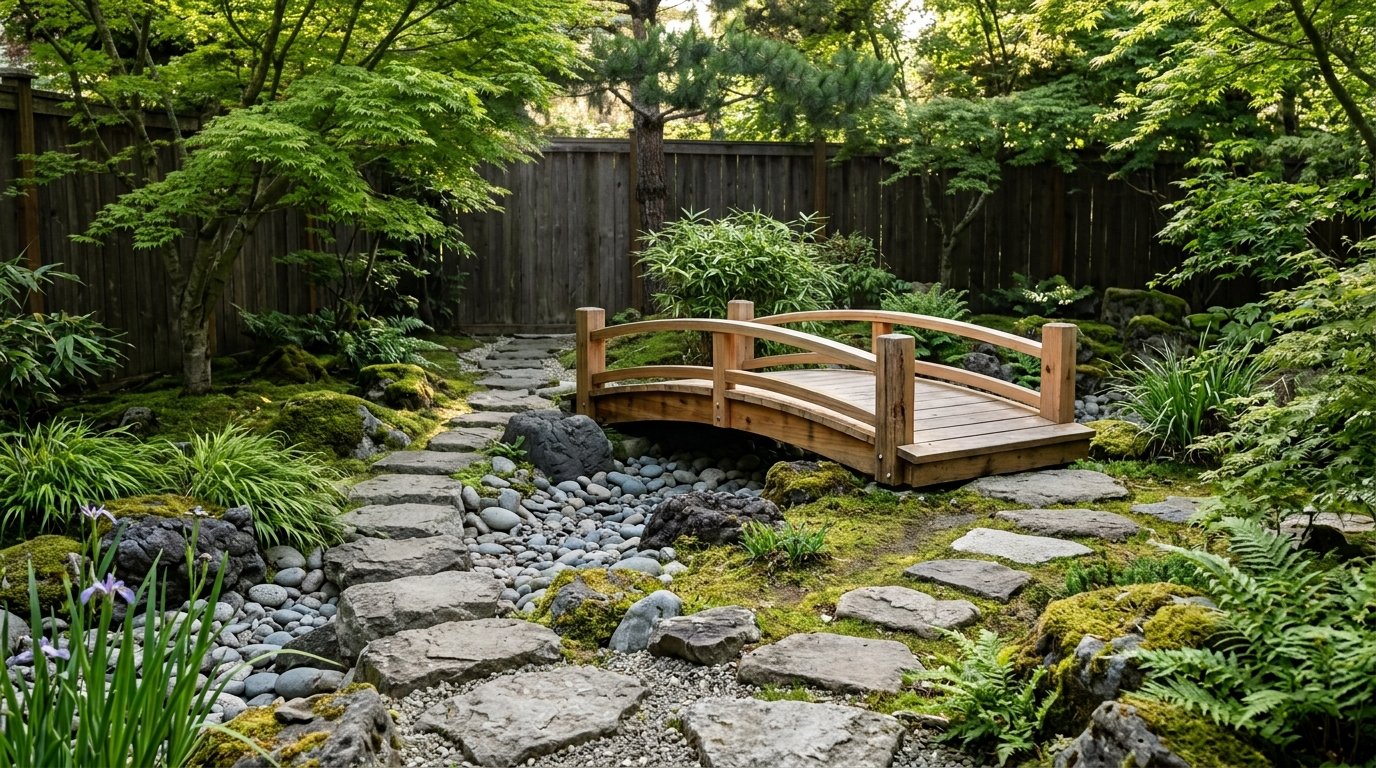
A small bridge can become a beautiful focal point when crossing a dry river bed or narrow pond.
It does not need to be large. Even a simple curved wooden bridge can create a sense of movement through the garden.
Use natural wood and keep the surrounding landscape understated.
Place stones and low plants around the bridge so it feels integrated rather than decorative.
18. Create a Raised Stone Garden
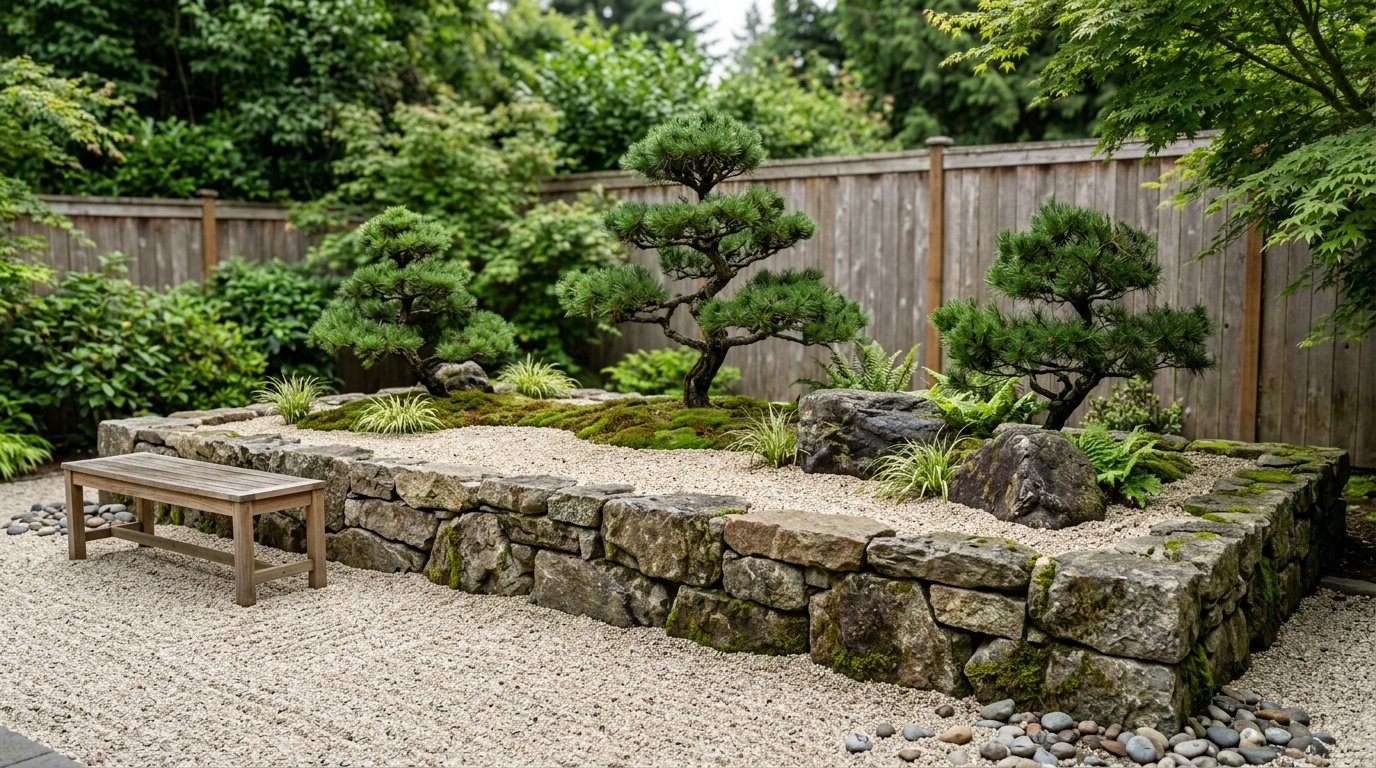
A slightly raised stone bed can add dimension to a flat backyard.
Use large stones to create a low retaining edge and fill the interior with gravel, moss and carefully selected plants.
Keep the height modest so the garden still feels natural.
A raised area can also make a small garden feel more visually layered.
19. Add a Simple Fire Feature
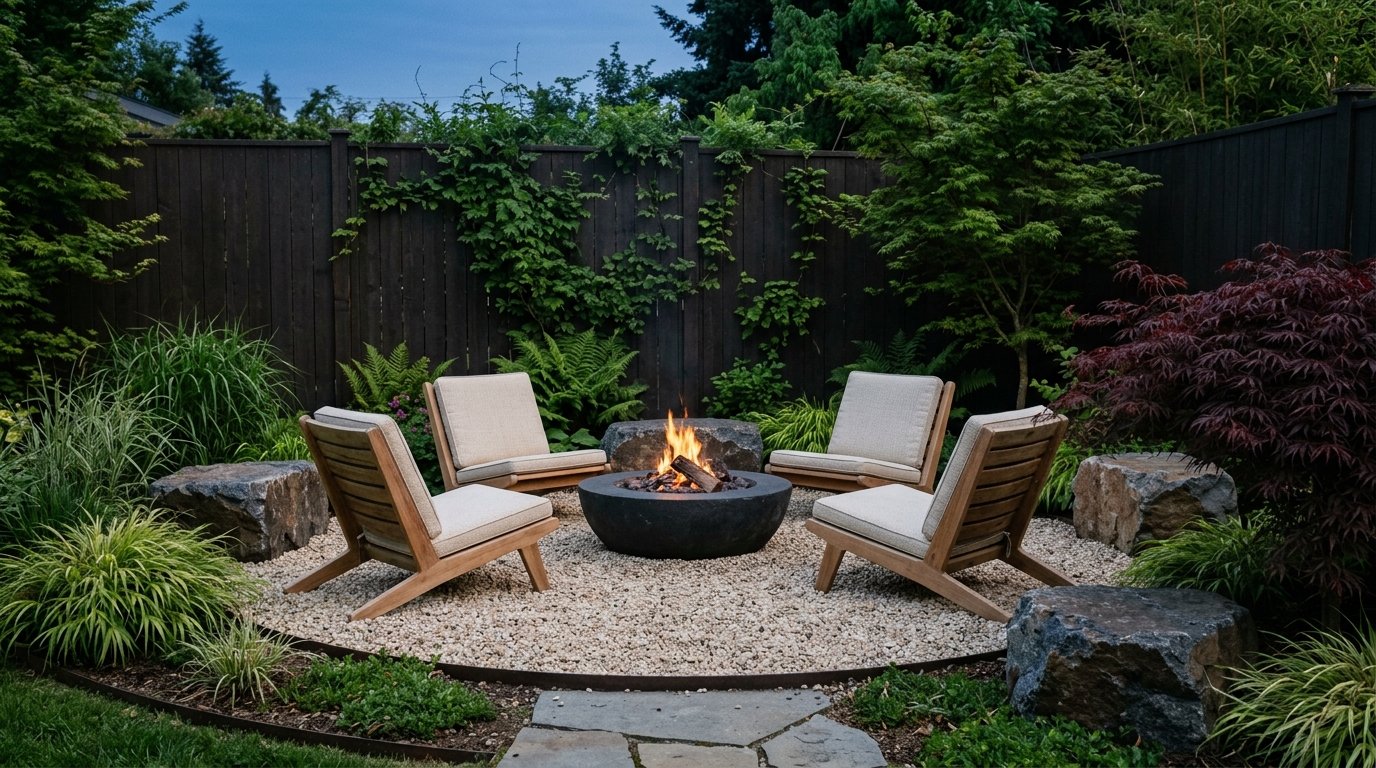
Fire may not be a traditional Zen garden element, but a carefully designed fire feature can work beautifully in a modern interpretation.
Choose a simple stone or concrete fire bowl rather than an elaborate outdoor fireplace.
Surround it with gravel and a few comfortable seats.
Keep the fire feature away from trees, fences and other combustible materials.
20. Use Stepping Stones Through Gravel
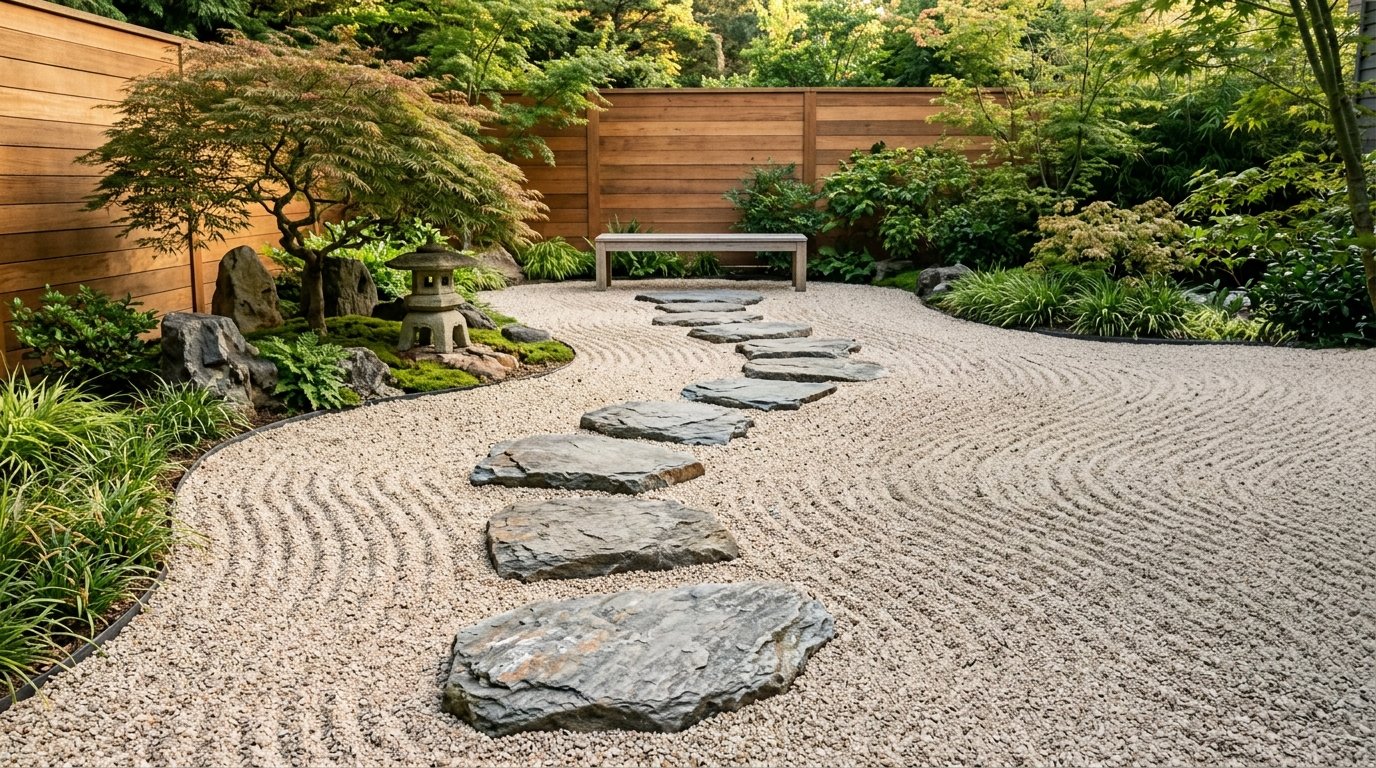
Stepping stones can create a clear path without breaking the minimalist appearance of a gravel garden.
Choose large flat stones with natural edges and space them comfortably.
Keep the gravel level around each stone so the path feels integrated into the garden.
The path can lead from the house to a bench or quiet corner.
21. Create a Complete Backyard Zen Retreat
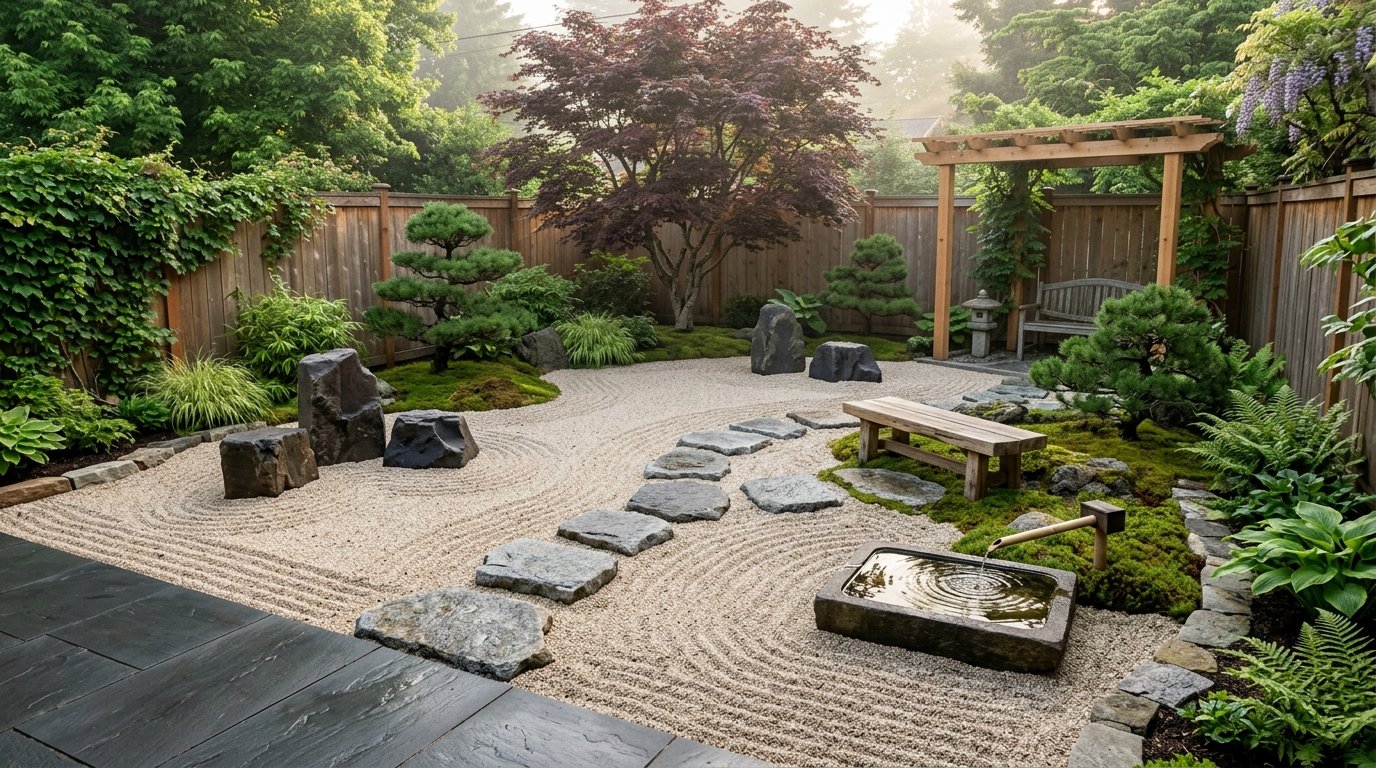
If you have enough space, combine several of these elements into one cohesive garden.
Start with a gravel foundation and then add a few larger stones, a stepping path and one strong plant feature.
A small water feature or meditation bench can give the garden a destination without overwhelming the landscape.
The most important part is restraint. Avoid adding every possible feature simply because you have room.
How to Make a Zen Garden Feel Peaceful
The most important part of a Zen garden is not any particular plant, stone or decoration. It is the overall feeling created by the space.
Try to limit the number of materials you use. Gravel, stone, wood and a small selection of plants are often enough to create a beautiful garden.
Think carefully about empty space as well. A garden does not need something in every corner. Open areas can make the elements that are present feel more important.
Natural materials also tend to work better than highly manufactured decorations. Weathered wood, irregular stones and plants with natural shapes can make the space feel connected to its surroundings.
Sound can be just as important as appearance. Wind moving through bamboo, leaves rustling in a tree or a small water feature can make the garden feel more immersive.
Finally, design the garden around how you actually want to use it. If you want somewhere to sit quietly, make the seating comfortable. If you want a place to meditate, keep the area around it especially uncluttered.
Final Thoughts
A backyard Zen garden does not have to be complicated or expensive. In many cases, a few carefully chosen elements can completely transform an otherwise ordinary corner of the yard.
Start with the basics. Use gravel or another simple ground covering, introduce a few natural stones and choose one or two plants that give the space character.
From there, you can add a stepping stone path, water feature, bench, bamboo screen or meditation area depending on how much room you have.
The goal is not to fill the backyard with decorations. It is to create a space where everything feels intentional and where there is enough simplicity to let your mind slow down.
With the right balance of stone, greenery, texture and open space, even a modest backyard can become a peaceful outdoor retreat.