
17 Small Space Mistakes That Make Your Home Feel More Cramped
Small rooms do not always feel cramped because they are genuinely too small. Sometimes the problem is how the space is arranged.
A room can have plenty of usable floor area and still feel uncomfortable when furniture blocks walkways, storage is poorly planned or too many visual details compete for attention.
The good news is that many of these problems are easy to fix. You do not necessarily need to renovate the room or get rid of everything you own.
A few changes to furniture placement, lighting, storage and decoration can make a noticeable difference.
If your home feels smaller than it should, these are some of the most common mistakes to look for.
1. Pushing Every Piece of Furniture Against the Wall
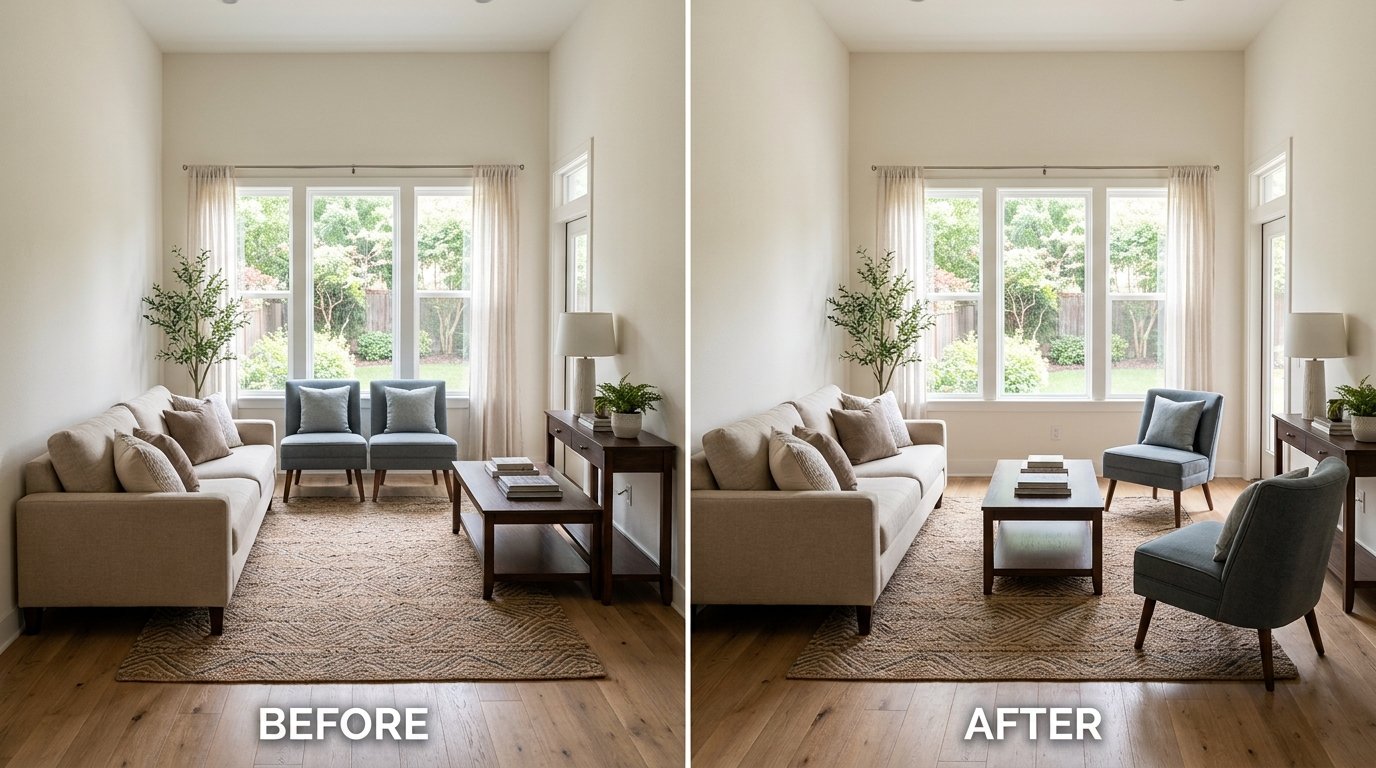
It seems logical to push furniture against the walls when you are trying to create more floor space.
However, this can sometimes make a room feel oddly arranged rather than spacious. Large gaps in the center combined with furniture crowded around the edges can make the layout feel disconnected.
Instead, think about how people actually move through the room. A sofa can sometimes sit slightly away from the wall if it creates a better conversation area.
Even moving a chair a few inches can make the room feel more intentional.
The goal is not to maximize the amount of empty floor you can see. It is to create comfortable pathways between the things you actually use.
2. Choosing Furniture That Is Too Large
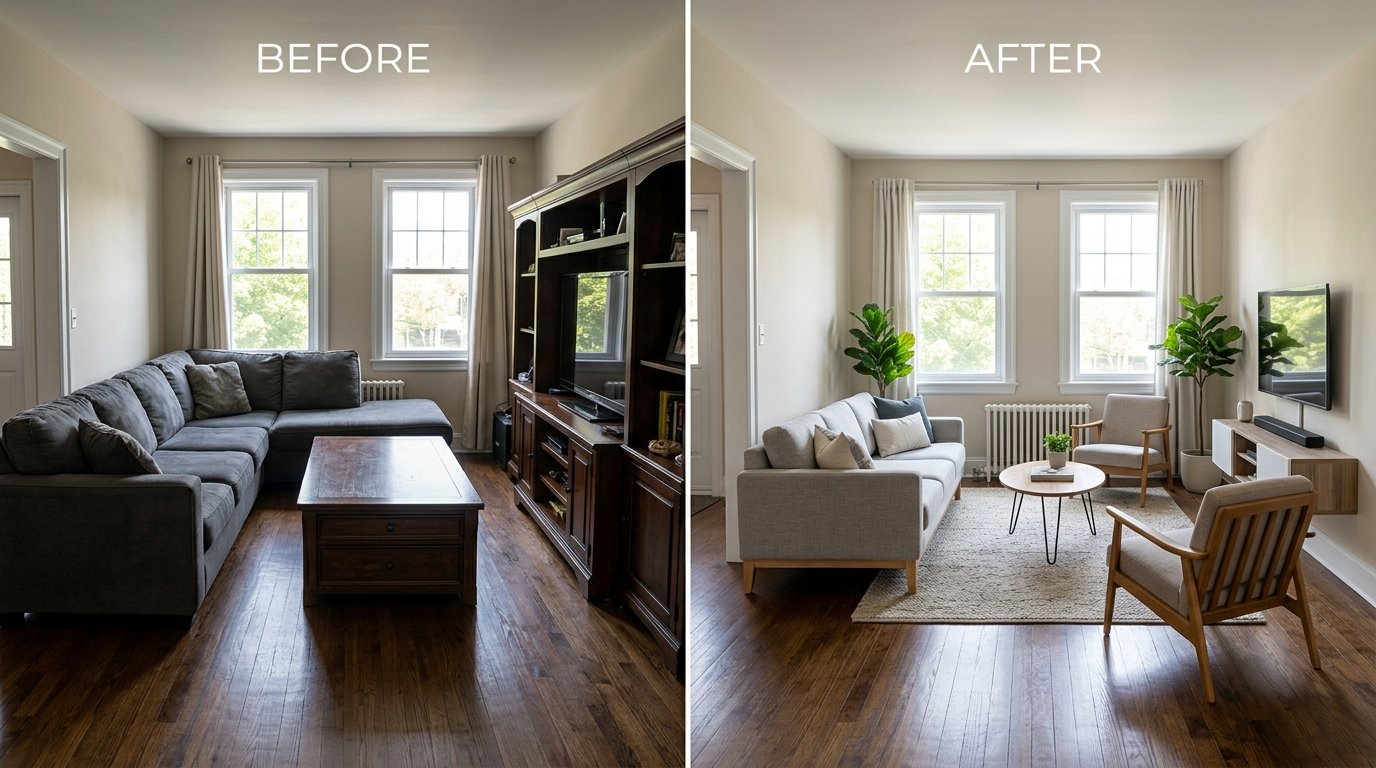
One oversized sofa can dominate an entire small room.
The same applies to enormous coffee tables, deep armchairs and bulky entertainment units.
Furniture should be comfortable, but it also needs to match the scale of the room.
Before buying anything large, measure the room and check the dimensions of the furniture carefully.
A piece that looks reasonable in a showroom can feel completely different when surrounded by walls and other furniture.
Slimmer furniture with visible legs can often make a small room feel lighter without sacrificing comfort.
3. Using Too Many Small Decorative Pieces
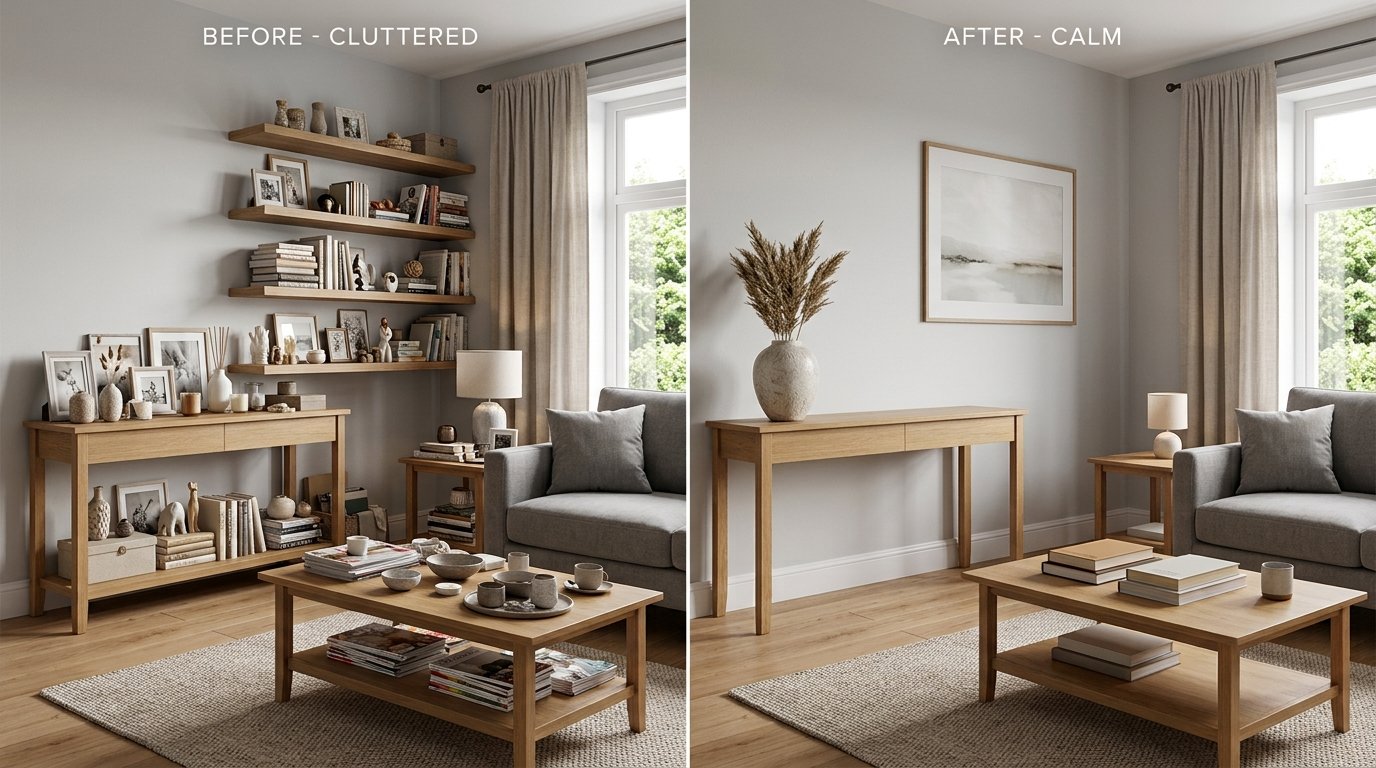
Small homes often become cluttered one little object at a time.
A collection of candles, vases, framed pictures, figurines and decorative trays can quickly create visual noise.
Even if each individual item looks good, the overall effect can make the room feel busy.
Instead of filling every available surface, choose a few pieces that have enough visual impact to stand on their own.
Leaving some surfaces empty is not a sign that the room is unfinished. It can actually make the things you keep look more intentional.
4. Blocking the Natural Light
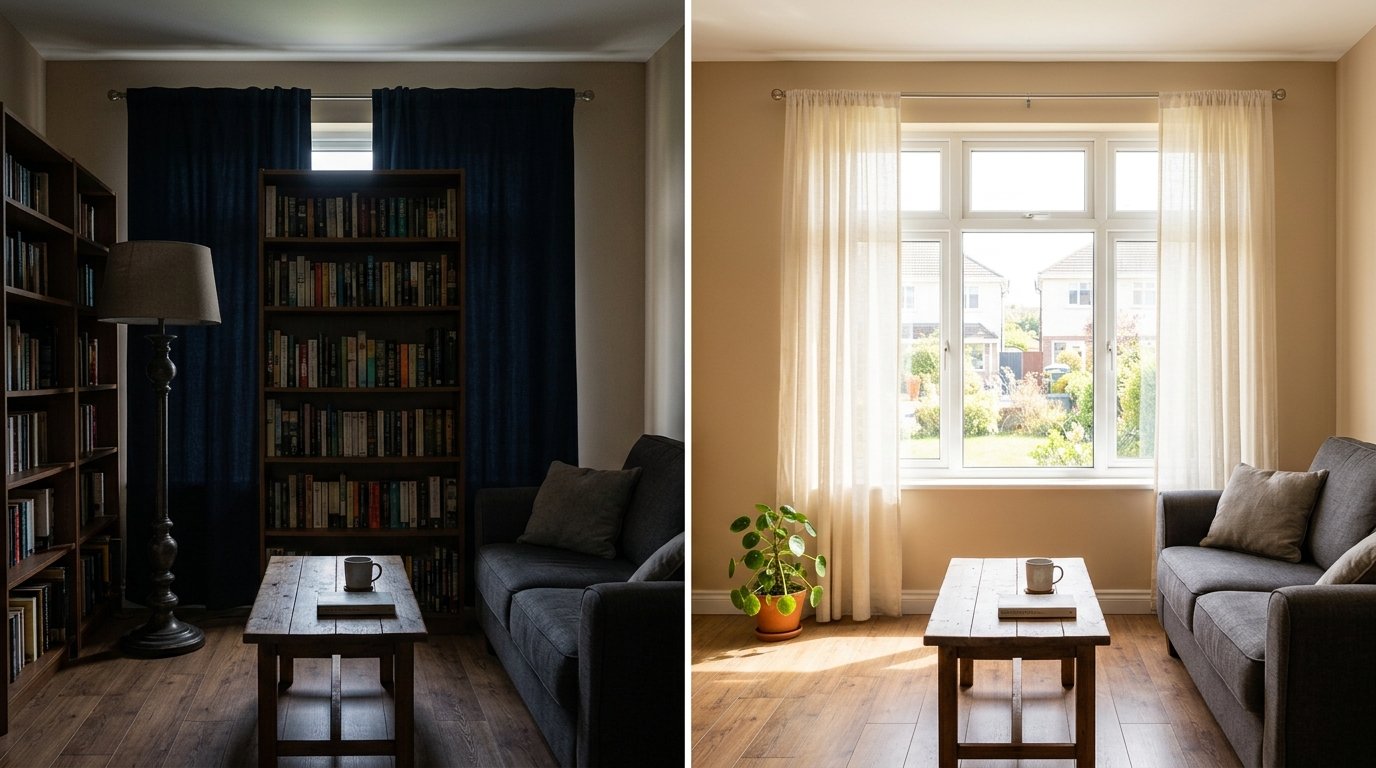
Natural light can make a small room feel dramatically larger.
Unfortunately, bulky furniture, heavy curtains or tall decorative objects can block windows and reduce the amount of light entering the space.
Keep the area directly around windows as open as possible.
Choose lightweight curtains that can be pulled completely to the sides during the day.
Even a small improvement in natural light can change the atmosphere of a compact room.
5. Covering Every Wall With Decor
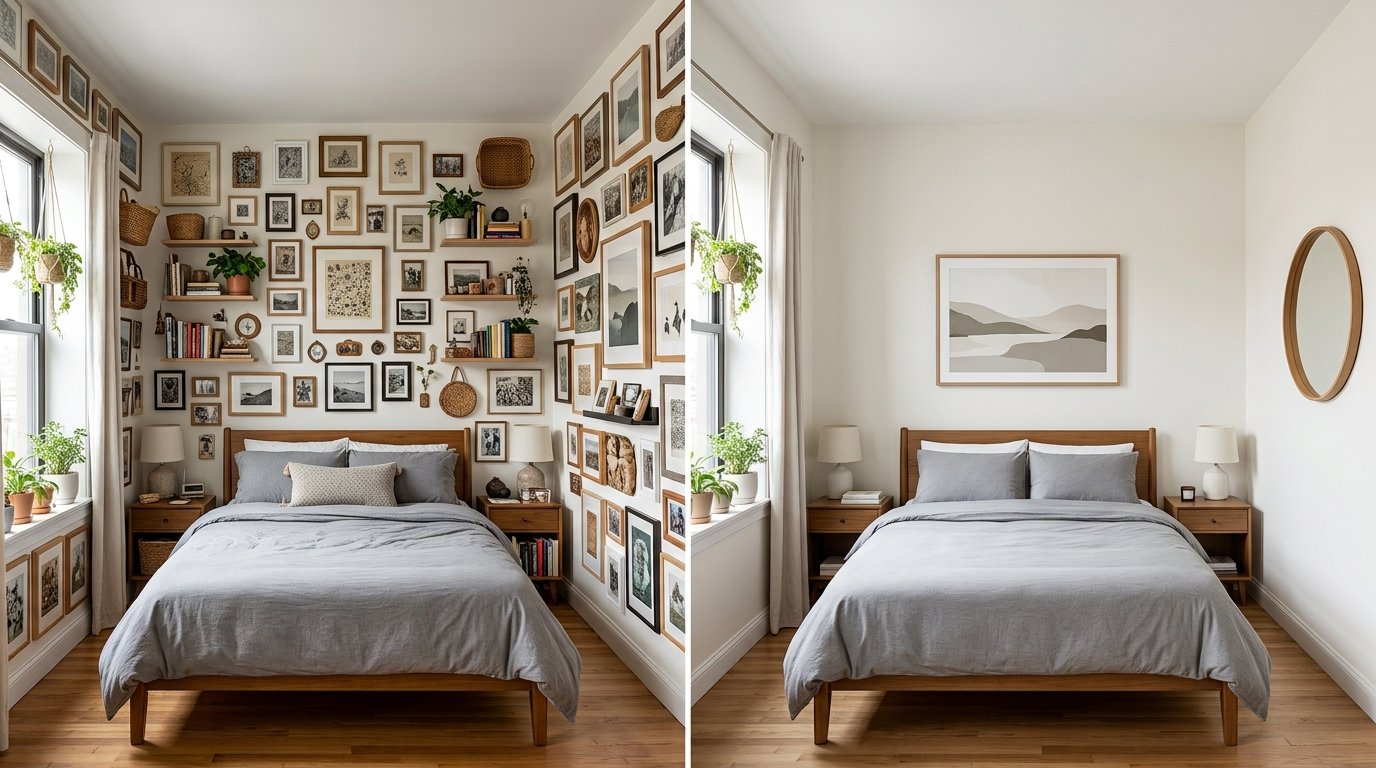
Empty wall space can be useful.
Covering every wall with artwork, shelves, mirrors and decorative objects can make a small room feel visually crowded.
Instead, create one or two focal points.
A large piece of artwork can often have more impact than a collection of many small frames.
Leave some wall space completely empty so the room has places for the eye to rest.
6. Using Too Many Different Colors
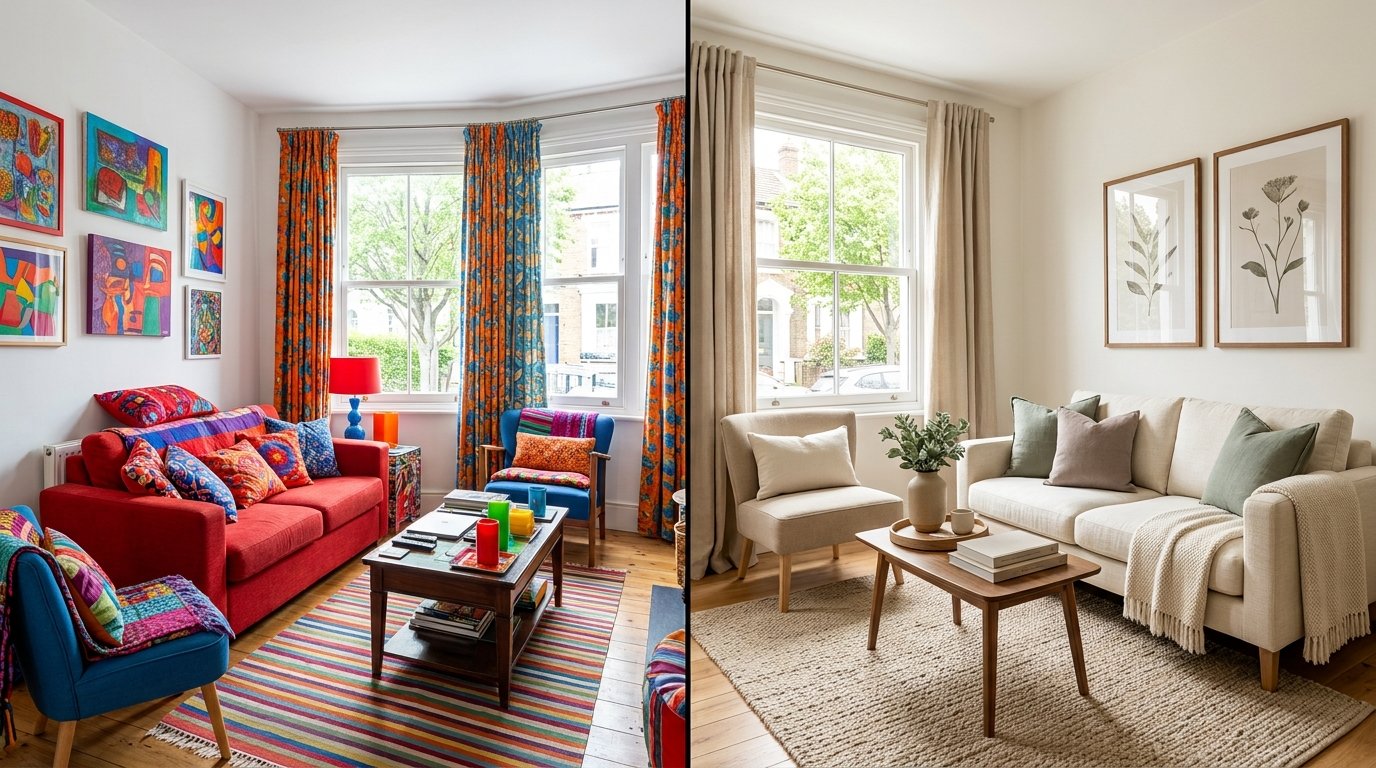
A small room can handle color, but too many competing colors can make the space feel fragmented.
When every piece of furniture or accessory has a different color, the eye has more visual information to process.
A simple base palette can help the room feel more cohesive.
You can still add personality with one or two accent colors through pillows, artwork, rugs or plants.
The goal is not to make everything identical. It is to give the different elements a visual connection.
7. Choosing a Tiny Rug
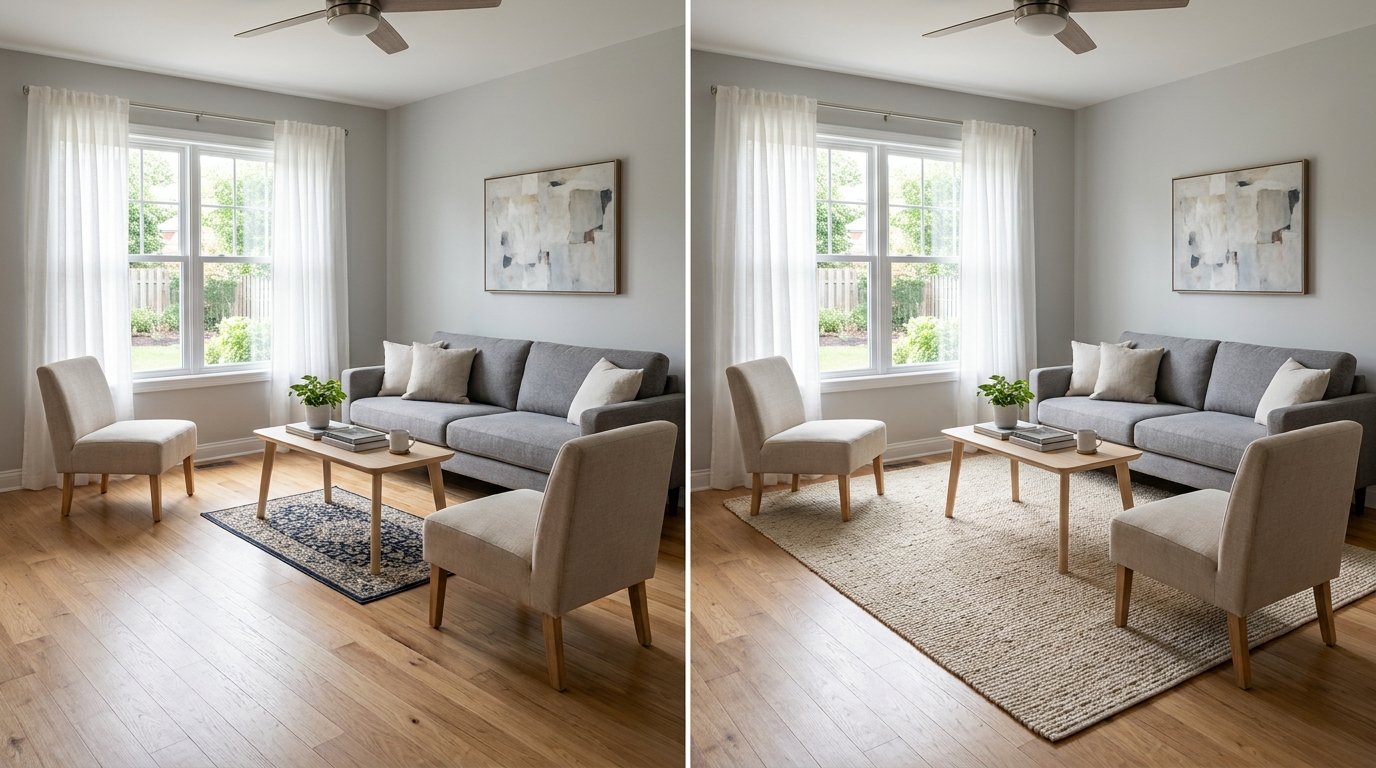
A rug that is too small can actually make a room feel more disconnected.
When furniture sits completely outside the rug, the seating area can look like several unrelated pieces.
In many small living rooms, a larger rug that fits under at least the front legs of the furniture creates a stronger visual zone.
It may seem counterintuitive to use a larger rug in a small room, but the right size can make the space feel more cohesive.
Measure the seating area before buying one.
8. Ignoring Vertical Storage
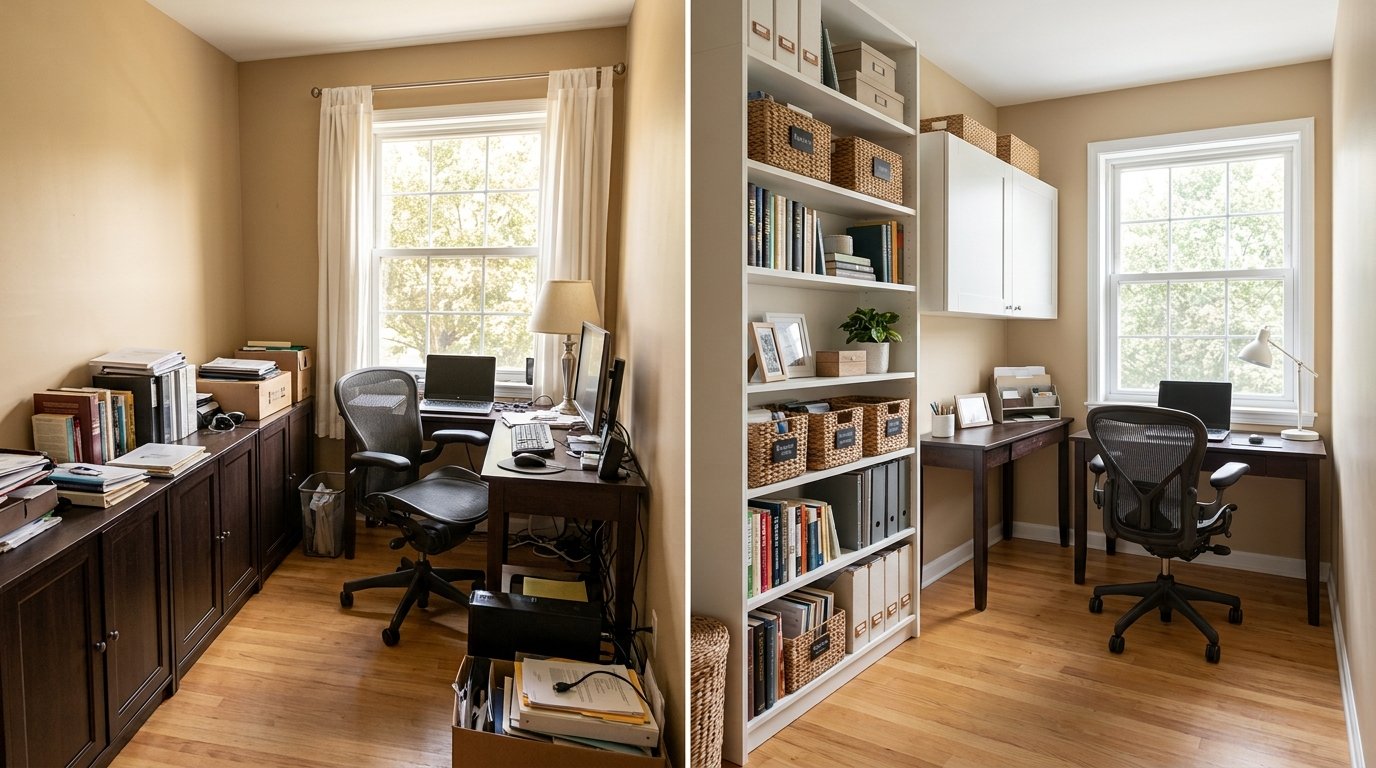
When floor space is limited, the walls become valuable storage territory.
Low cabinets can be useful, but they can also consume a lot of floor area.
Tall shelving, wall mounted cabinets and vertical organizers can provide additional storage without spreading furniture across the room.
Use the higher shelves for items you do not need every day.
Keep frequently used belongings within easy reach so the storage remains practical.
9. Letting Cables and Wires Stay Visible
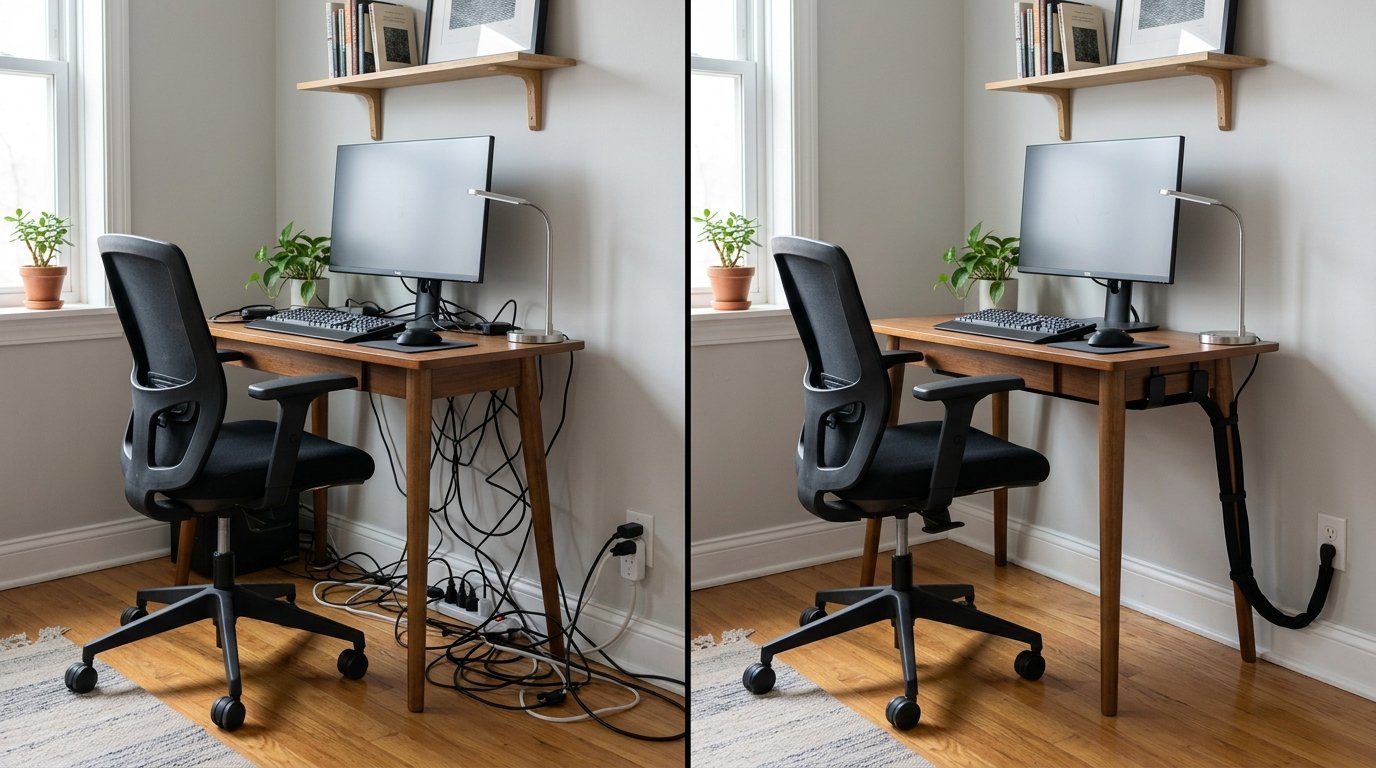
Visible cables can create a surprising amount of visual clutter.
Television wires, charging cables, computer cords and extension leads can make even a tidy room look messy.
Use cable clips, sleeves or hidden channels to organize them.
If possible, position electronics close to outlets so fewer cables have to cross the room.
A cleaner visual line can make the room feel more organized immediately.
10. Using Heavy Dark Curtains
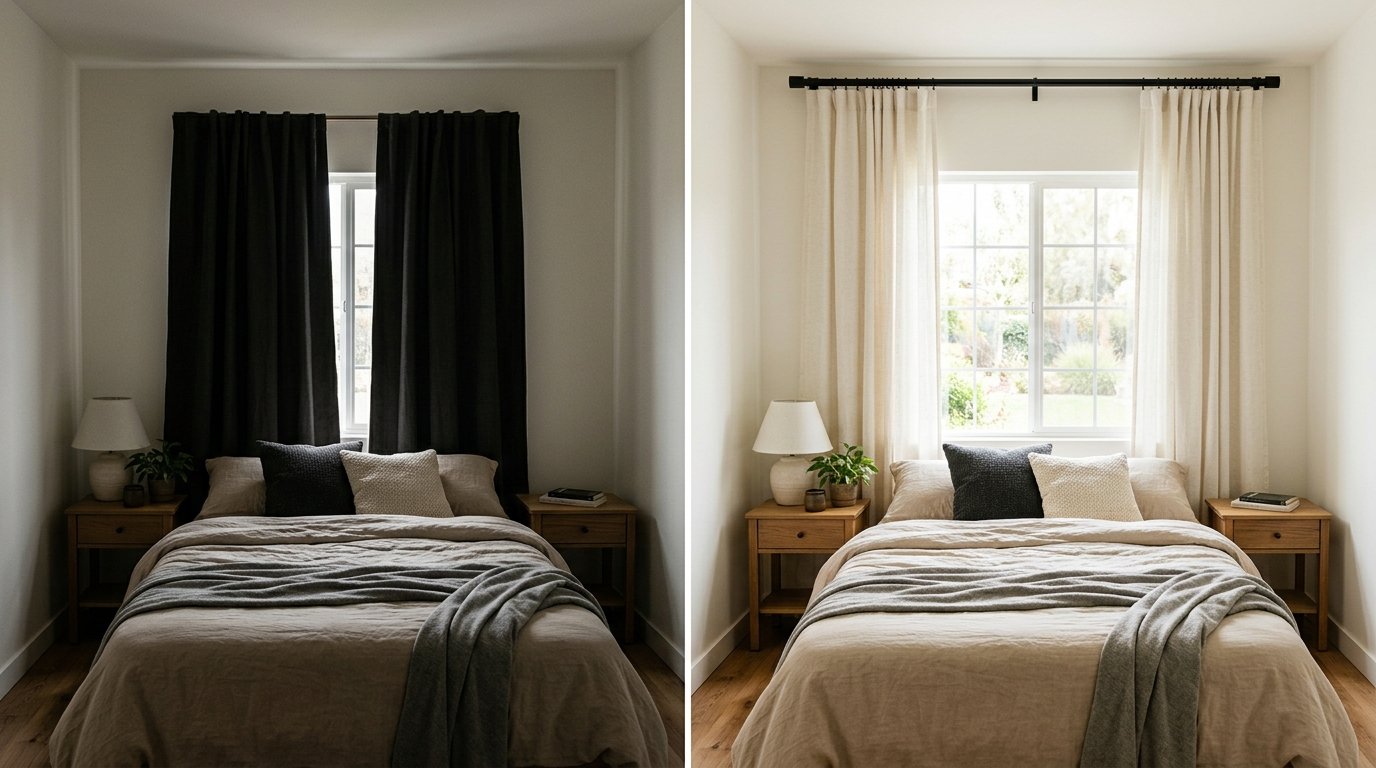
Heavy curtains can make a compact room feel darker and visually heavier.
This is especially noticeable when the curtains cover a large portion of the wall around the window.
Lightweight curtains can provide privacy while allowing more daylight into the room.
Mounting the curtain rod slightly wider and higher than the window can also make the window appear larger.
Choose a fabric that complements the room rather than competing with everything else.
11. Filling the Floor With Furniture
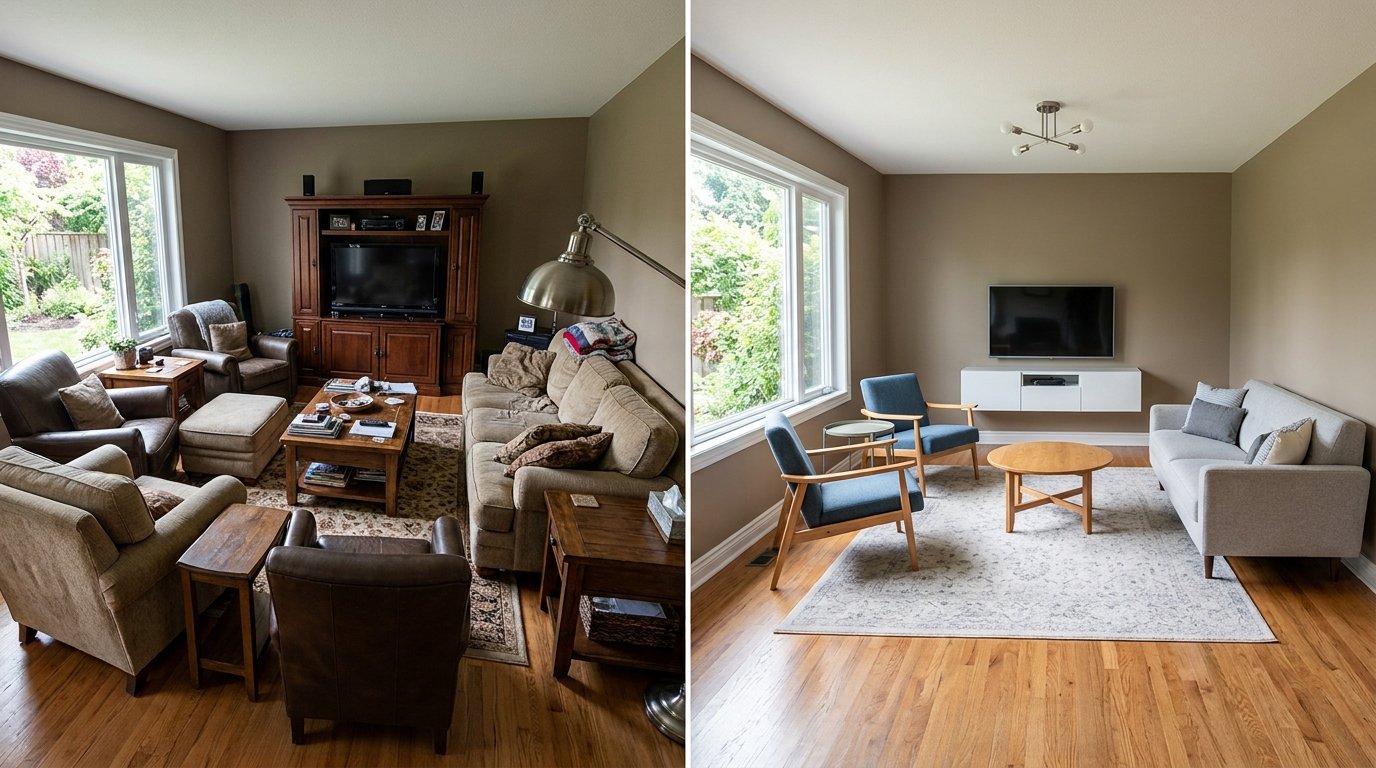
Every piece of furniture takes away from usable movement space.
In a small room, this becomes obvious very quickly.
A side table here, an extra chair there and a large storage unit can leave you constantly navigating around obstacles.
Before adding another piece, ask whether it solves a genuine problem.
If the answer is no, leaving the floor open may be the better design choice.
12. Choosing Furniture With No Storage
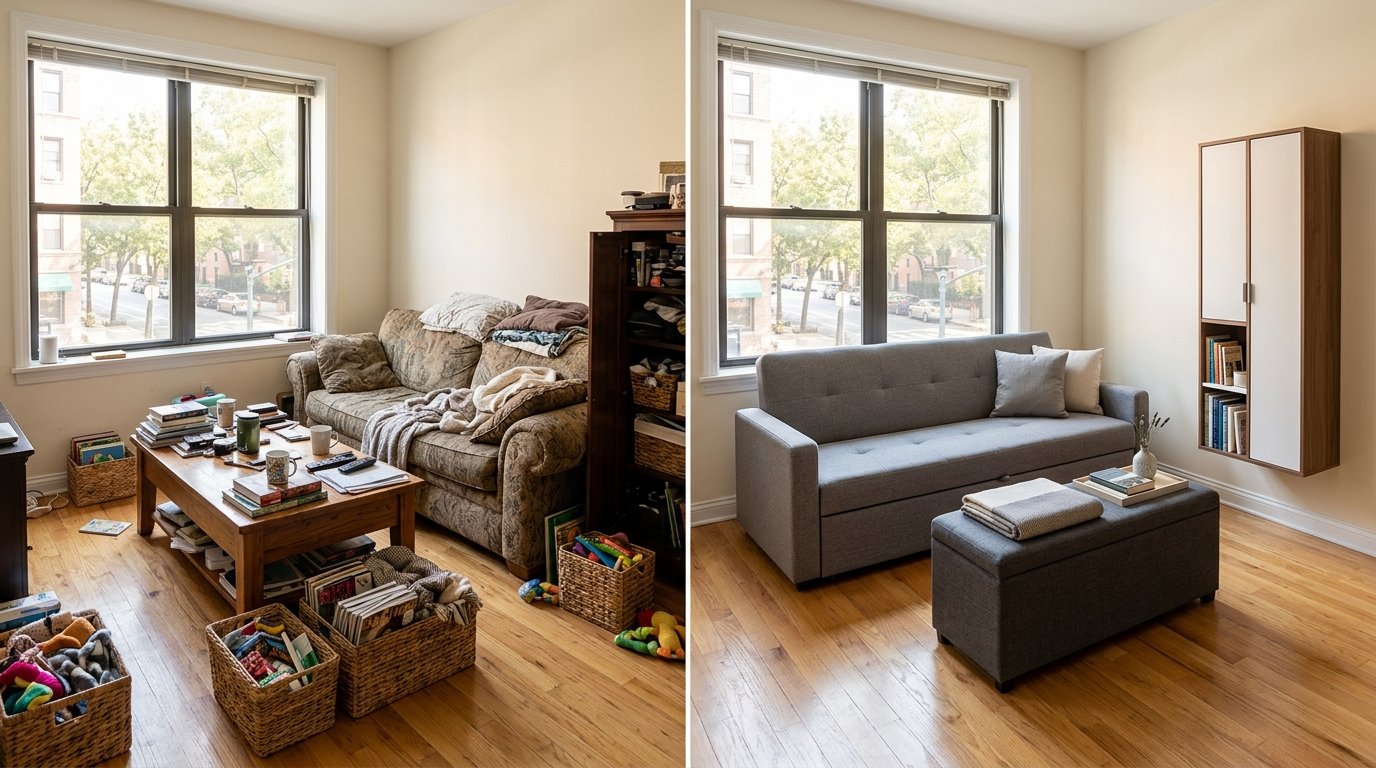
Furniture that performs multiple jobs can be extremely useful in a small home.
A storage ottoman can provide seating, a coffee table can contain hidden storage and a bed can include drawers underneath.
When every piece of furniture has only one function, you may need more pieces to meet all your storage needs.
Look for opportunities to combine functions.
The best small space furniture often works quietly in the background without making the room feel like a storage unit.
13. Placing Furniture in the Wrong Traffic Path
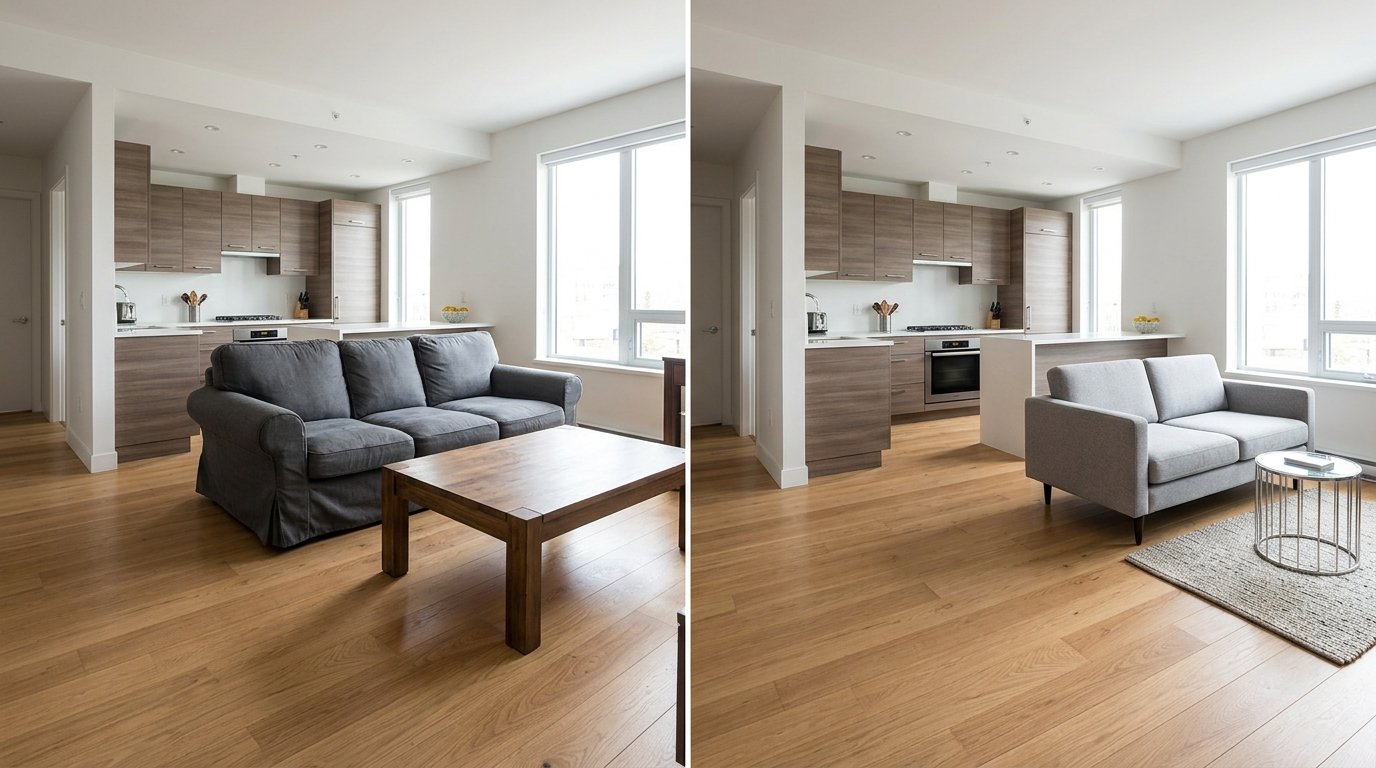
A room can technically contain all your furniture and still be difficult to use.
If you have to walk around the coffee table three times to reach the kitchen, the layout is probably working against you.
Pay attention to the routes people naturally take through the room.
Keep major pathways open and avoid placing furniture directly in front of doors.
A slightly smaller seating arrangement may work much better if it creates a natural flow through the home.
14. Ignoring the Ceiling
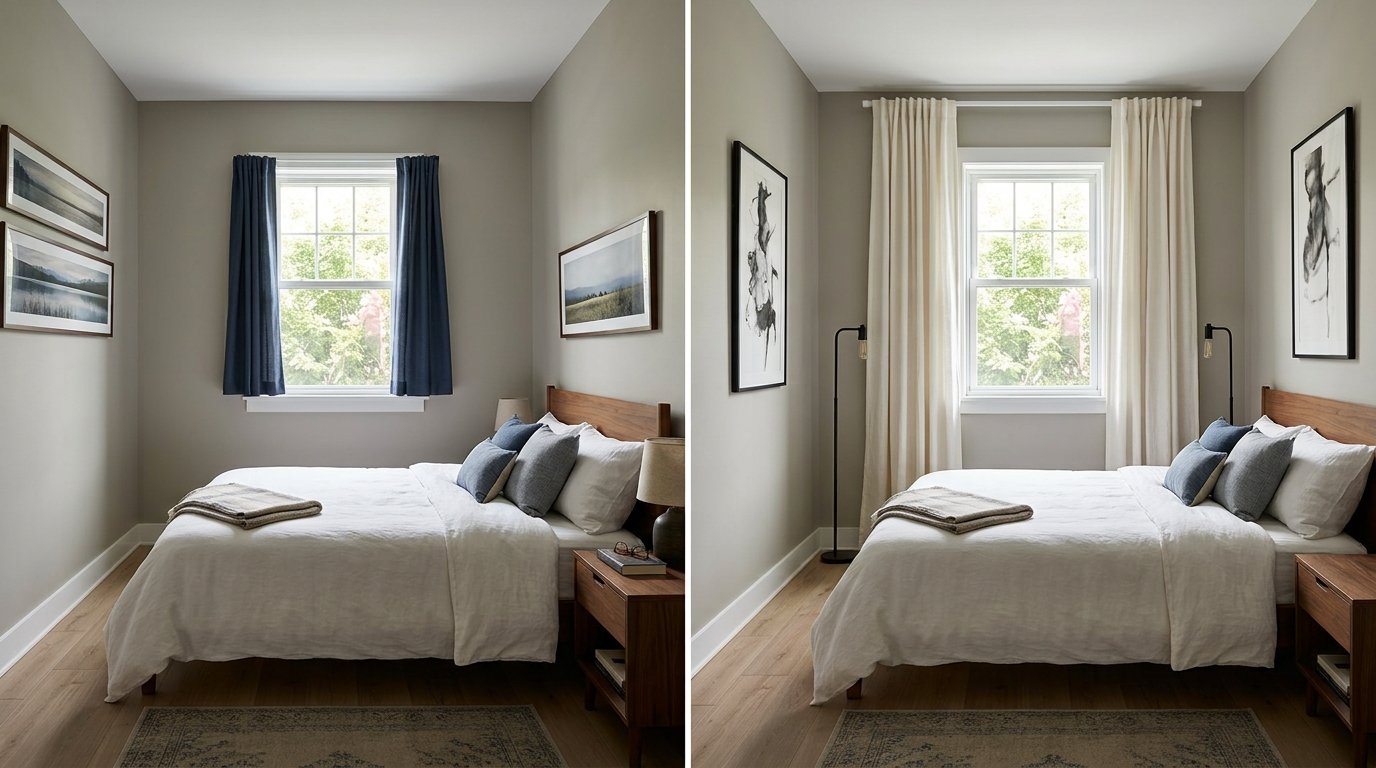
The ceiling is often overlooked when decorating a small home.
But the vertical dimension can affect how large a room feels.
Floor to ceiling curtains, tall bookcases and vertically oriented artwork can draw the eye upward.
Even a simple pendant light can emphasize the height of a room.
You do not need to fill the walls from floor to ceiling. The idea is simply to make better use of the vertical space you already have.
15. Using Only One Light Source
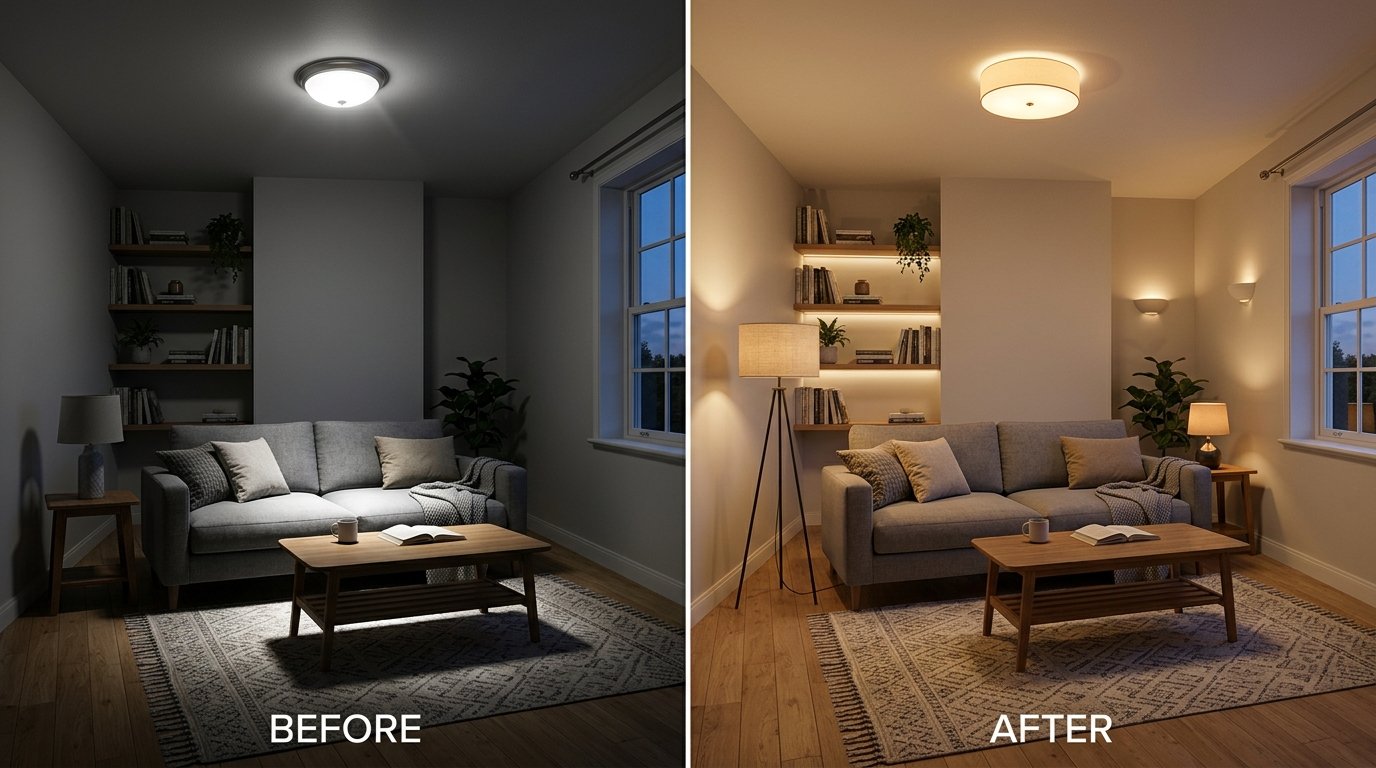
A single ceiling light can leave corners dark.
Those darker areas can make the room feel smaller than it actually is.
Use several layers of lighting instead.
A floor lamp, table lamp, wall sconce or under shelf lighting can brighten different areas without requiring much floor space.
Warm, evenly distributed light can make a compact room feel more comfortable and open in the evening.
16. Leaving Clutter on Open Surfaces
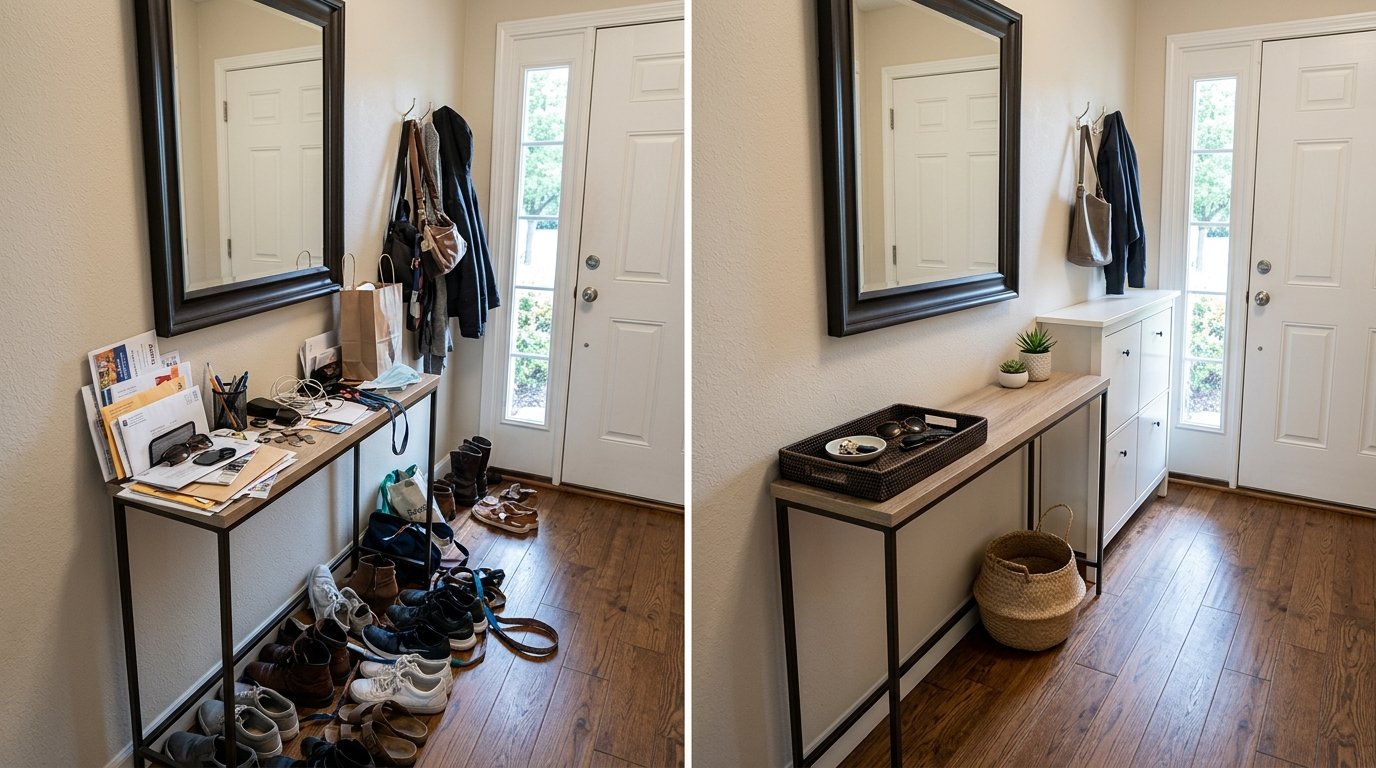
Open shelves and countertops can become clutter magnets.
Mail, keys, chargers, bags and random household items can quickly accumulate.
The problem is not necessarily the amount of stuff you own. It is that everything remains visible.
Use trays, baskets and closed storage to group smaller belongings.
Give frequently used items a designated home so they do not end up scattered across every available surface.
17. Trying to Fill Every Empty Space
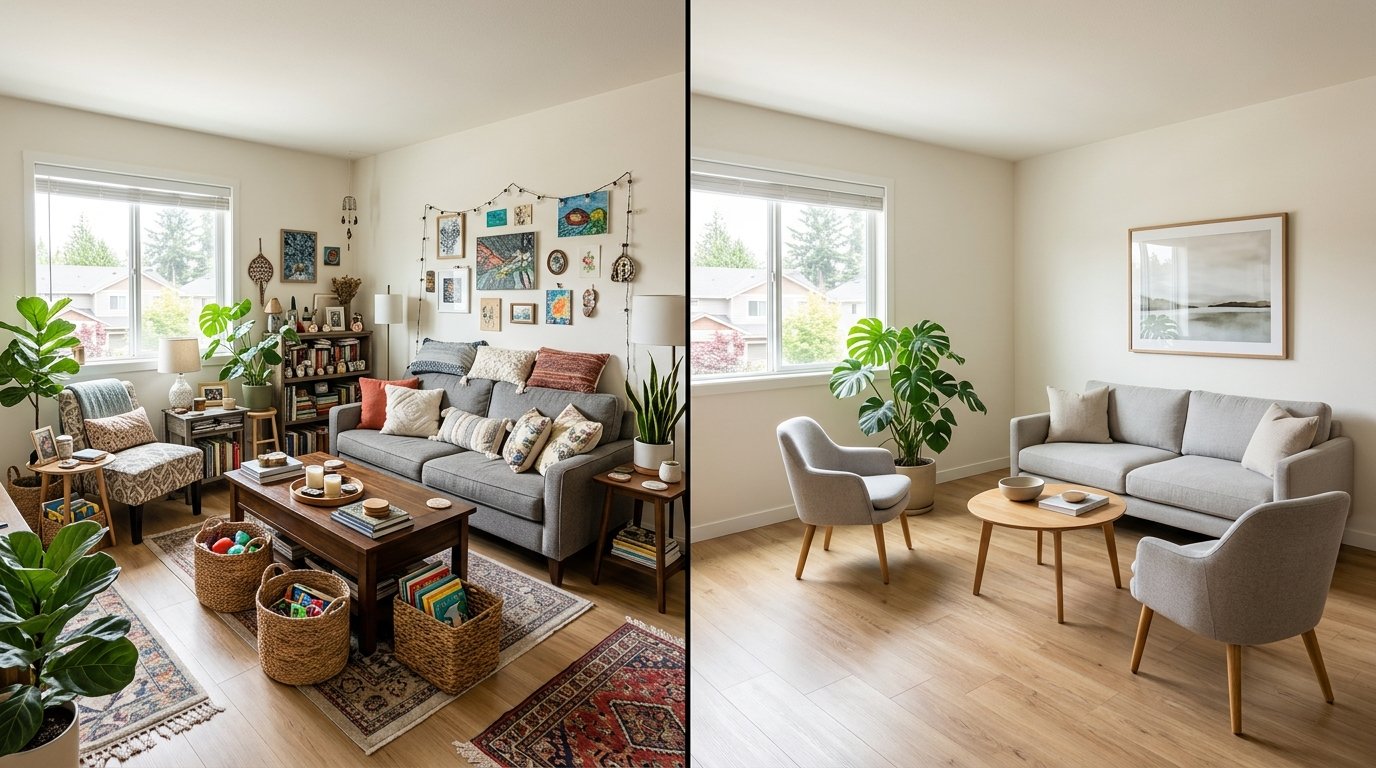
Perhaps the biggest small space mistake is assuming every empty area needs something.
An empty corner does not automatically need a chair.
A blank wall does not automatically need shelves.
A clear section of floor does not mean you are missing furniture.
Negative space gives the eye somewhere to rest and makes the useful parts of the room stand out.
Before adding anything, live with the room for a while. You may discover that the empty space is exactly what makes the room comfortable.
How to Make a Small Home Feel More Spacious
Once you identify the things making your home feel cramped, start with the easiest changes.
Remove furniture that blocks important pathways. Clear surfaces that have become cluttered. Open the curtains and see how much natural light the room receives.
Then look at storage.
If belongings constantly end up on countertops, floors and tables, the room may need better storage rather than less decoration. Closed cabinets, baskets and vertical shelving can make a surprisingly large difference.
Finally, look at the overall visual balance. Try to avoid having every wall, surface and corner competing for attention.
A room does not need to be empty to feel spacious. It simply needs enough breathing room between the things that are already there.
The Bottom Line
Making a small home feel larger is often less about adding things and more about removing the things that work against the space.
Furniture that is too large, cluttered surfaces, blocked windows, poor traffic flow and unnecessary decoration can all make a room feel considerably smaller.
The good news is that most of these problems can be addressed without a major renovation.
Start by improving the layout, then work on storage, lighting and visual clutter. Once those basics are handled, you may be surprised by how much space your home seemed to have all along.