
25 Warm Neutral Bathroom Ideas for a Cozy, Timeless Space
A bathroom can feel warm and inviting without turning into a beige box. The trick comes down to layering the right neutrals, textures, lighting, and natural materials so the room feels calm instead of flat.
I’ve always liked bathrooms that look polished but still feel like someone actually lives there. You know the kind: warm wood, soft towels, gentle lighting, a few plants, and just enough personality to keep the room from feeling like a hotel showroom.
If you’re planning a bathroom refresh, these 25 warm neutral bathroom ideas can help you create a space that feels cozy today and still looks great years from now.
1. Start With Warm Cream Walls
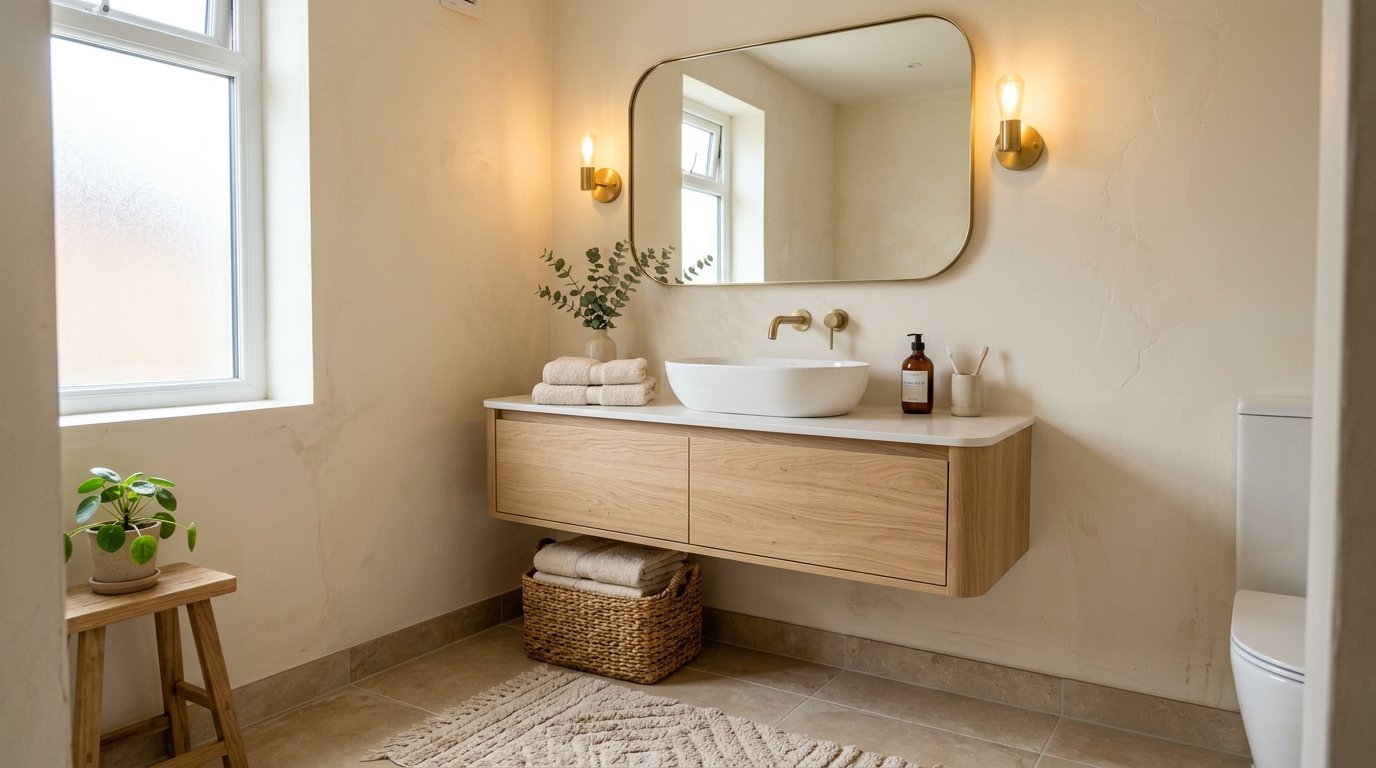
Cream walls give you one of the easiest ways to make a bathroom feel instantly warmer. Instead of choosing a stark white, look for creamy whites with subtle beige or yellow undertones.
Pair the walls with natural wood, warm stone, and brass fixtures to build a relaxed palette. You can also use a limewash or lightly textured paint if you want the walls to add more visual interest.
The beauty of cream comes from its flexibility. You can easily change towels, artwork, rugs, and accessories later without fighting against the wall color.
2. Add a Natural Wood Vanity
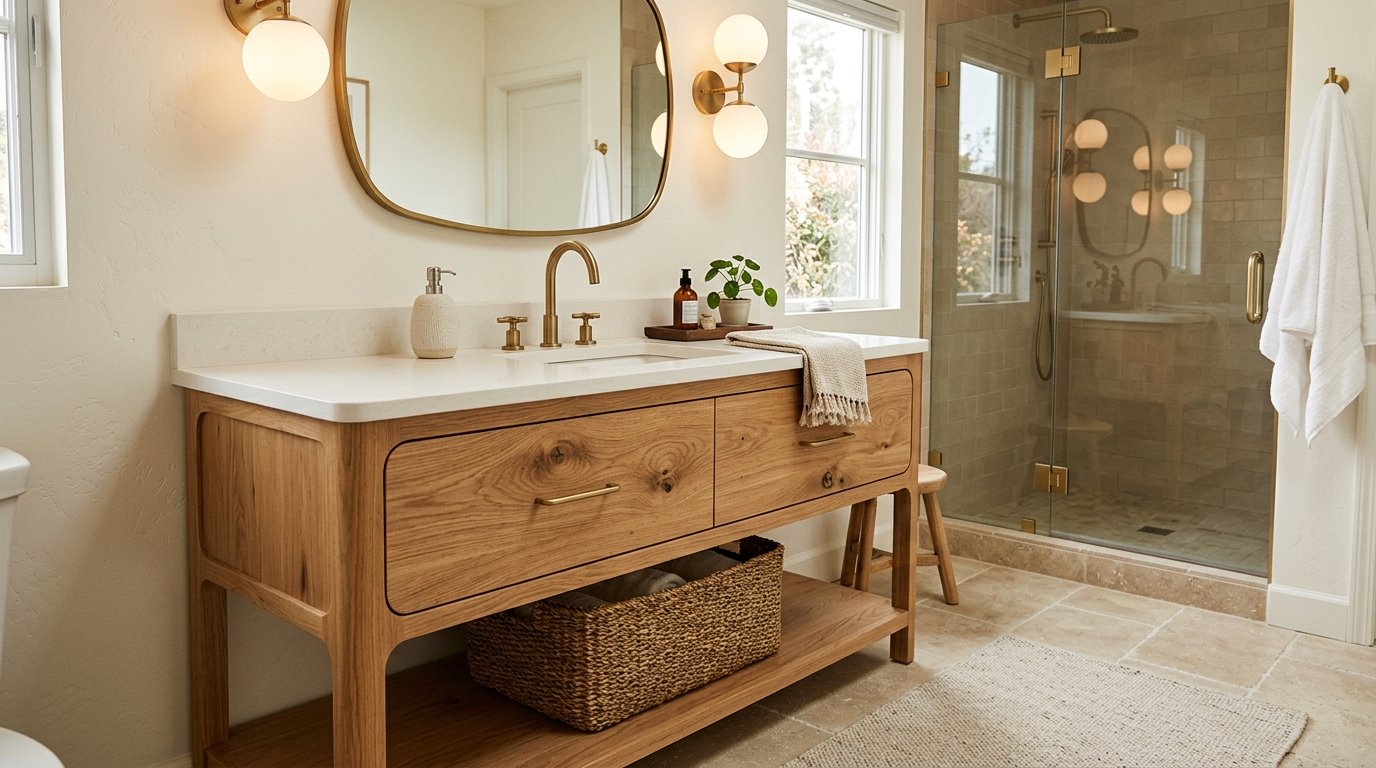
A natural wood vanity can completely change the personality of a neutral bathroom. Oak, walnut, ash, and similar woods introduce warmth that painted cabinetry simply cannot replicate.
IMO, natural oak works especially well with warm neutral bathrooms because it adds character without making the room feel too dark.
Choose a floating vanity if you have a smaller bathroom. The open floor underneath creates more visual space while giving you room for a woven basket or two.
3. Use Beige Stone for a Timeless Look
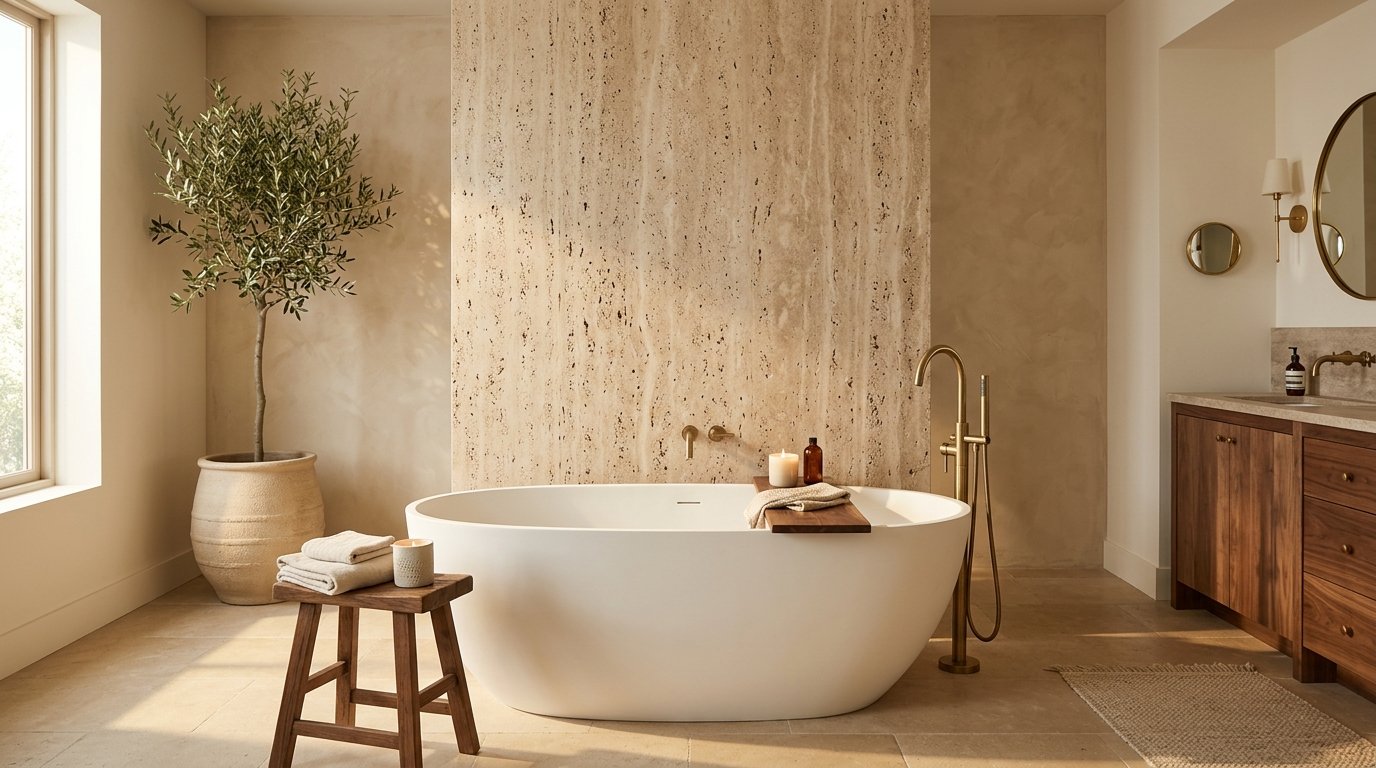
Beige stone brings natural variation into a bathroom while keeping the overall palette calm. You can use limestone, travertine, marble-look porcelain, or other stone-inspired materials depending on your budget and maintenance preferences.
Real stone creates beautiful natural variation, but porcelain can give you a similar visual effect with easier maintenance. If you want the look without worrying about every splash of water, porcelain deserves a serious look.
Use the same stone across the floor and selected walls for a more cohesive appearance. The continuity can make even a small bathroom feel more thoughtfully designed.
4. Choose a Rounded Mirror
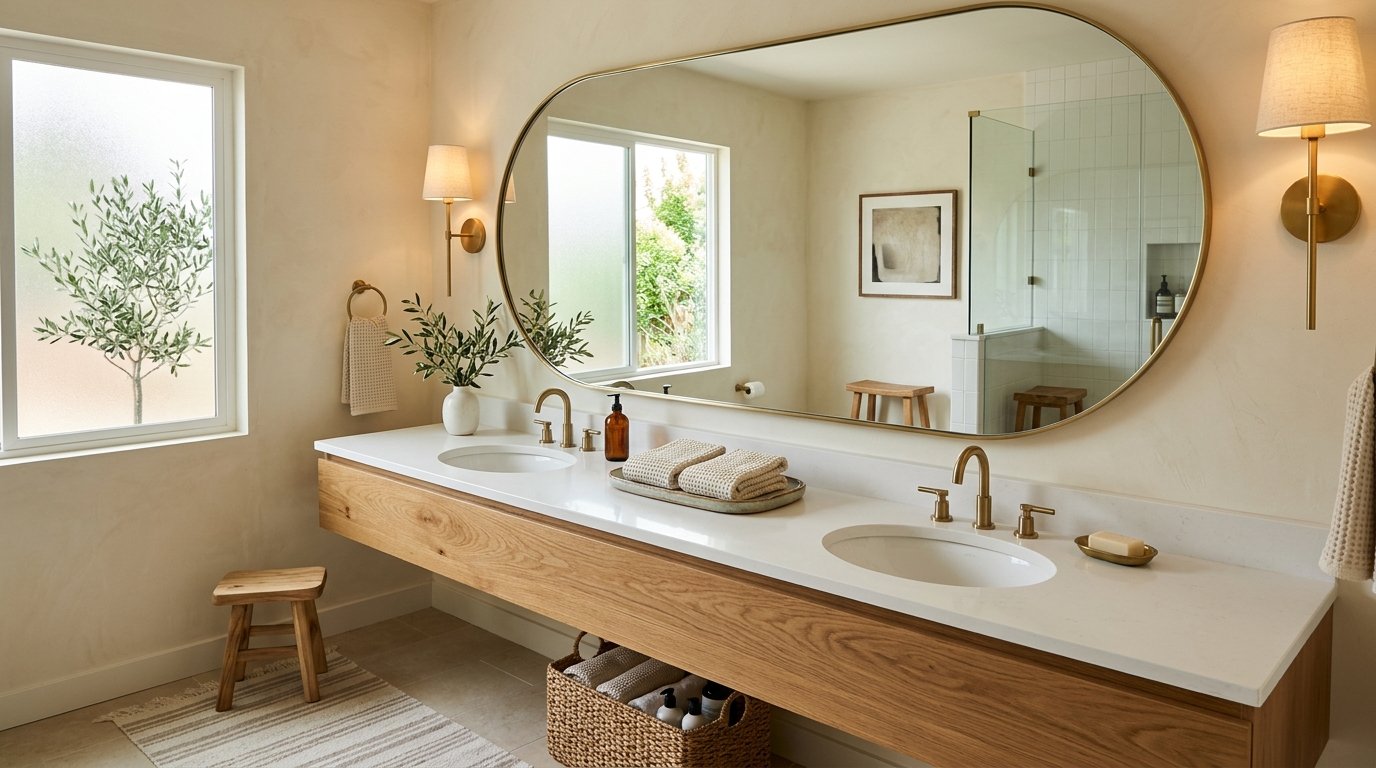
Hard rectangular lines can make a bathroom feel somewhat rigid. A rounded or arched mirror instantly softens those edges.
Try a large oval mirror above the vanity or an oversized rounded-rectangle design if you want something slightly more contemporary. A thin brass or natural wood frame can tie the mirror into the rest of your bathroom.
Ever noticed how much softer curved furniture looks compared with sharp corners? That little difference can have a surprisingly big effect.
5. Bring in Warm Brass Fixtures
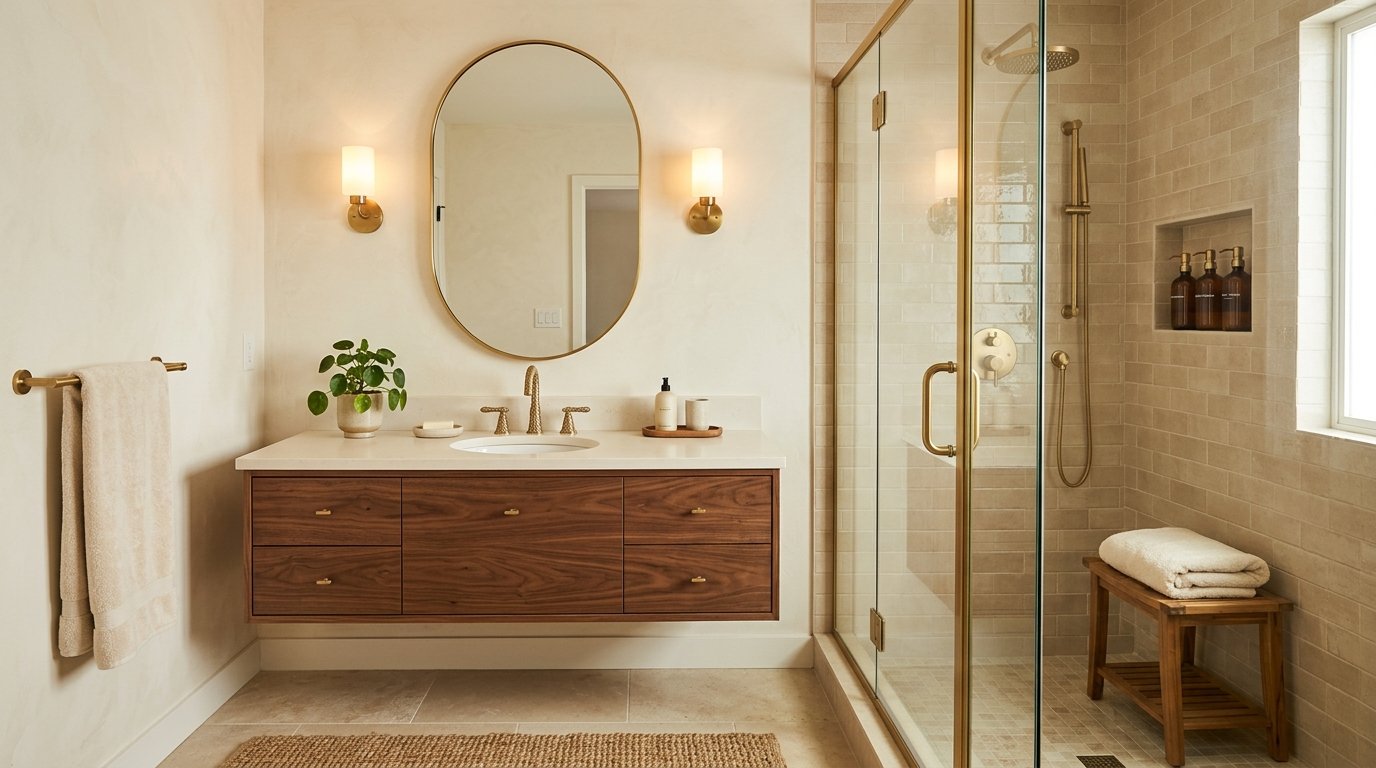
Brass fixtures can add warmth without requiring a major design change. Look for brushed or aged brass if you want a softer appearance.
You can use brass across the faucet, shower fixtures, cabinet handles, towel bars, and mirror frame. Keeping the finish consistent helps the room look intentional rather than randomly decorated.
If polished brass feels too flashy for your taste, brushed brass usually offers a more relaxed middle ground.
6. Layer Soft Bathroom Lighting
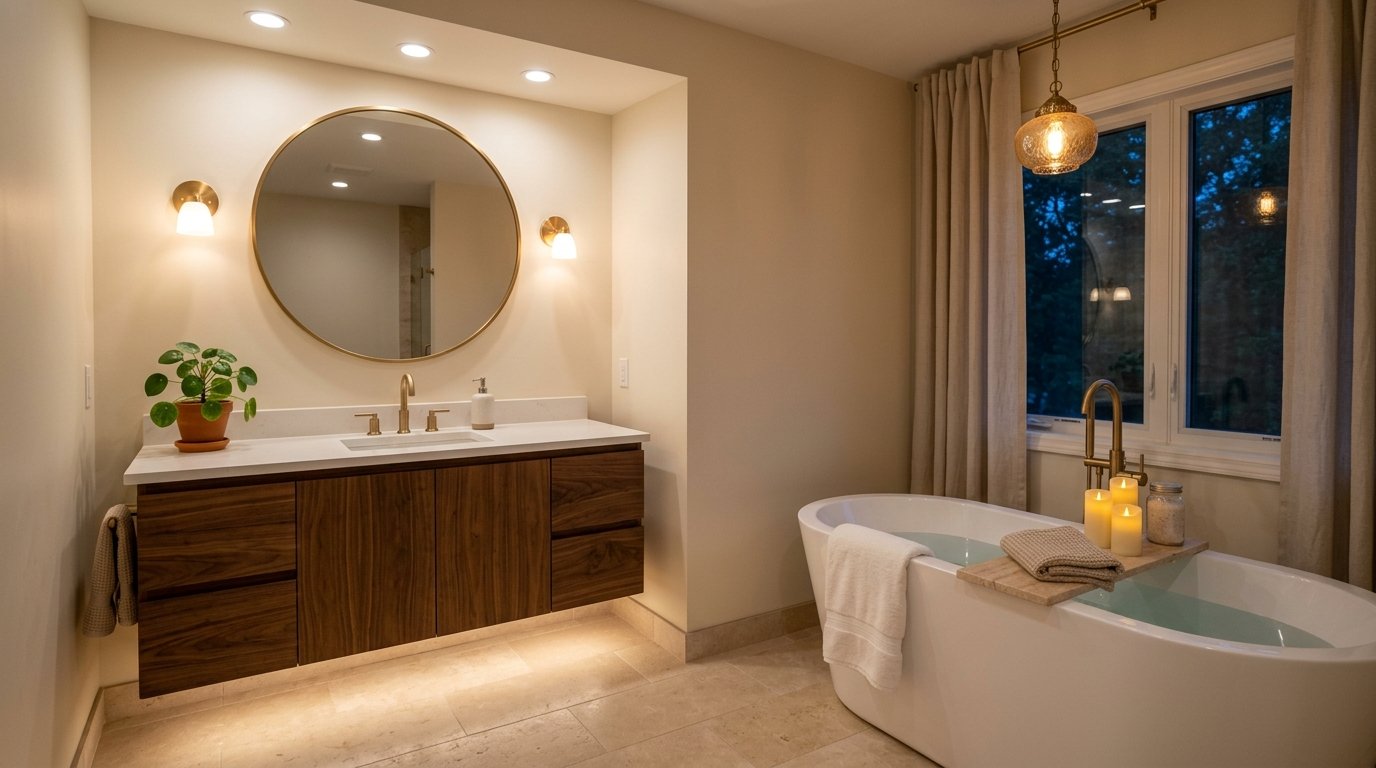
Good lighting can make or break a cozy bathroom. Even the prettiest beige tiles can look cold under harsh blue-white bulbs.
Use multiple sources instead of relying entirely on one ceiling fixture. Consider:
- Warm vanity sconces
- Recessed ceiling lights
- Under-vanity lighting
- A small decorative pendant
- Dimmable accent lighting
Aim for warm white lighting around 2700K to 3000K for a softer atmosphere. FYI, you can still use brighter task lighting around the mirror when you need to shave, apply makeup, or actually see what you’re doing.
7. Layer Different Shades of Beige
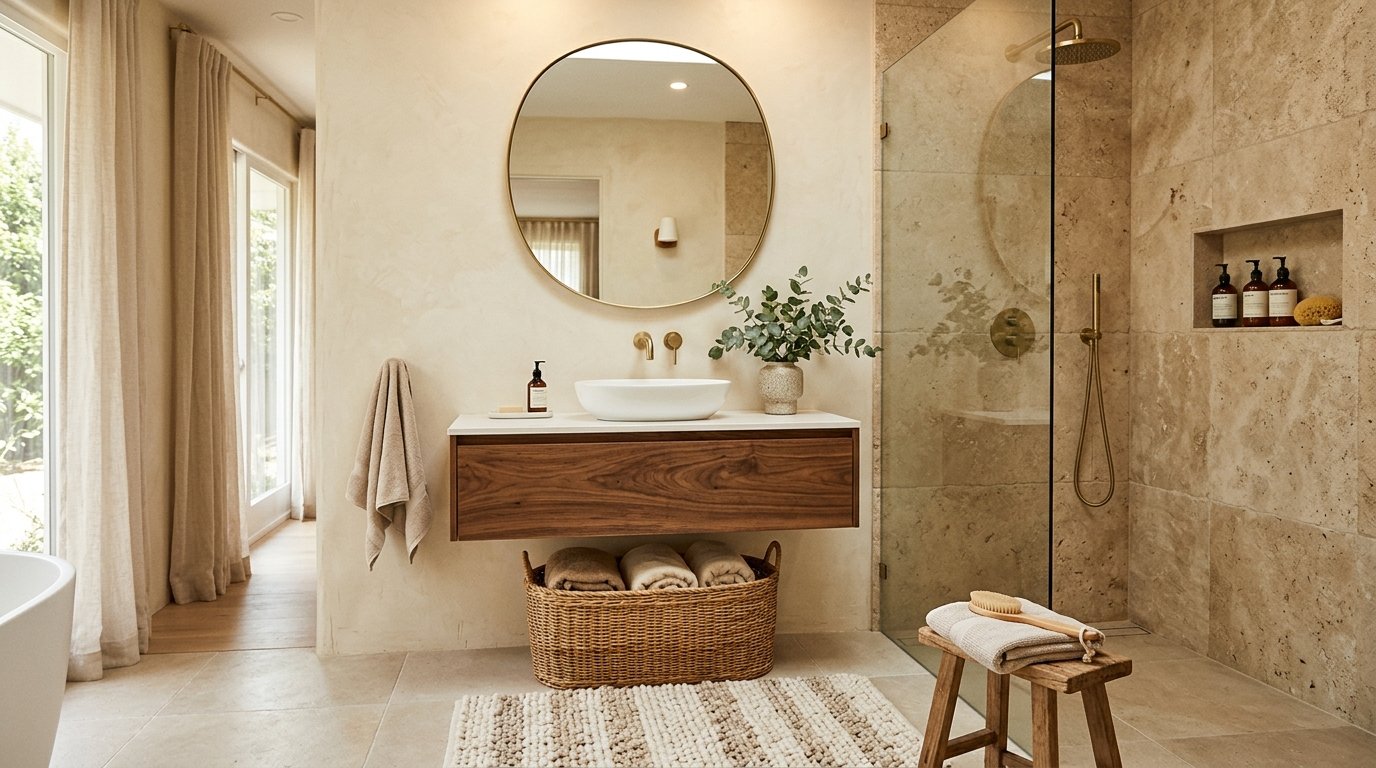
A warm neutral bathroom doesn’t need one exact shade everywhere. In fact, using several related tones usually creates a much richer result.
Try combining cream walls, beige flooring, taupe textiles, light oak cabinetry, and slightly darker brown accessories.
The colors should complement one another without matching perfectly. That small amount of variation keeps the room from looking flat.
8. Add Plush Neutral Towels
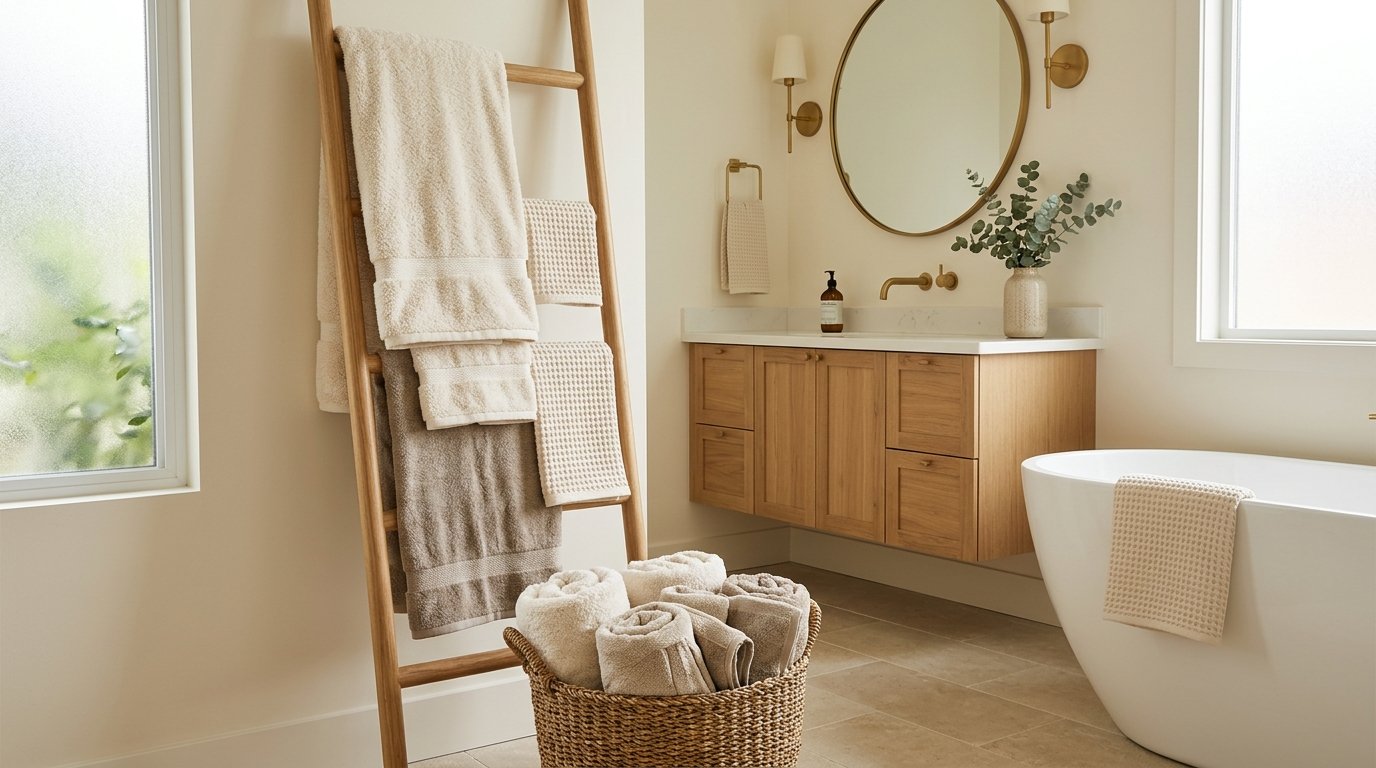
Never underestimate the power of good towels. A stack of thick cream or beige towels can make a bathroom feel noticeably more comfortable.
Try mixing different textures rather than buying everything in exactly the same fabric. Waffle towels, ribbed towels, linen hand towels, and plush bath towels can create subtle layers.
Keep the color palette simple and let texture do the work. You don’t need ten different colors screaming for attention from the towel rack.
9. Use a Woven Bath Mat
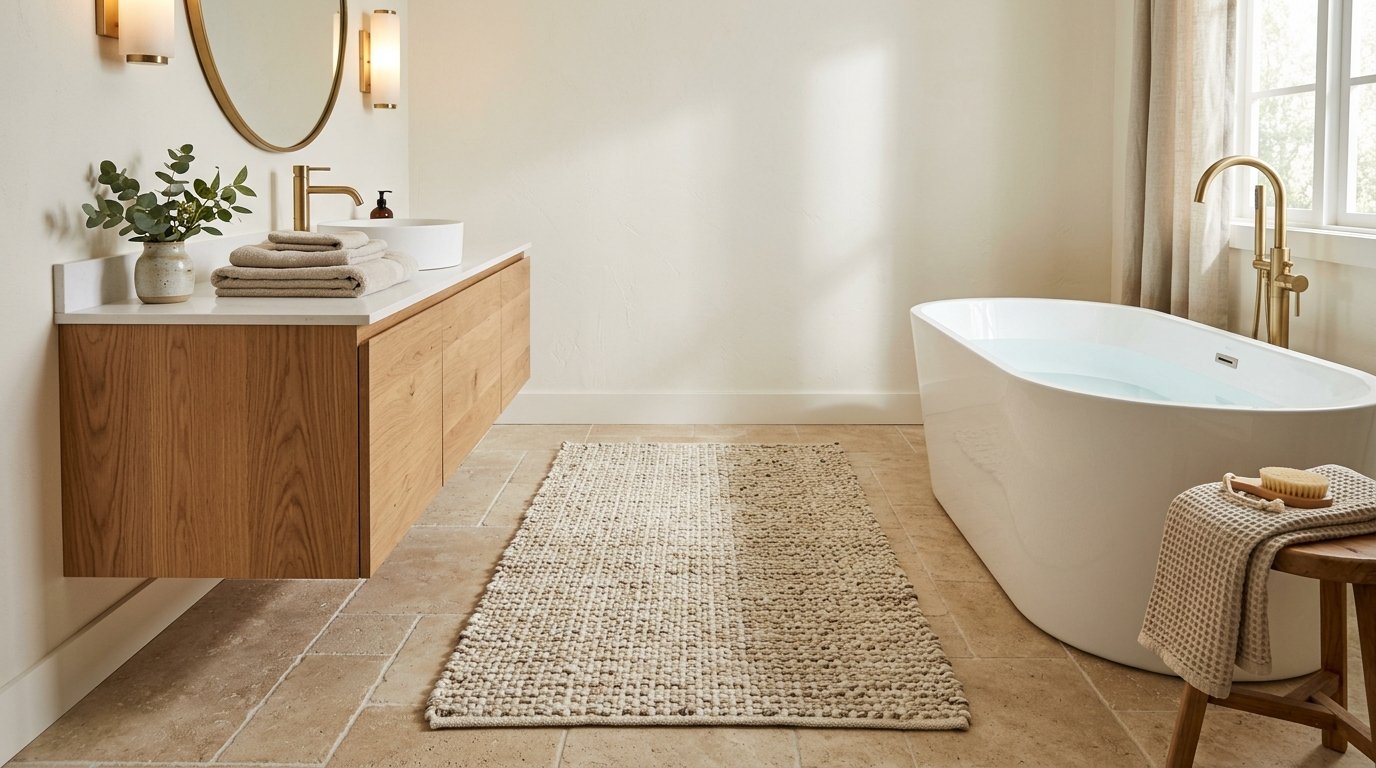
A woven bath mat can bring natural texture into an otherwise hard space filled with tile, glass, porcelain, and metal.
Look for cotton, jute-inspired, or other washable woven designs in cream, oatmeal, tan, or muted brown. A textured mat can also visually connect the floor with wooden cabinetry and rattan storage.
For bathrooms with heavy moisture, prioritize washable and quick-drying materials. Pretty matters, but nobody wants a permanently damp rug sitting beside their shower.
10. Introduce Natural Stone Accessories
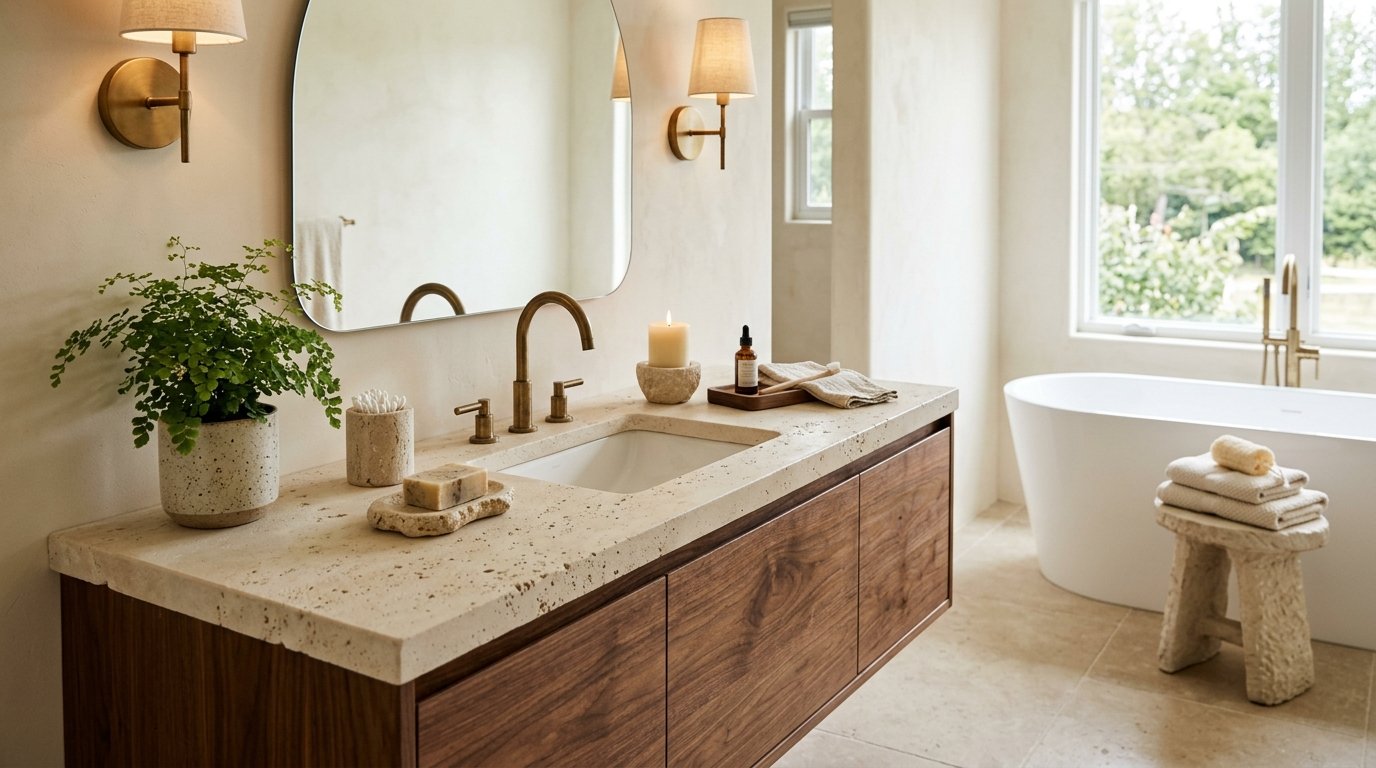
You don’t have to cover every surface in expensive stone. A few small accessories can provide the same earthy feeling.
Consider a stone soap tray, small limestone container, marble-look tray, or natural stone stool. These details work especially well alongside wood because the materials balance each other.
The combination of wood, stone, and warm textiles creates one of the easiest formulas for a timeless bathroom.
11. Add Greenery for a Fresh Contrast
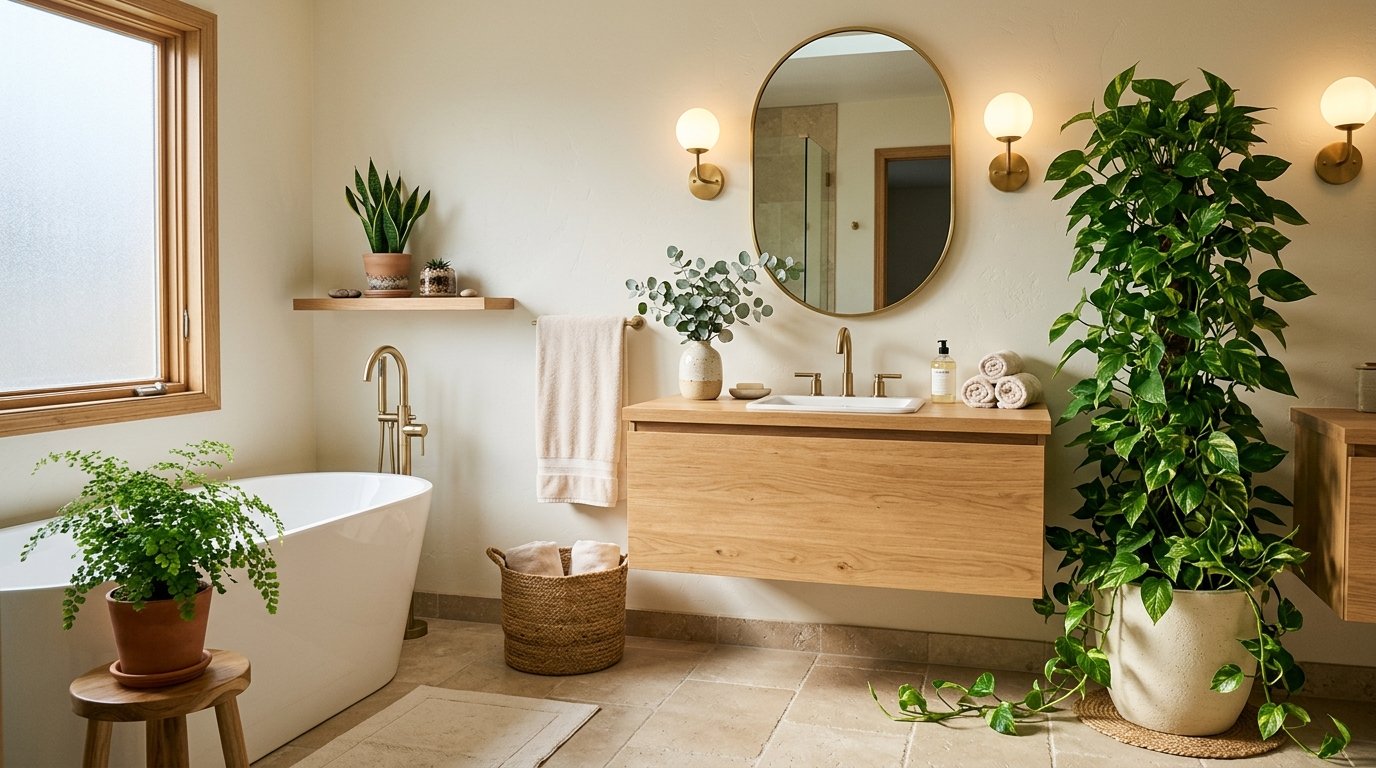
Plants give warm neutral bathrooms a natural burst of color without disrupting the overall palette.
Try pothos, snake plants, ferns, or other humidity-friendly varieties that suit your bathroom’s lighting. Place a larger plant beside the vanity or bathtub and use smaller plants on shelves.
If your bathroom gets almost no natural light, choose a realistic faux plant instead. A struggling plant doesn’t exactly scream relaxing retreat. 🙂
12. Install Floating Shelves
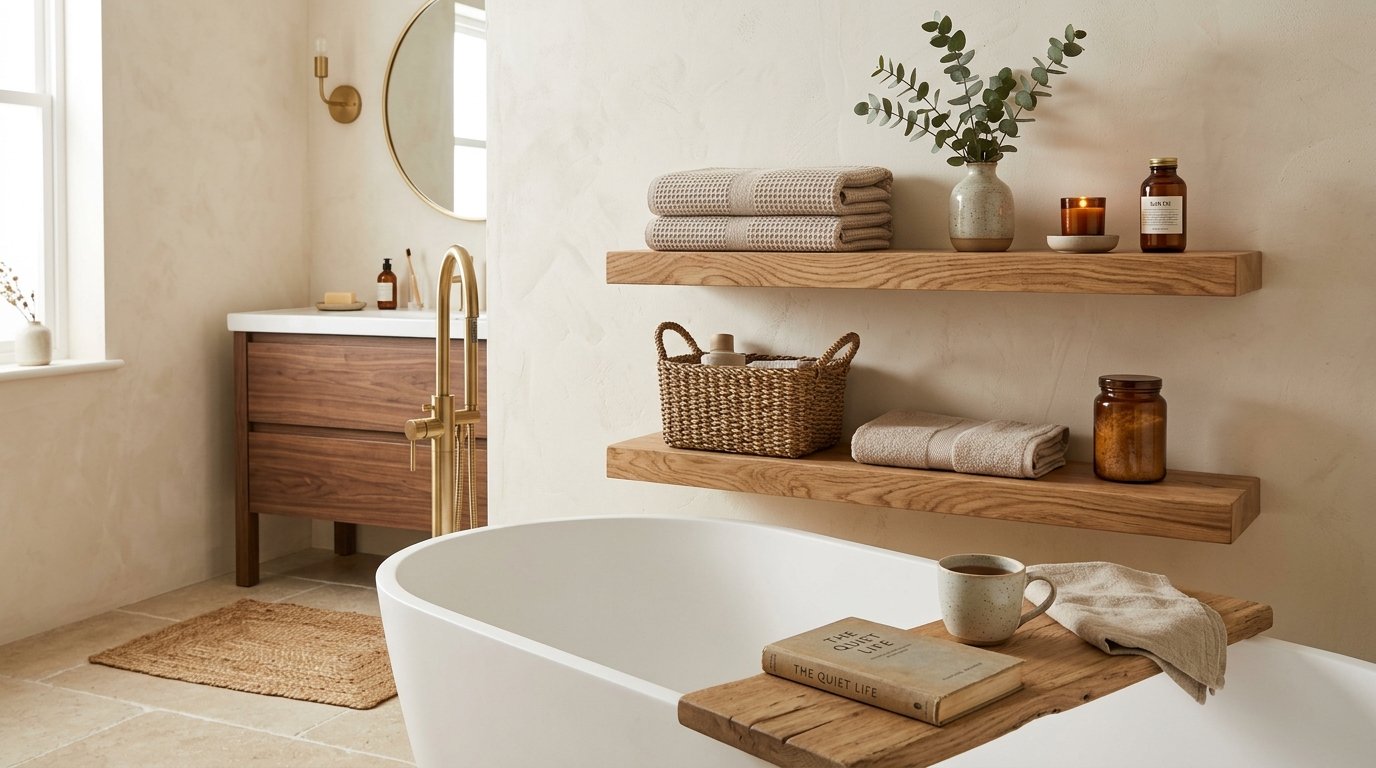
Floating shelves give you storage while also creating space for decorative details.
Use natural oak or walnut shelves against a cream wall. Then style them with folded towels, woven baskets, ceramic containers, candles, and small plants.
Avoid filling every inch. Negative space matters just as much as the objects you display. Leaving some empty shelf space makes the entire bathroom feel calmer.
13. Bring in Woven Storage Baskets
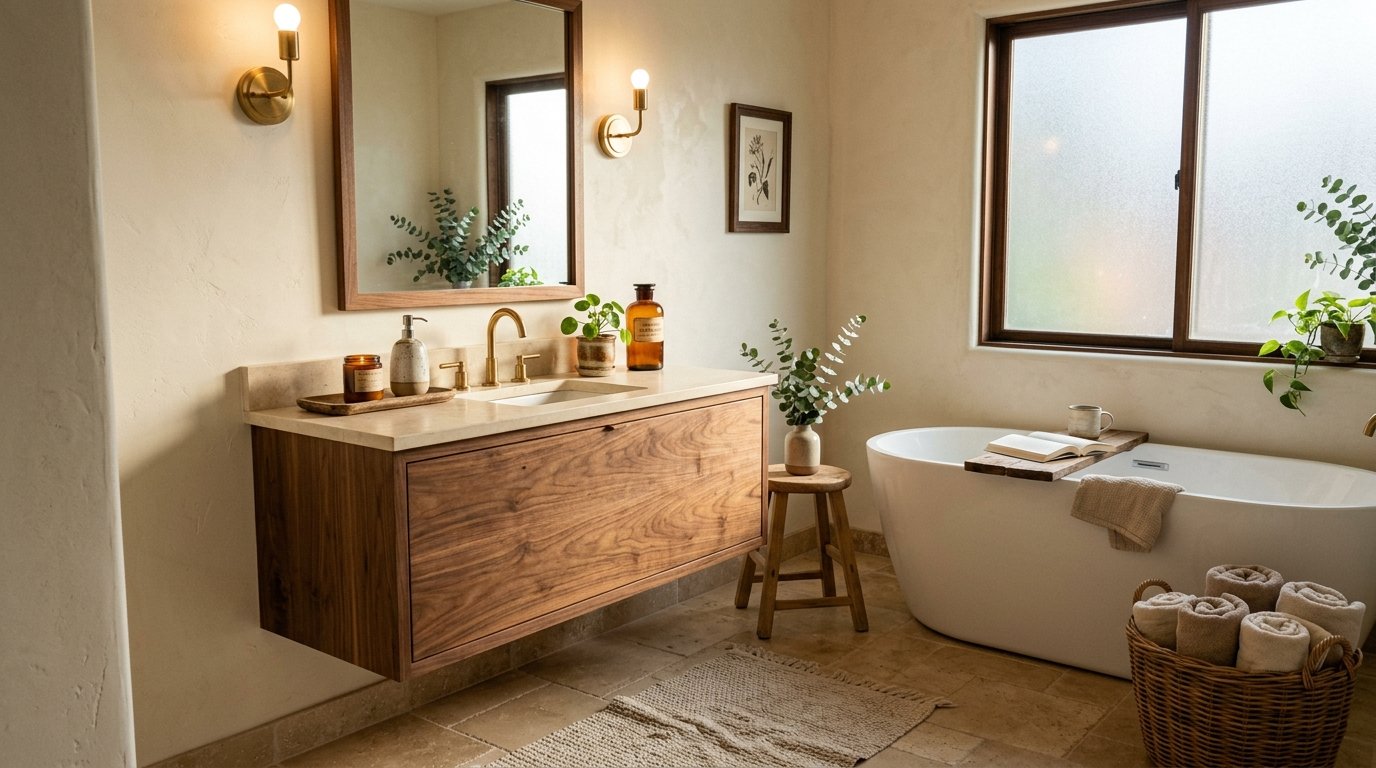
Bathrooms accumulate an impressive amount of stuff. Woven baskets give you a stylish way to hide the chaos.
Use larger baskets under a floating vanity for towels or extra toiletries. Smaller baskets can sit on shelves and hold skincare products, hair accessories, or other everyday items.
Natural rattan and seagrass work particularly well with warm neutral color schemes because they add texture without introducing a loud color.
14. Create a Cozy Bathtub Corner
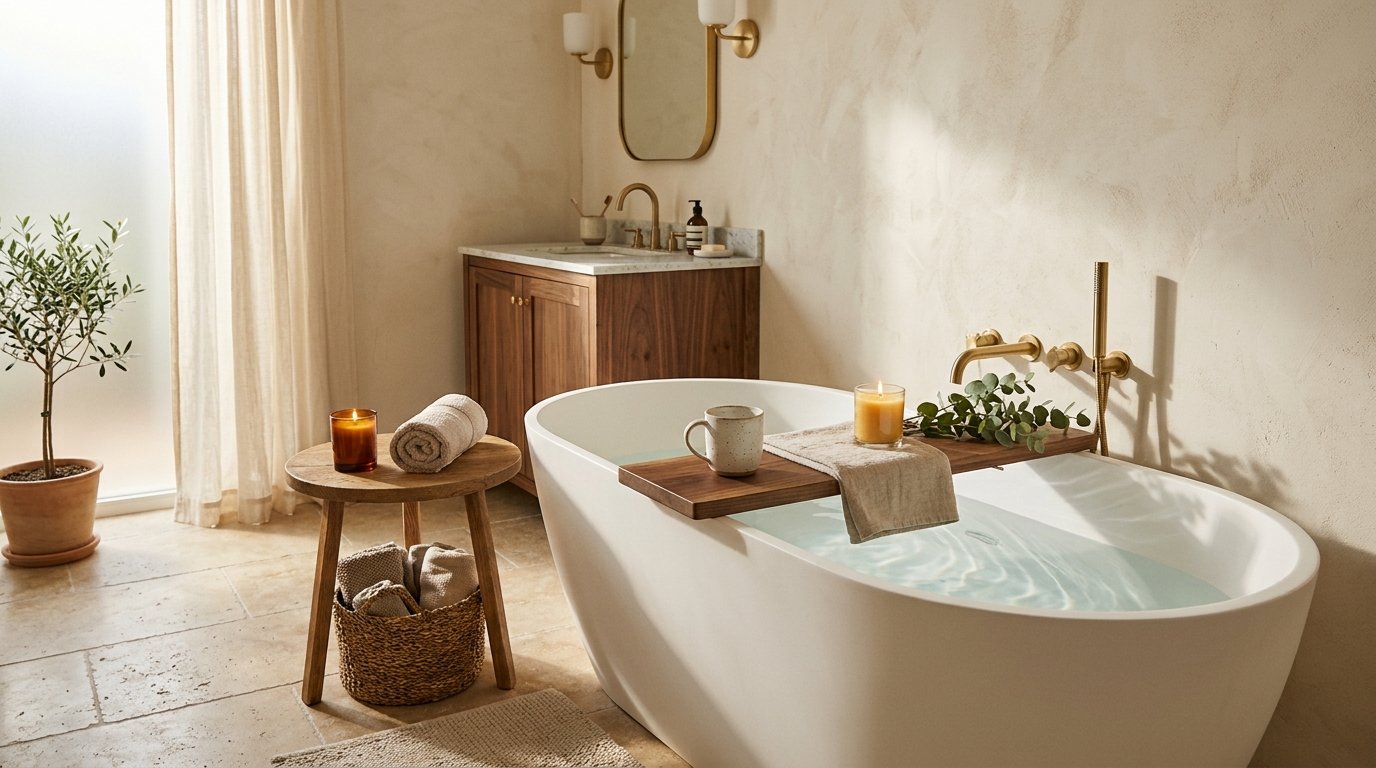
If you have a bathtub, turn the surrounding area into a genuine relaxation zone.
Place a small wooden stool next to the tub with a folded towel, candle, and small plant. Add a wooden bath tray across the tub for a book, cup, or other small items.
You don’t need to recreate a five-star hotel. A few thoughtful details can make the bathtub feel much more inviting.
15. Choose Travertine-Inspired Tile
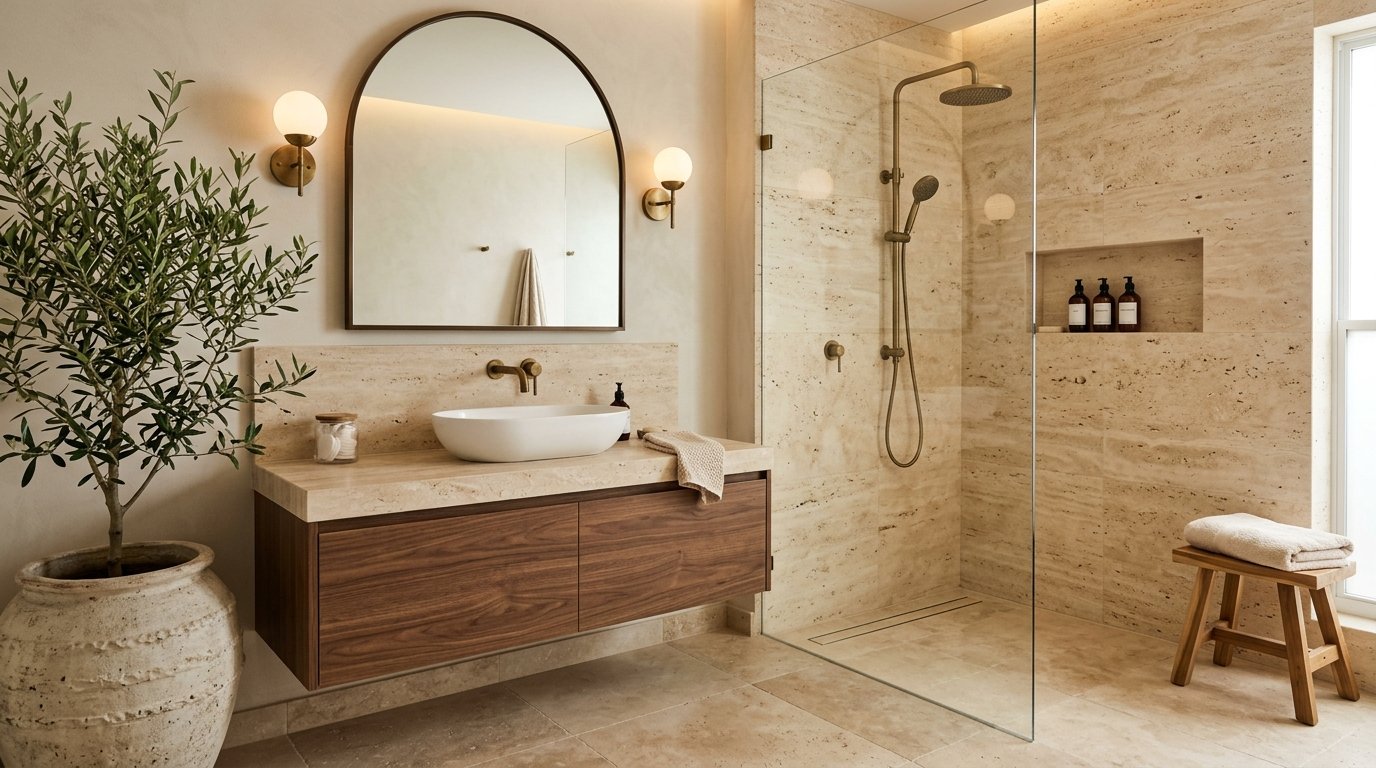
Travertine has made a strong comeback in warm, organic bathroom design. Its earthy color and natural variation work beautifully with cream, oak, walnut, and brass.
If real travertine doesn’t fit your budget or maintenance preferences, choose a high-quality porcelain tile that recreates its appearance.
Use the material on the shower walls, floor, or vanity backsplash. Just make sure the different surfaces share compatible tones rather than creating a patchwork of competing beige shades.
16. Use a Soft Linen Shower Curtain
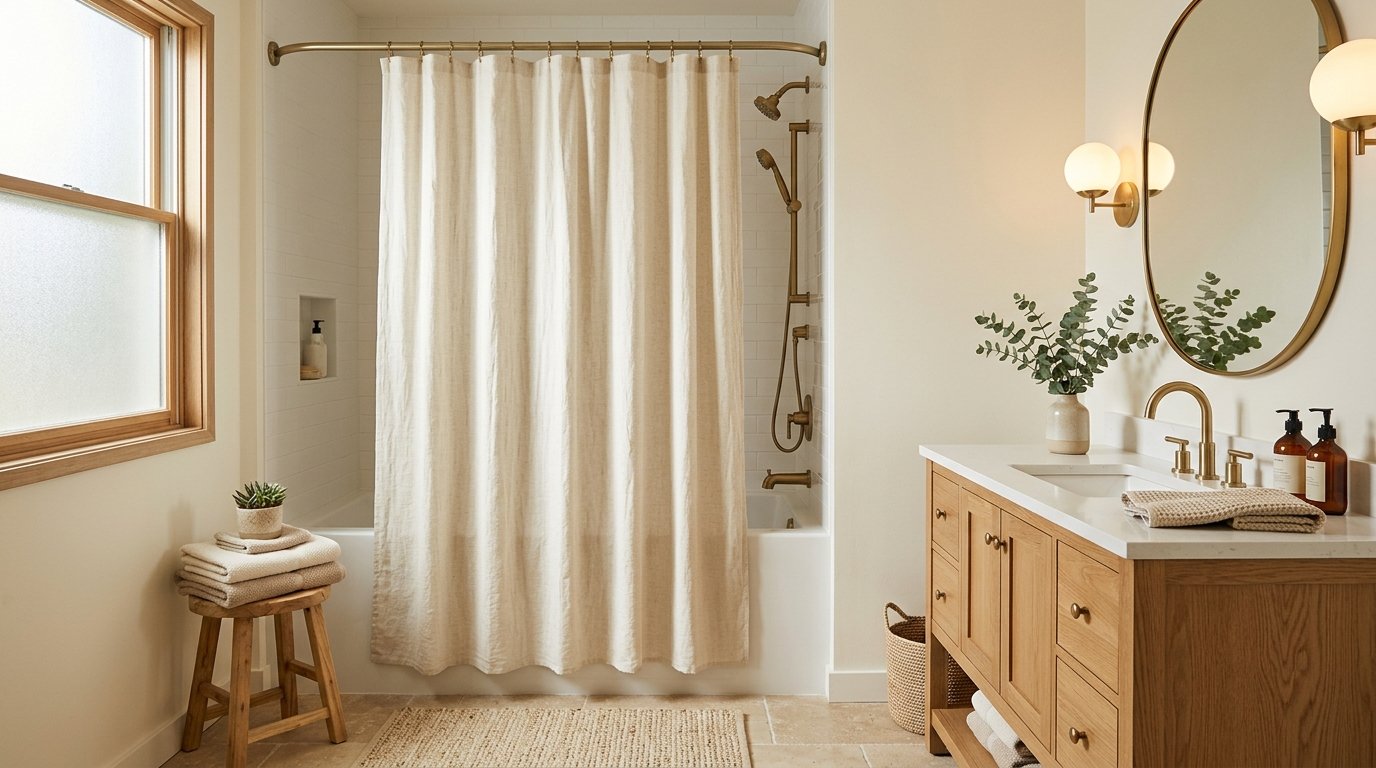
A shower curtain can add surprisingly much warmth to a bathroom. Choose a cream, oatmeal, or warm white linen-look curtain with subtle texture.
The fabric softens all the hard surfaces around the shower or bathtub. It also gives you an easy way to change the bathroom’s appearance later.
Choose a curtain that reaches close to the floor for a more polished look. Just keep enough clearance to prevent unnecessary moisture problems.
17. Add a Wooden Stool
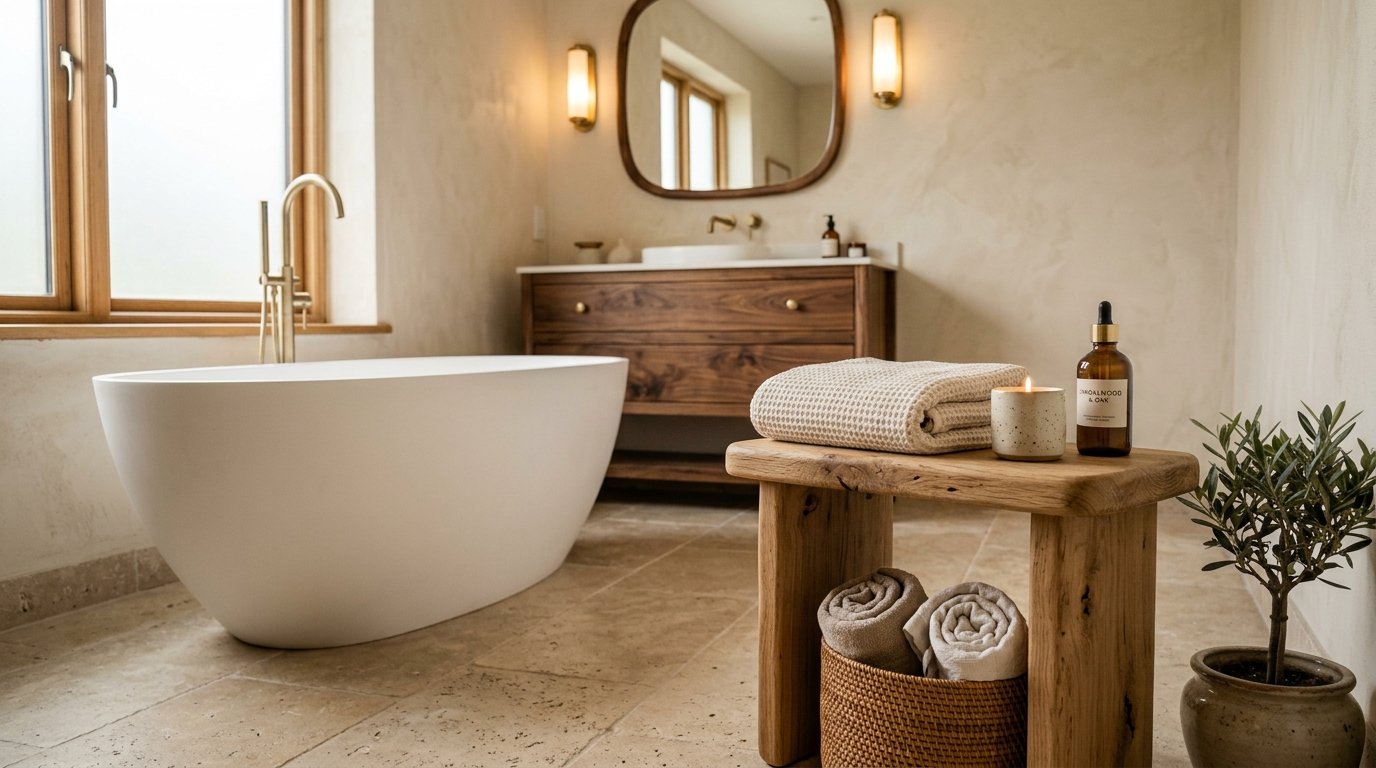
A small wooden stool gives you both function and visual warmth. Place one beside the bathtub, shower, or vanity.
Use it for towels, toiletries, candles, or simply as a place to sit while getting ready. Choose a design with simple lines and visible wood grain.
A stool also gives you an opportunity to bring a little furniture-like character into a room that otherwise contains mostly built-in fixtures.
18. Create a Spa-Inspired Shower
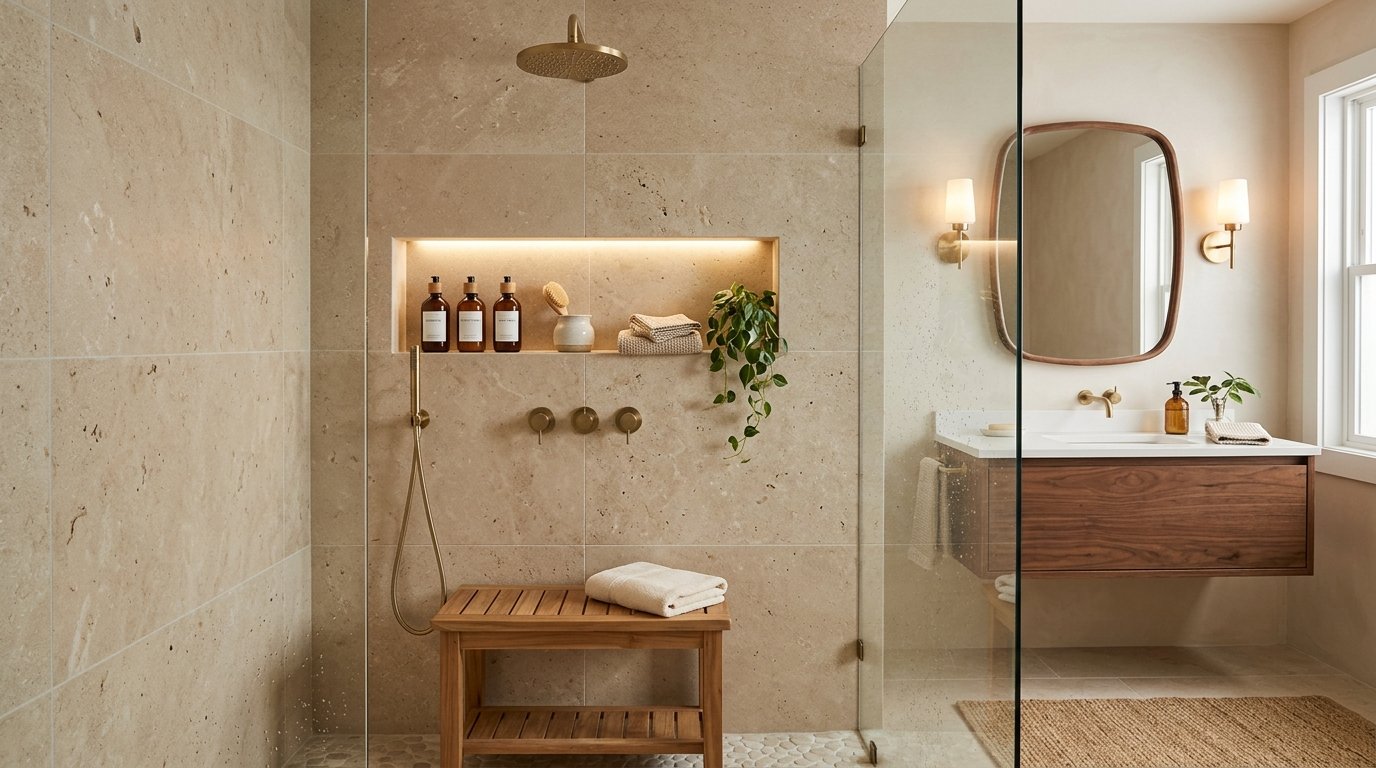
You can make an ordinary shower feel much more relaxing with a few thoughtful upgrades.
Consider adding:
- A rainfall showerhead
- A handheld showerhead
- A recessed wall niche
- Warm stone-look tile
- A teak shower bench
- Eucalyptus
- Soft warm lighting
A built-in niche can keep bottles organized while maintaining clean sight lines. Add only the products you actually use so the space doesn’t turn into a collection of half-empty bottles.
19. Use Warm Wood Shelving Around the Toilet
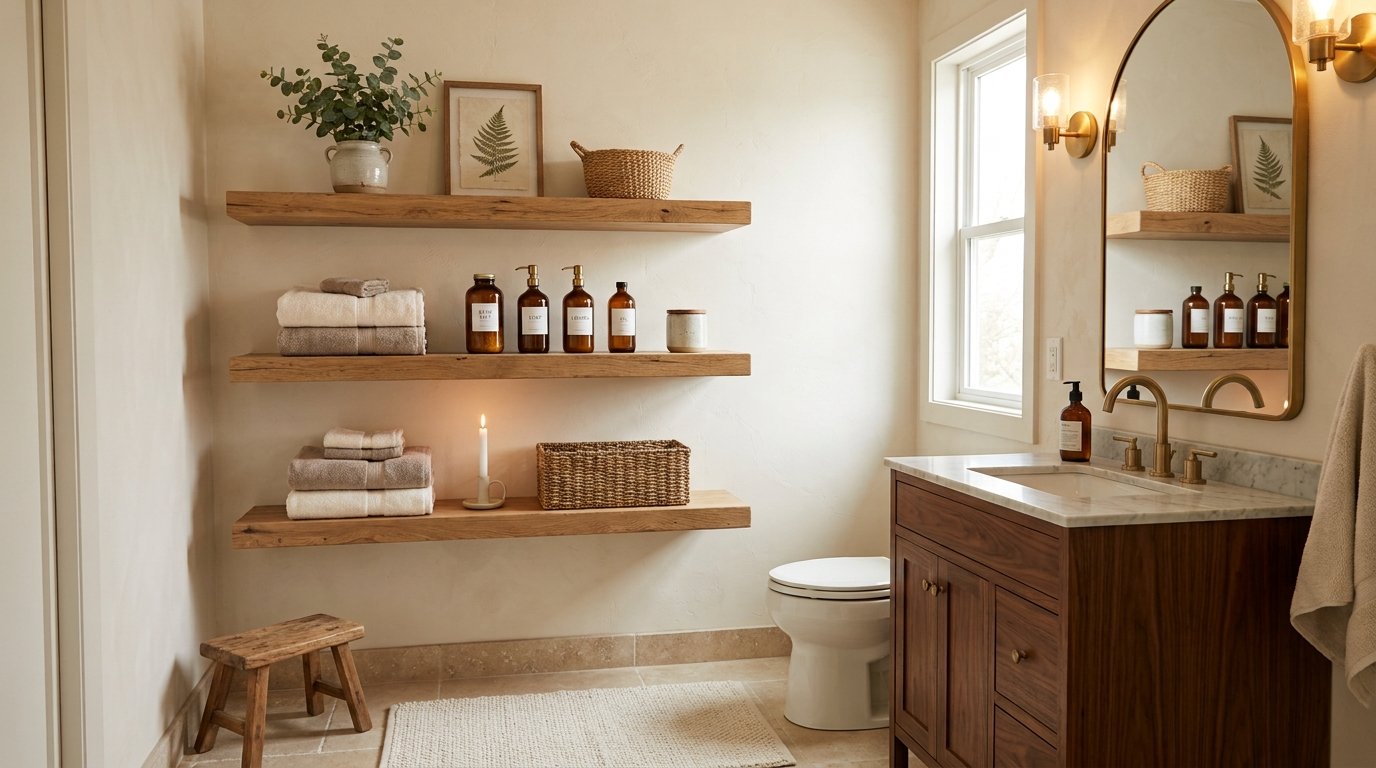
The wall above or beside the toilet often becomes wasted space. A couple of wooden shelves can turn that empty area into useful storage.
Install two or three shelves and keep the styling simple. Add folded towels, small baskets, a ceramic vase, and perhaps one small plant.
Choose shelves that match your vanity or other wood accents. That connection makes the room feel coordinated without forcing everything to match perfectly.
20. Mix Cream With Muted Sage
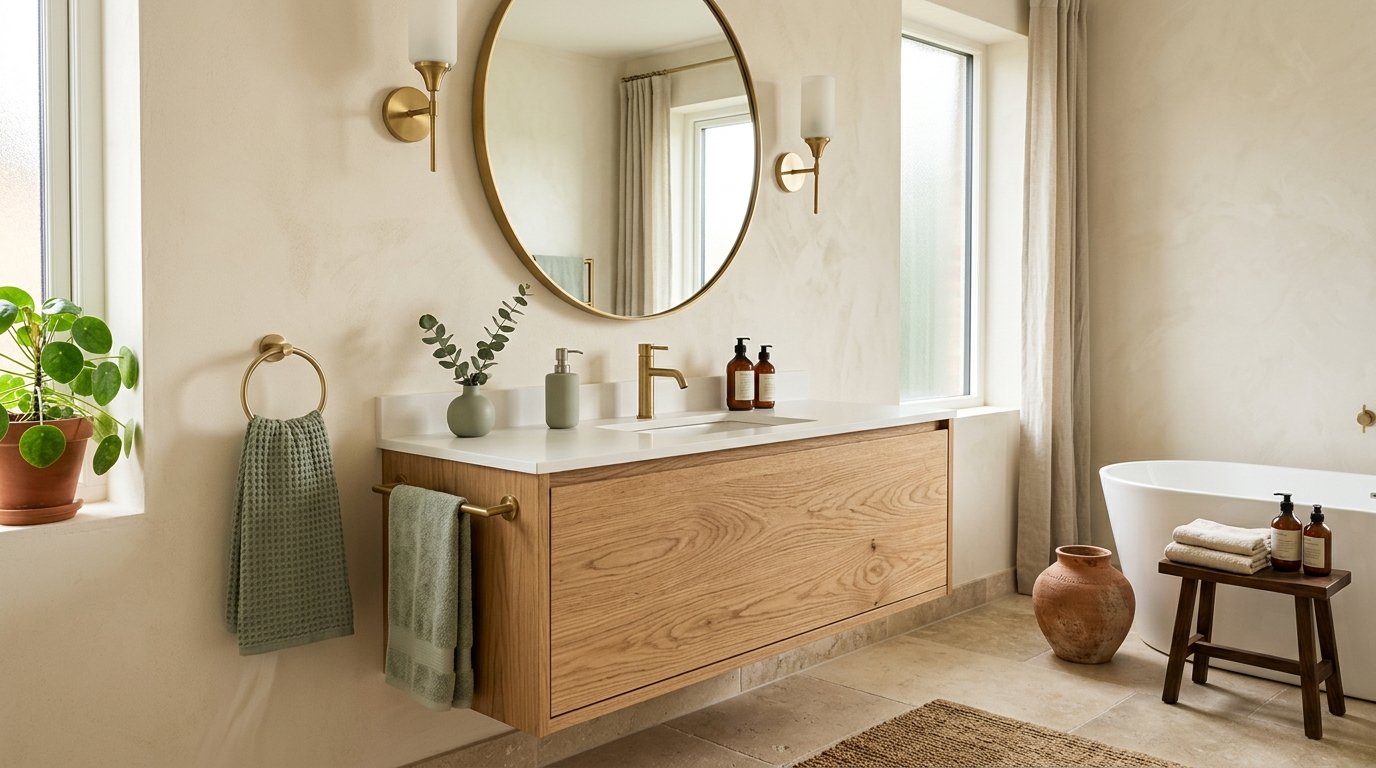
Warm neutrals don’t need to remain completely brown and beige. Muted sage green gives the palette a gentle natural accent.
Try sage towels, a ceramic soap dispenser, a small plant pot, or a piece of artwork. Keep the green soft and dusty rather than highly saturated.
Cream and sage work particularly well with natural oak because all three colors share an organic quality.
21. Add Personality With Simple Artwork
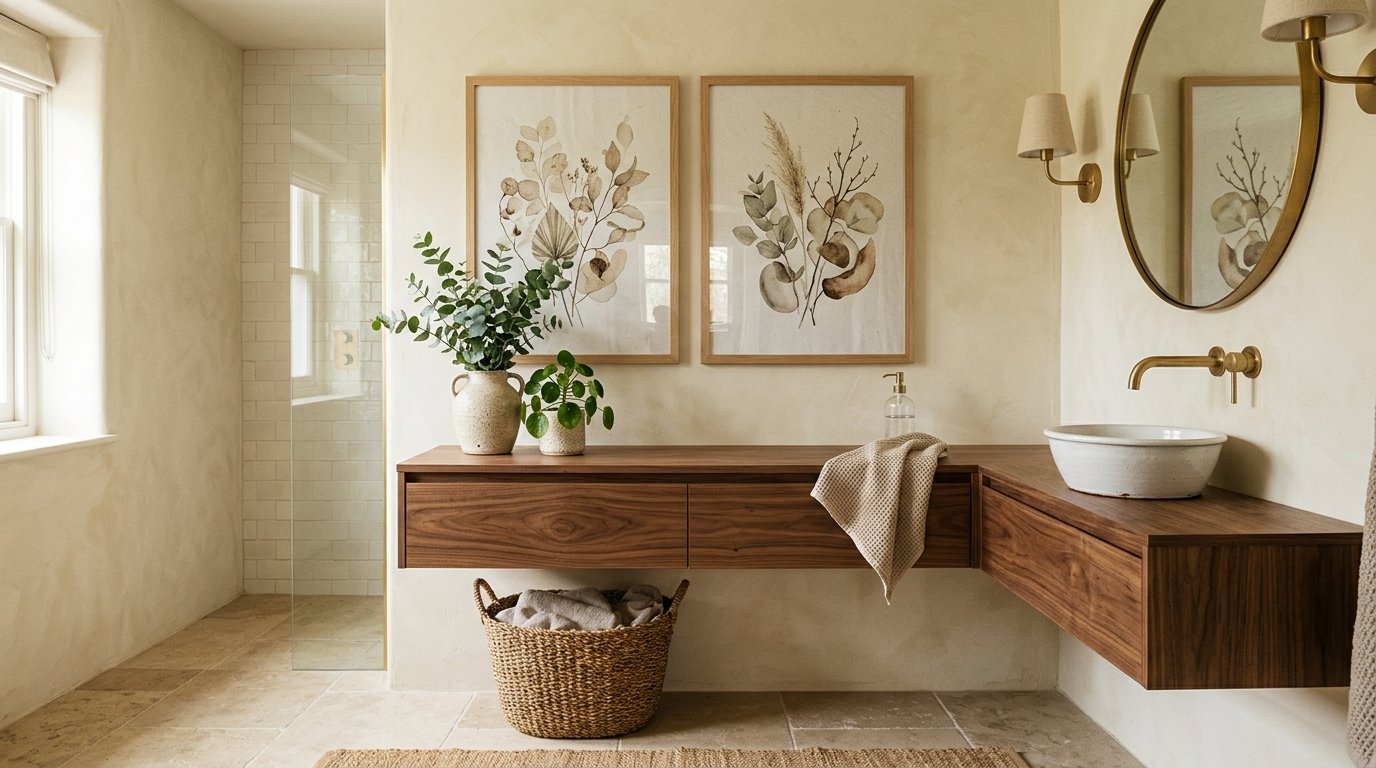
A bathroom can absolutely have artwork. In fact, a small piece can make the space feel much more personal.
Choose botanical prints, abstract landscapes, minimalist sketches, or earthy artwork that complements your palette. Natural wood or thin brass frames can connect the artwork with your other finishes.
Keep artwork away from areas that receive constant direct moisture. You want your favorite print to survive longer than your next shower.
22. Keep the Countertop Intentionally Minimal
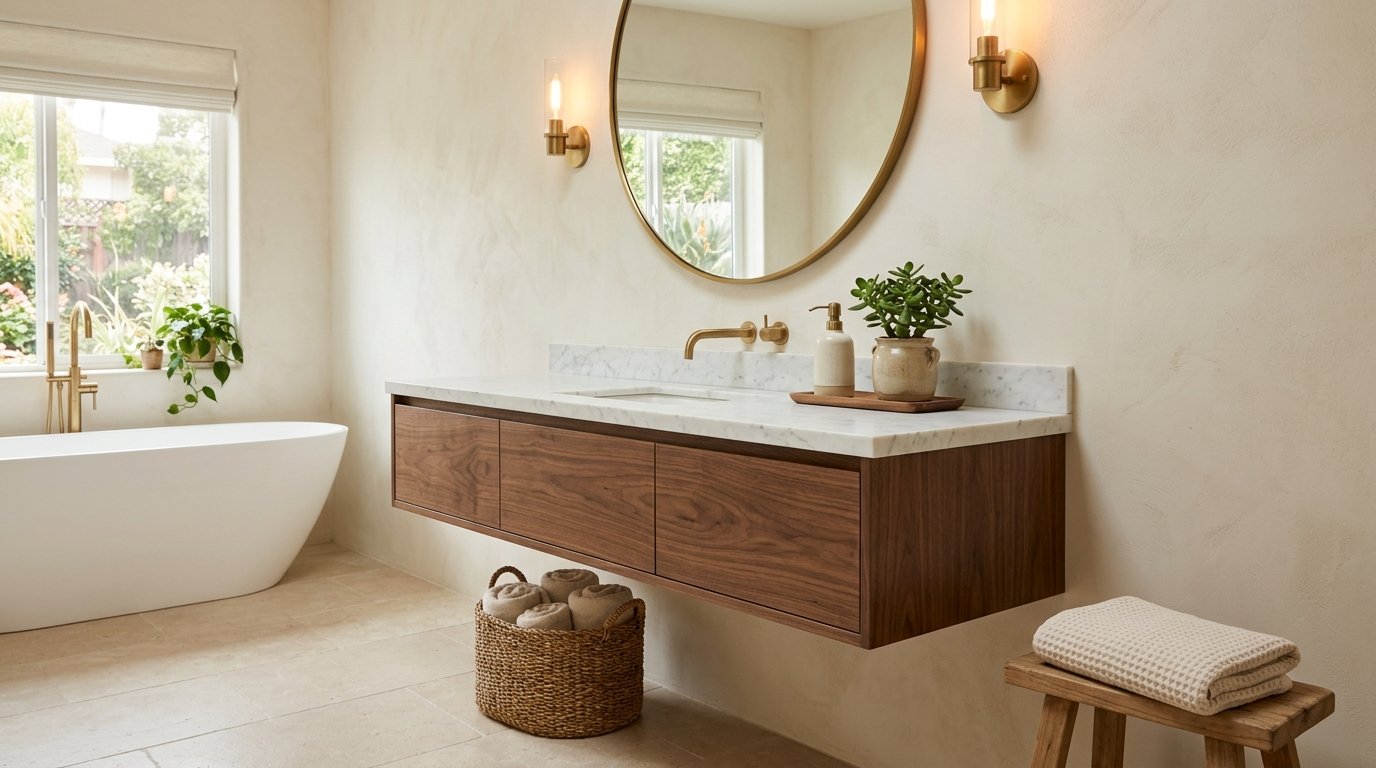
A cozy bathroom doesn’t need a countertop covered in products. A small collection of attractive everyday items can create a much cleaner appearance.
Try keeping only:
- One soap dispenser
- One small tray
- A ceramic vase
- One plant
- One or two everyday products
Store everything else inside drawers or cabinets. A clear countertop instantly makes a bathroom feel more organized and peaceful.
23. Add a Freestanding Tub
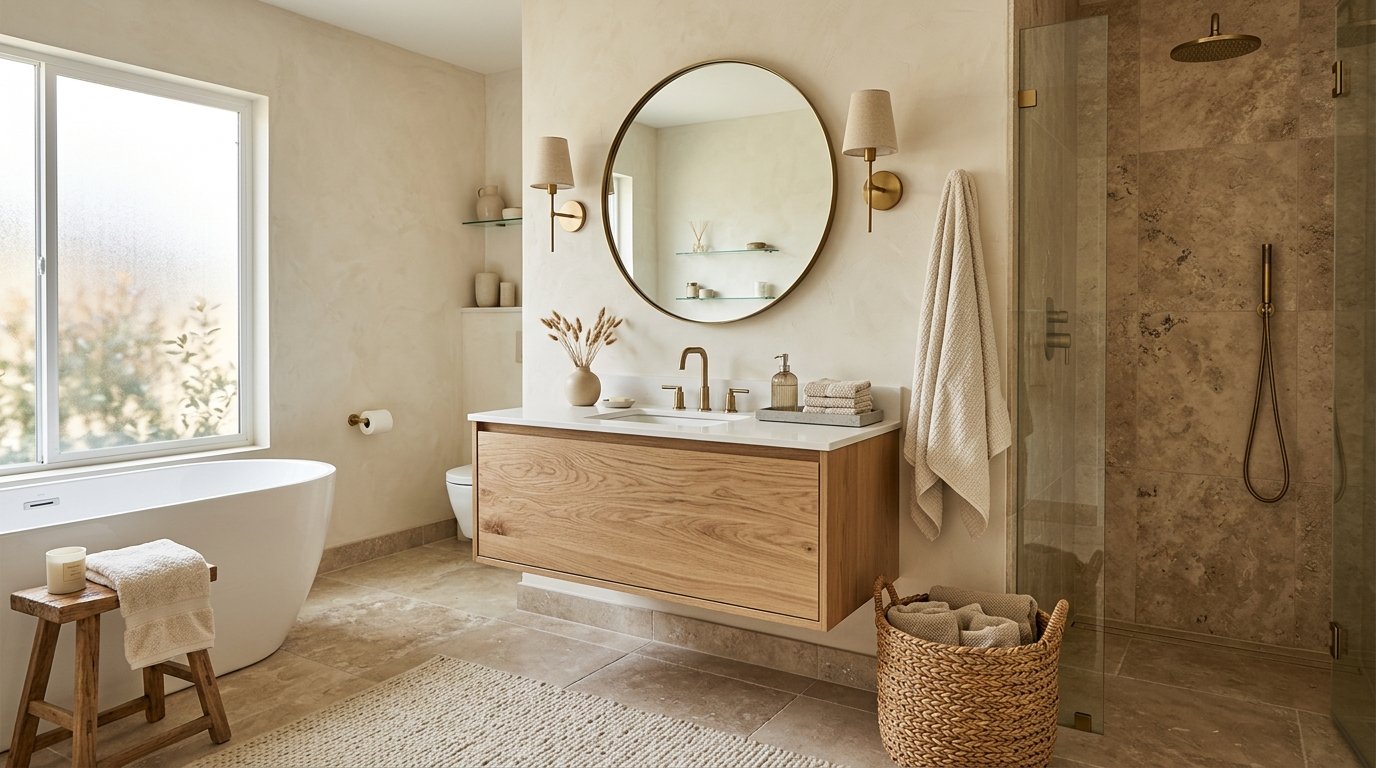
A freestanding tub can become the visual centerpiece of a larger bathroom. A simple white oval tub works especially well with warm neutral surroundings because it provides a clean contrast against stone, wood, and beige walls.
You can make the area feel even cozier with a wooden stool, woven basket, soft rug, and a small plant nearby.
Don’t overcrowd the tub area, though. Give the bathtub enough breathing room so it can actually stand out.
24. Combine Different Natural Textures
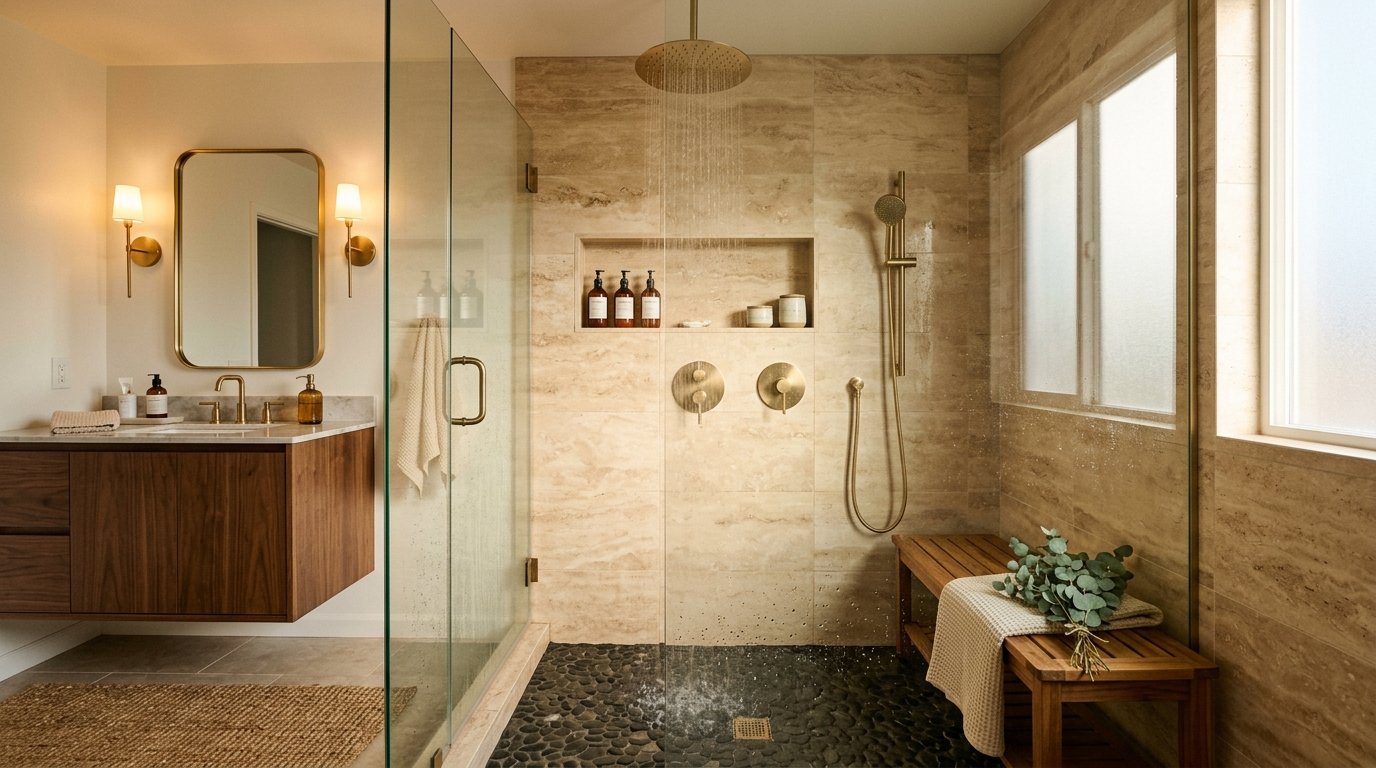
Here’s one of my favorite tricks for making neutral bathrooms interesting: stop relying on color and start relying on texture.
Combine smooth ceramic, rough stone, natural wood, woven rattan, soft cotton, textured linen, and leafy greenery. Even when all these elements share similar colors, they create plenty of visual variety.
This approach also helps a neutral bathroom age well. You can replace individual accessories without having to redesign the entire room.
25. Finish With Warm Personal Details
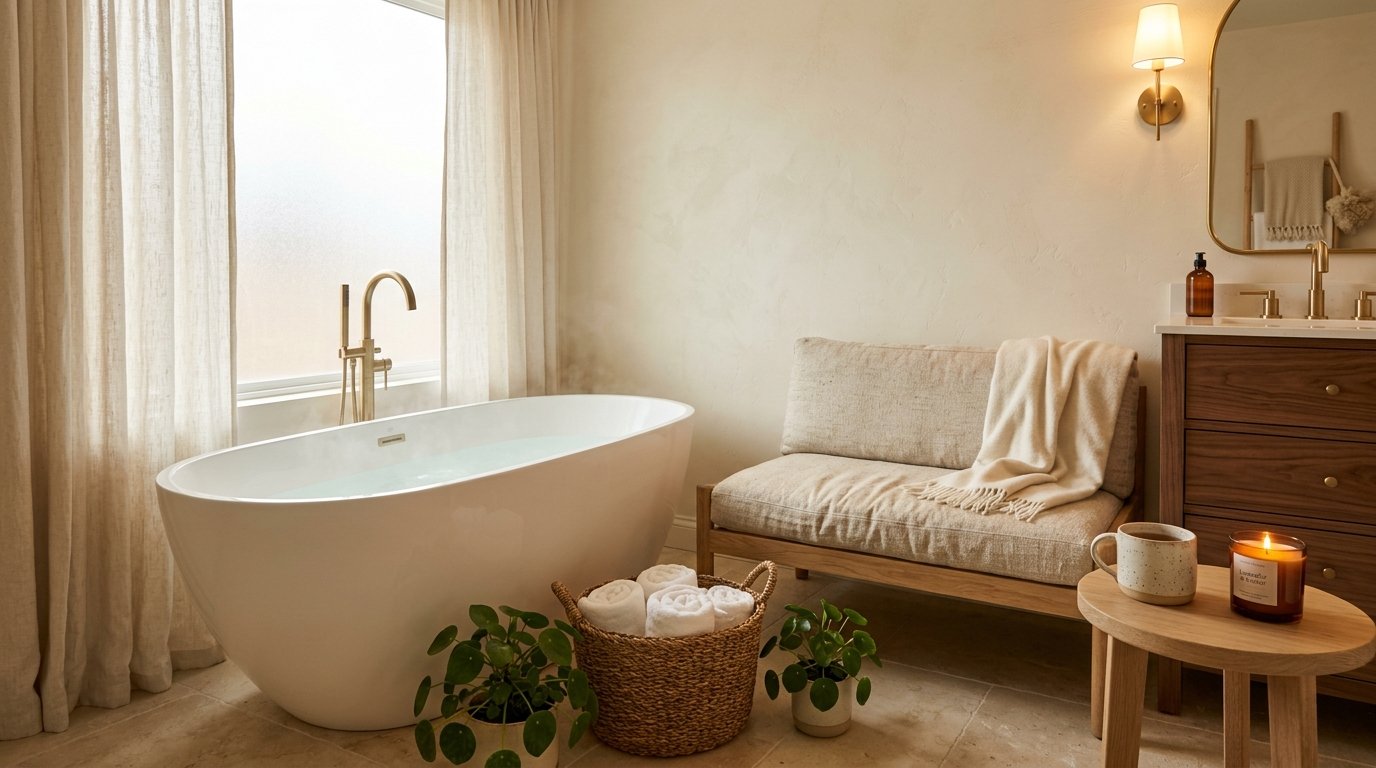
The final idea might sound obvious, but it makes the biggest difference. Add details that make the bathroom feel like yours.
Maybe that’s a favorite candle, a little piece of artwork, a beautiful ceramic container, a stack of your favorite towels, or a small wooden stool you’ve had for years.
A timeless bathroom shouldn’t feel frozen in a catalog. The goal isn’t perfection. The goal is creating a space that makes you want to slow down for a few minutes.
How to Choose the Right Warm Neutral Palette
Before buying paint, tile, towels, and accessories, decide which direction you want your bathroom to take.
A cream and oak palette creates a light and airy feeling. It works particularly well in smaller bathrooms because it keeps the room visually bright.
A beige and walnut palette creates a richer and more sophisticated atmosphere. Darker wood works beautifully when your bathroom receives plenty of natural light.
For something softer, combine cream, taupe, muted sage, and natural rattan. This combination feels organic and relaxed without looking overly rustic.
If you prefer a slightly more luxurious look, combine warm ivory, travertine, walnut, and brushed brass. The materials create enough variation that you don’t need many decorative accessories.
How to Make a Warm Neutral Bathroom Feel Less Boring
The biggest mistake people make with neutral bathrooms involves using too much of the same material.
If you use beige tile, beige walls, beige towels, beige cabinetry, and beige accessories with no texture variation, the room can start looking flat.
Instead, create contrast through material, shape, and texture.
For example, pair:
- Smooth white porcelain with rough natural stone
- Warm oak with brushed brass
- Plush towels with woven baskets
- Rounded mirrors with rectangular tiles
- Matte walls with glossy ceramic
- Soft textiles with hard stone surfaces
You don’t need dramatic colors to create an interesting bathroom. You just need enough contrast for your eye to move around the room.
Warm Neutral Bathroom Ideas for Small Spaces
Small bathrooms benefit from warm neutral colors because they can make the room feel visually softer and more spacious.
Start with light cream walls and flooring. Then choose a floating vanity to expose more floor area underneath. Add a large mirror to reflect light and create the impression of additional space.
Use wall-mounted shelves instead of bulky cabinets where possible. Keep decorative pieces limited and prioritize storage that hides everyday clutter.
A small bathroom also gives you a good reason to experiment with texture. One woven basket, a textured bath mat, a wood shelf, and warm lighting can add plenty of personality without taking up much room.
How to Keep a Neutral Bathroom Looking Timeless
Trendy bathrooms can look fantastic for a few years and then suddenly feel dated. A timeless bathroom takes a different approach.
Choose classic shapes and natural materials for the permanent elements. You can experiment with trends through accessories that cost less to replace.
For example, keep the vanity, tile, and plumbing fixtures relatively classic. Then introduce trendy colors through towels, artwork, baskets, or small decorative pieces.
This strategy gives you flexibility. When your taste changes, you can refresh the room without ripping out half the bathroom.
Final Thoughts
Warm neutral bathrooms work because they create a comfortable middle ground between practical and beautiful. Cream walls, natural wood, warm stone, soft textiles, greenery, brass details, and layered lighting can completely change the personality of the room.
You also don’t need to tackle all 25 ideas at once. Start with the elements that will make the biggest visual difference, such as warmer lighting, better towels, a natural wood accent, or a more cohesive color palette.
Personally, I’d start with lighting and texture before spending money on a major renovation. Those two changes can make a surprisingly dramatic difference.
And remember, your bathroom doesn’t need to look like a showroom. Give it some personality, keep the clutter under control, and create a space that feels good when you walk through the door.
Frequently Asked Questions
1. What colors work best for a warm neutral bathroom?
Cream, beige, taupe, warm white, greige, muted sage, and earthy brown all work well in warm neutral bathrooms. You can combine several shades instead of relying on one color throughout the room. Natural wood and warm metallic finishes can add additional depth.
2. How can I make a neutral bathroom feel cozy?
Focus on texture and lighting. Add plush towels, woven baskets, natural wood, soft rugs, plants, warm lighting, and stone accessories. These elements can make a neutral bathroom feel comfortable without adding bright colors.
3. Are warm neutral bathrooms still in style?
Yes. Warm neutral bathrooms offer a timeless foundation because they rely heavily on natural colors and materials rather than short-lived trends. You can also update the room easily by changing accessories, towels, artwork, and small decorative pieces.
4. What wood looks best with a neutral bathroom?
Natural oak and walnut both work particularly well. Oak creates a lighter, more casual appearance, while walnut adds richness and contrast. Choose the wood tone based on the amount of natural light and the overall mood you want.
5. How can I make a small bathroom look warmer?
Use light warm colors, layered lighting, natural textures, and a few carefully selected accessories. A large rounded mirror, floating vanity, woven basket, warm wood accent, and soft neutral textiles can make a small bathroom feel much more inviting.
6. What metal finish works best with warm neutral colors?
Brushed brass and aged brass complement warm neutral palettes particularly well. They add warmth without creating the overly shiny appearance that polished metals can sometimes produce. You can also use matte black for contrast if you prefer a more contemporary look.
7. How do I decorate a beige bathroom without making it boring?
Use different textures and materials rather than adding lots of colors. Combine stone, wood, linen, cotton, rattan, ceramic, and greenery to create visual variety. You can also introduce one subtle accent color, such as muted sage green, to break up the beige palette.